National report offers blueprint for three-year bachelor’s degrees
The report arrives as Oklahoma moves ahead with four bachelor’s programs requiring 90 to 103 credit hours.
OKLAHOMA CITY (OBV) — A new national framework calls for colleges developing three-year bachelor’s degrees to preserve academic quality, build in practical work experience, and track whether students graduate with less debt and stronger career prospects.
Released Oct. 20, Redesigning Time to Degree: A Framework for High-Quality Three-Year Bachelor’s Degrees focuses on programs requiring fewer than the traditional 120 credit hours, commonly about 90. These programs redesign the degree itself. Accelerated traditional programs still require 120 credits, completed through heavier course loads, summer classes, or other ways of earning credit.
“Three-year degrees have real potential to improve the value of higher education for students, but realizing that promise requires thoughtful design,” said Jessica Taketa of Arnold Ventures in the announcement accompanying the report.
The task force identified four principles for high-quality programs: focus on student success, maximize the value students receive, rigorously evaluate results, and recognize qualifying three-year programs as bachelor’s degrees. It said general education should preserve the breadth of learning expected from a bachelor’s degree, even when institutions change how they deliver it.
“Delivering on that promise requires deliberate redesign, not simple subtraction,” the report states. “A three-year degree should not be created by simply cutting a fourth year from an existing program.”
The task force recommends that faculty lead curriculum redesign and employers help shape career connections, including internships, apprenticeships, practicums, and projects that give students experience applying their skills.
Oklahoma took a step toward the reduced-credit model in September, when the State Regents for Higher Education approved four programs at three public universities, as OBV reported. The degrees require between 90 and 103 credit hours.
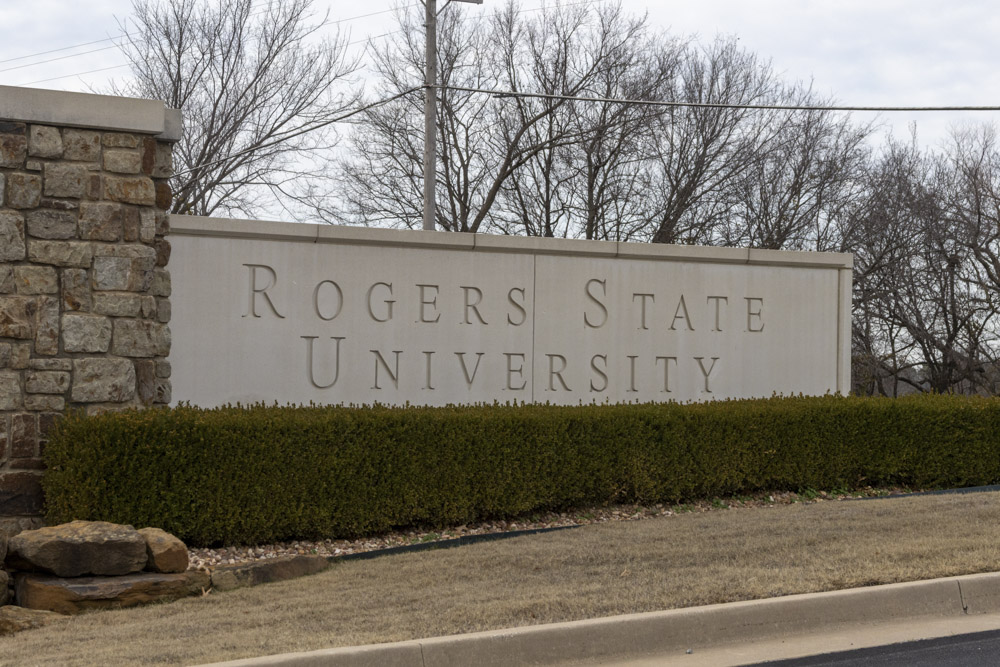
Those approvals covered social work at the University of Oklahoma; artificial intelligence and business essentials and applications at Oklahoma State University; and workforce development at Rogers State University.
Oklahoma’s approval framework, adopted in May, requires universities to demonstrate workforce and student demand, explain how the curriculum will achieve its learning goals, and address accreditation, professional licensing, and graduate education considerations.
OBV also reported on Rogers State’s proposal in July. The university proposed options in automation manufacturing and digital systems, and cyber defense and digital forensics, with an emphasis on applied learning and regional employers’ needs.
“This accelerated degree was developed after extensive conversations with our workforce partners,” RSU President Don Raleigh said at the time.
Arnold Ventures, Strada Education Foundation, and the College-in-3 Exchange convened the 17-member national task force, which worked for six months. Adam Maxey, vice president of government affairs for the State Chamber, served on the group.
The report also offers an early look at Strada research involving 654 hiring managers and recruiters at employers with at least 250 employees. The research found that work experience strengthens employers’ perceptions of reduced-credit degrees and that employers see value in a shorter timeline for developing and recruiting talent. Those findings concern employer perceptions, rather than graduates’ actual employment outcomes.
“The three-year degree movement has gained considerable momentum over the past two years, and that rapid growth makes attention to quality all the more important,” said Madeleine Green of the College-in-3 Exchange in the release. “The Task Force report offers a framework for ensuring that these degrees are not only faster and less expensive but, above all, provide high-quality learning for a wide range of students.”
The report cites a RAND review that identified 119 programs offered or in planning as of May 2026. With most programs still awaiting their first graduates, evidence remains limited on whether their outcomes compare with traditional bachelor’s degrees.
To answer that question, the task force recommends tracking learning, completion, debt, employment, earnings, and graduate school enrollment, with comparisons to traditional programs where possible. It also calls for further research on transfer credits, financial aid, and which students benefit most.
The task force cautioned that some fields may be unsuitable for fewer-credit degrees because of licensing, accreditation, or the amount of learning required. Its recommendations leave institutions room to assess individual programs.
“The Task Force report highlights the questions we still need to answer and makes a compelling case that a shorter path to a bachelor’s degree doesn’t have to mean a lesser path,” said Stephen Payne of Strada Education Foundation in the release.