
OBV Special Report / Higher Education
A degree, sooner
Oklahoma approved four bachelor’s programs requiring fewer credits. Rep. Ryan Eaves explains why he pushed for the change—and what he wants to see next.
Read the story
The cost of getting there
Fewer credits. A chance to finish sooner.
Oklahoma’s four newly approved bachelor’s programs require 17 to 30 fewer credit hours than the traditional 120. Rep. Ryan Eaves wants that shorter path to help more Oklahomans afford to finish college.
In written responses to Oklahoma Business Voice, the Atoka Republican connected the cost of an education with employers’ difficulty finding trained workers.
“Workforce issues are a very real issue as is affordability concerns for people in Oklahoma,” Eaves said. “An untrained workforce is an unemployable workforce, and it’s impossible to separate that out from rising costs in education.”
Eaves and Sen. Julie Daniels, R-Bartlesville, authored House Bill 3315, which directed the State Regents for Higher Education to study the feasibility of three-year bachelor’s degrees. Gov. Kevin Stitt signed the measure April 30.
The Regents adopted a review framework in May and approved four programs Sept. 3: social work at the University of Oklahoma, artificial intelligence and business at Oklahoma State University, and workforce development at Rogers State University.
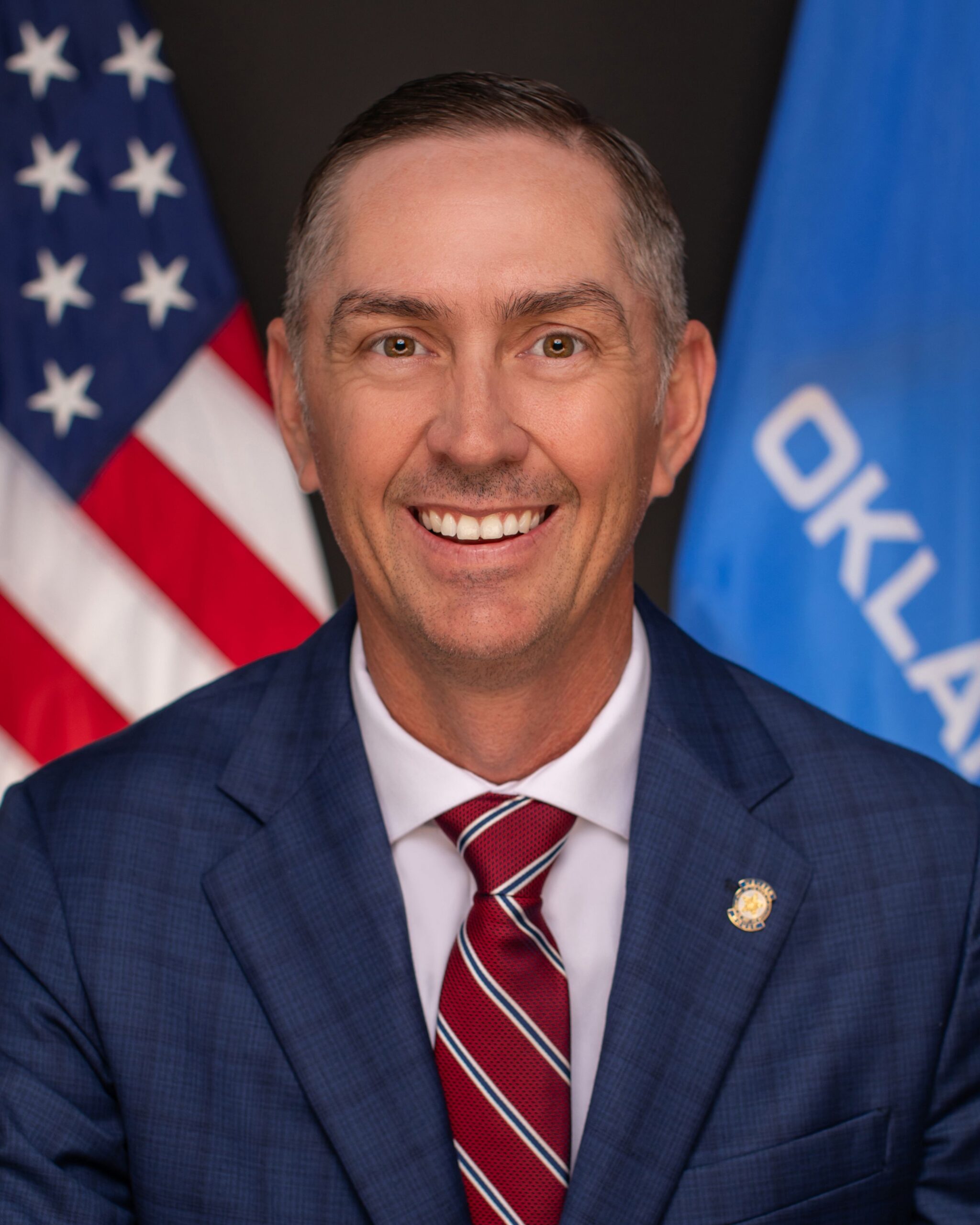
Rep. Ryan Eaves · R-Atoka
“If the workforce is uneducated simply because of financial stress then we have failed.”
Four programs, three universities
What Oklahoma approved
The programs range from 90 to 103 credits. The reduced-credit model changes the degree’s requirements; an accelerated traditional degree still requires 120 credits, completed on a shorter schedule.
Eaves said the approvals give students in those fields a way to reach their career goals earlier. He also sees a message to employers seeking those skills.
“Also, for the businesses that are in need of people with these skills, the state of Oklahoma has signaled to those businesses that, we hear you and we are actively working to help solve your workforce needs,” he said.
Explore the degrees
See the difference in credits.
Approved Sept. 3, 2026
University of Oklahoma
Social Work
Bachelor of Applied Studies
Social work preparation, including field experience. OU’s proposal retains foundational social work courses and practicums while reducing electives and general education requirements.
Read the program proposal30 fewer credit hours
Oklahoma State University
Artificial Intelligence
Bachelor of Applied Science
Applied AI study with mathematics, computing, and a capstone project. The curriculum includes calculus, linear algebra, statistics, and data structures.
Read the program proposal28 fewer credit hours
Oklahoma State University
Business Essentials and Applications
Bachelor of Applied Science
A degree-completion option designed for adults, transfer students, and others with prior college credit. Coursework covers business fundamentals, including management, finance, and marketing.
Read the program proposal30 fewer credit hours
Rogers State University
Workforce Development
Bachelor of Applied Science
Options in Cyber Defense and Digital Forensics, and Automation Manufacturing and Digital Systems. Total credits vary with the student’s course requirements.
Read the program proposal17–21 fewer credit hours
Credit requirements: State Regents’ Sept. 3 meeting materials. Differences use 120 credits as the baseline. Completion time and cost depend on a student’s course plan, transfer credits, and tuition and fees.
Before choosing a program
The degree has to fit the goal.
Oklahoma’s framework requires universities to explain what students will learn, how that learning will be assessed, and which workforce needs a program addresses. Proposals must also account for accreditation, professional licensing, and graduate education.
For students, the details will matter as much as the credit total. These are the questions to take to an adviser.
Will my existing credits count?
Ask for a course-by-course review showing which credits apply to the degree and what remains. The answer determines the work still ahead.
Can I use the degree for graduate school or a license?
Check the requirements of the specific graduate program or licensing board you plan to pursue. Ask the university how its degree meets those requirements.
What will it cost, and when could I finish?
Request a written degree plan and an estimate that includes tuition, fees, aid, and required course scheduling. Fewer required credits can reduce costs; the total depends on the student and program.
When can I enroll?
Confirm the university’s start date, admissions requirements, and current accreditation status. State approval is one step in launching a program.
What comes next
Give it time. Listen to the results.
Asked what Oklahoma should measure to judge the programs, Eaves emphasized patience and feedback from the people using them.
“First and foremost we need to understand that patience is going to have to come first,” he said. “When we allow this process to play out we won’t necessarily have to measure anything in a very specific way. The business community and the students themselves will let us know to what extent this is or is not successful.”
He said that feedback could guide adjustments and help identify practices worth adopting.
A national task force’s Oct. 20 framework puts formal evaluation at the center of the work. Convened by Arnold Ventures, Strada Education Foundation, and the College-in-3 Exchange, the group calls for programs to assess student outcomes and use the findings to improve. It also emphasizes employer involvement and practical work experience.
Most reduced-credit programs nationally have yet to produce graduates, according to the task force’s announcement. Evidence about their results is still developing.
Eaves said further steps are under discussion, though he did not identify a specific legislative proposal.
“Status quo is and always will be the enemy of progress and all I can say at the moment is that those next steps are being actively discussed,” he said.