







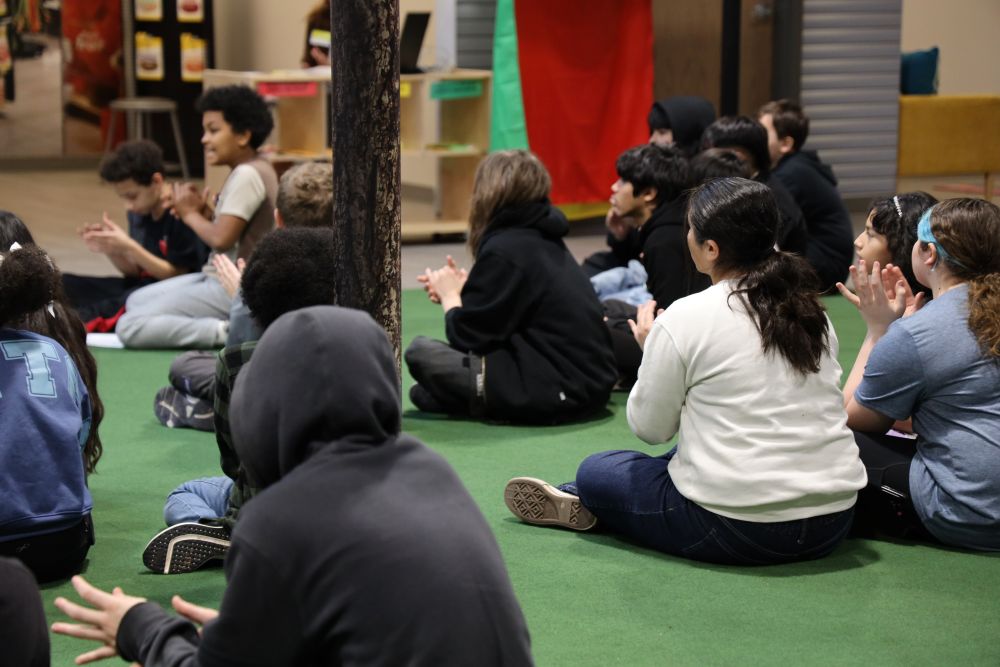

OKLAHOMA CITY (OBV) — At the corner of Love’s Lane and JA BizTown Boulevard, just outside a Love’s-branded storefront, a group of sixth graders sits cross-legged on a green carpet beneath a ceiling dotted with clouds and paper leaves.
“Good morning,” one student says, standing tall. “My name is Serenity. I am the CEO at the Bank of Oklahoma.”
For today, she is.
Scenes like this play out nearly every school day inside Junior Achievement of Oklahoma’s new facility, which opened in October 2024 and has quickly become a hub for hands-on workforce education. The setting looks playful, but the purpose is serious: preparing students for the realities of work, money, and decision-making long before their first job application.
Last year alone, Junior Achievement served roughly 66,000 students across Oklahoma—about 10 percent of the state’s K-12 population. The organization focuses on three core areas: financial literacy, work readiness, and entrepreneurship. Together, they form the foundation of what business leaders increasingly describe as workforce readiness.
“This isn’t just a field trip,” said Erica Irvine, chief operating officer of JA Oklahoma, a longtime JA leader who has been with the organization for more than 25 years. “Students arrive here having already completed a curriculum. They apply for jobs, interview, learn how businesses operate, and manage their own budgets before they ever walk through the door.”
JA BizTown, the program Serenity is participating in, blends multiple learning objectives into a single experience. Students rotate through real-world roles inside a simulated town, working for one of 13 businesses—some sponsored by Oklahoma employers—and learning firsthand how earning, spending, and saving connect.
For Oklahoma employers, the relevance is immediate. JA’s programming reflects skills companies say are increasingly hard to find: communication, collaboration, problem-solving, and basic financial understanding.
Ed Pope, JA Oklahoma’s director of development and a Junior Achievement alumnus himself, describes the organization as a bridge between classrooms and careers.
“What JA does really well is connect students with people,” Pope said. “They get to see adults who look like them doing jobs they may never have imagined were possible. That exposure changes how students think about their future.”
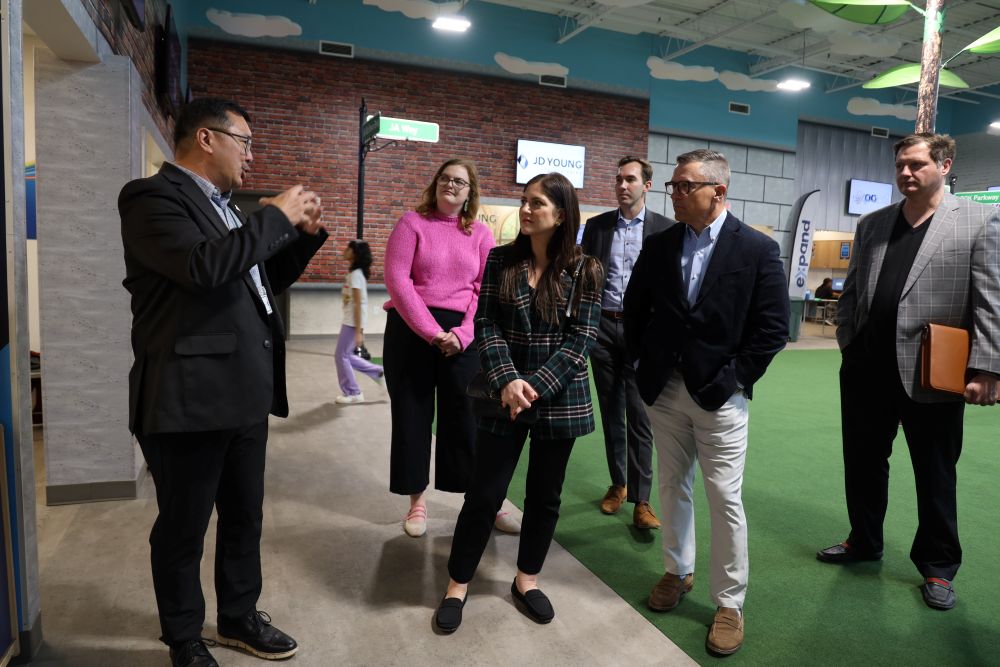
Ed Pope describes Junior Achievement programming to a contingent from the State Chamber of Oklahoma.
The data backs that up. A 2025 national survey of Gen Z and Millennial JA alumni found that 91 percent said Junior Achievement motivated them to become lifelong learners, while 90 percent reported improved critical-thinking skills. More than four in five alumni said their JA experience helped them find more opportunities in education and work, and 82 percent said it influenced their decision to pursue a high-demand degree.
Those outcomes matter in a state where workforce alignment is becoming a defining economic issue. As Oklahoma pushes to grow advanced manufacturing, aerospace, energy, and technology sectors, employers need workers who are prepared not just academically, but practically.
Junior Achievement is expanding to meet that need at multiple levels. For middle school students, JA Inspire introduces career exploration before high school course decisions are locked in. For high schoolers, JA Finance Park helps schools meet Oklahoma’s financial literacy graduation requirement—an unfunded mandate many districts rely on JA to fulfill.
“We’re helping schools deliver what the workforce is asking for,” Irvine said. “And we’re doing it at no cost to most schools.”
JA’s reach is growing, but so is the gap it aims to fill—particularly in rural Oklahoma, where access to career exposure and financial education can be limited. That’s where partnerships with the business community become essential.
“If we want businesses to grow, we need students who understand how businesses work,” said Pope.
Back inside BizTown, Serenity finishes her remarks and takes her seat. Around her, classmates prepare to clock in, manage payroll, sell goods, and balance ledgers. It’s a small town, built for a day—but the skills they practice are meant to last much longer.
For Oklahoma’s workforce future, that early start may make all the difference.