






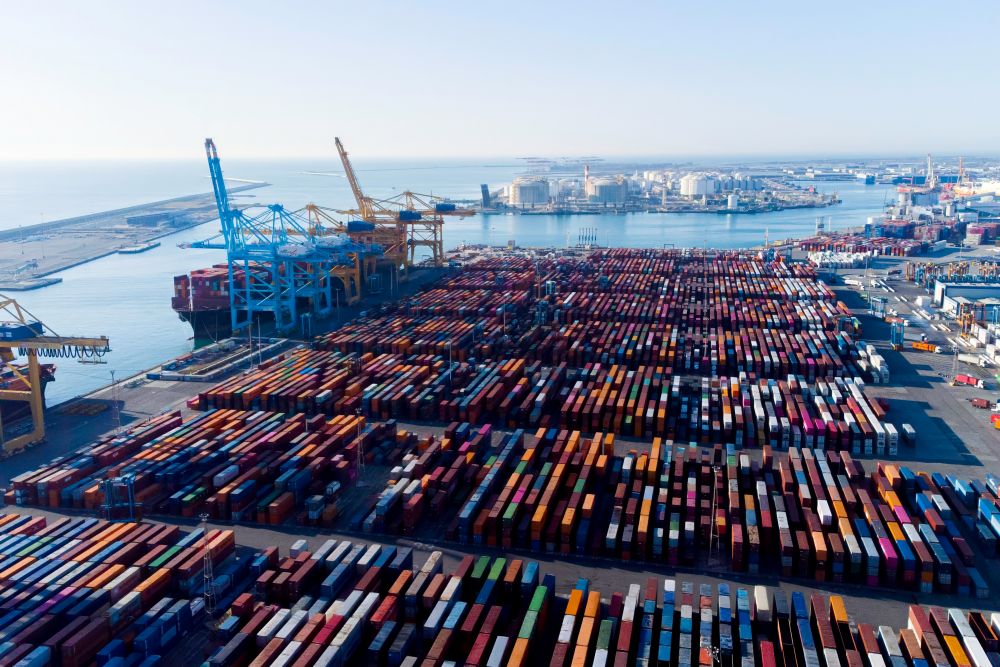

OKLAHOMA CITY (OBV) — Brookings’ flagship Brookings Papers on Economic Activity released a conference draft finding that President Trump’s 2025 tariff increases lifted the average U.S. tariff from 2.4% to 9.6%—the highest in at least 80 years—yet produced only a small aggregate impact on GDP in the short run (between +0.10% and −0.13%, depending on modeling assumptions).
The authors, UCLA’s Pablo Fajgelbaum and Yale’s Amit Khandelwal, report $264 billion in tariff revenue for 2025—more than triple 2024—while estimating about 90% of the tariff burden was passed through to U.S. importers. They note limited foreign retaliation beyond China and point out that 57% of imports still entered duty‑free—including most shipments from Canada and Mexico under USMCA.
The paper concludes the tariffs met two stated objectives—raising federal revenue and speeding trade decoupling from China—but finds little evidence so far on other goals such as lowering foreign prices, shrinking the overall trade deficit, or boosting manufacturing jobs. U.S.–China trade contraction accelerated in 2025, while the overall goods trade deficit rose modestly and manufacturing employment edged down.
Policy uncertainty remains elevated. The Supreme Court in February ruled the president exceeded his authority on a large share of tariffs, and the next day the administration announced a new global tariff under a different statute—developments that could alter long‑run outcomes. Even so, the authors expect tariffs to remain an active U.S. policy tool in 2026 and beyond.