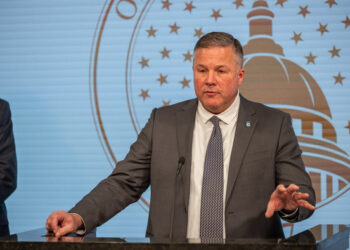




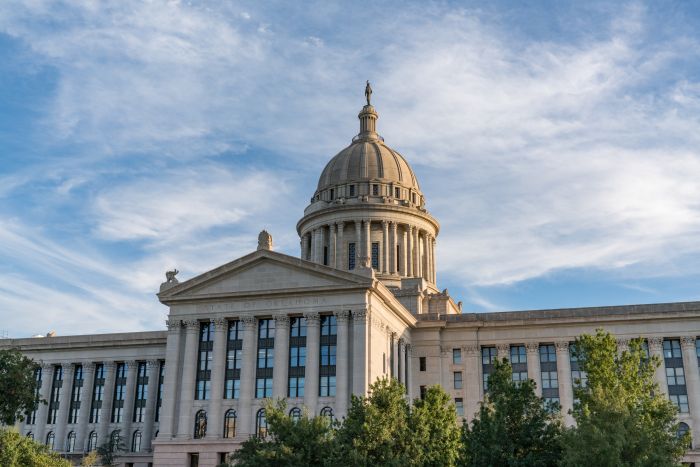

OKLAHOMA CITY (OBV) — At the dais, Gov. Kevin Stitt opened a Capitol budget announcement with a joke: “Well, I wanted to first make an announcement that, we have a budget deal. And it’s April Fool’s.”
Stitt, flanked by Senate President Pro Tempore Lonnie Paxton and House Speaker Kyle Hilbert, briefly departed the dais after the quip, then returned and confirmed, “we do, we do have a budget deal.”
Stitt said the agreement reflects “fiscal restraint,” reforms to welfare programs and continued investment in education, while he framed the plan as his final budget as governor. He cited growth in state savings and tax cuts during his tenure and highlighted a proposed “taxpayer endowment trust fund” that would place $200 million from existing savings into a long-term investment vehicle intended to grow over time.
Hilbert said the budget was being released earlier than Oklahomans typically see, describing the announcement as among the earliest he could recall and emphasizing the goal of transparency by posting the proposal publicly. He also pointed to education funding and a proposed increase to starting teacher pay, describing a $2,000 increase to the starting salary as part of the package.
Paxton and Hilbert both used the announcement to preview a coming ballot question on Medicaid expansion. Paxton said the proposal would move Medicaid expansion language from the Constitution into state statute, arguing it would give lawmakers flexibility to make changes over time. Hilbert echoed that argument, saying lawmakers need more tools to manage long-term cost growth.
Democratic leaders have criticized the budget process and urged transparency. In a March 31 release, Senate Democratic Leader Julia Kirt said Oklahomans are “being left in the dark” without public meetings to discuss the fiscal year 2027 budget and warned it could soon be “too late to voice their concerns.” Senate Democratic Caucus Chair Michael Brooks pointed to childcare closures and a lack of recent retiree COLAs as examples of pressures he said the budget should address. House Democratic Leader Cyndi Munson cited rising household costs and warned federal cuts could put the state in a “dire situation,” while Rep. Melissa Provenzano questioned how long-term education initiatives would be funded, arguing the state needs a multi-year investment plan.
Budget writers said the plan totals $12.786 billion in spending, which they described as a 1.27% increase from the prior year. Legislative leaders said the agreement will be carried through the normal appropriations process in the weeks ahead.