Juice Worth the Squeeze: Oklahoma Leaders Say Reading Scores, Not Rhetoric, Will Decide Competitiveness
Leaders called early literacy the foundation of workforce readiness, urged modernized tech transfer and R&D tools, and pressed for accountability in tax incentives.
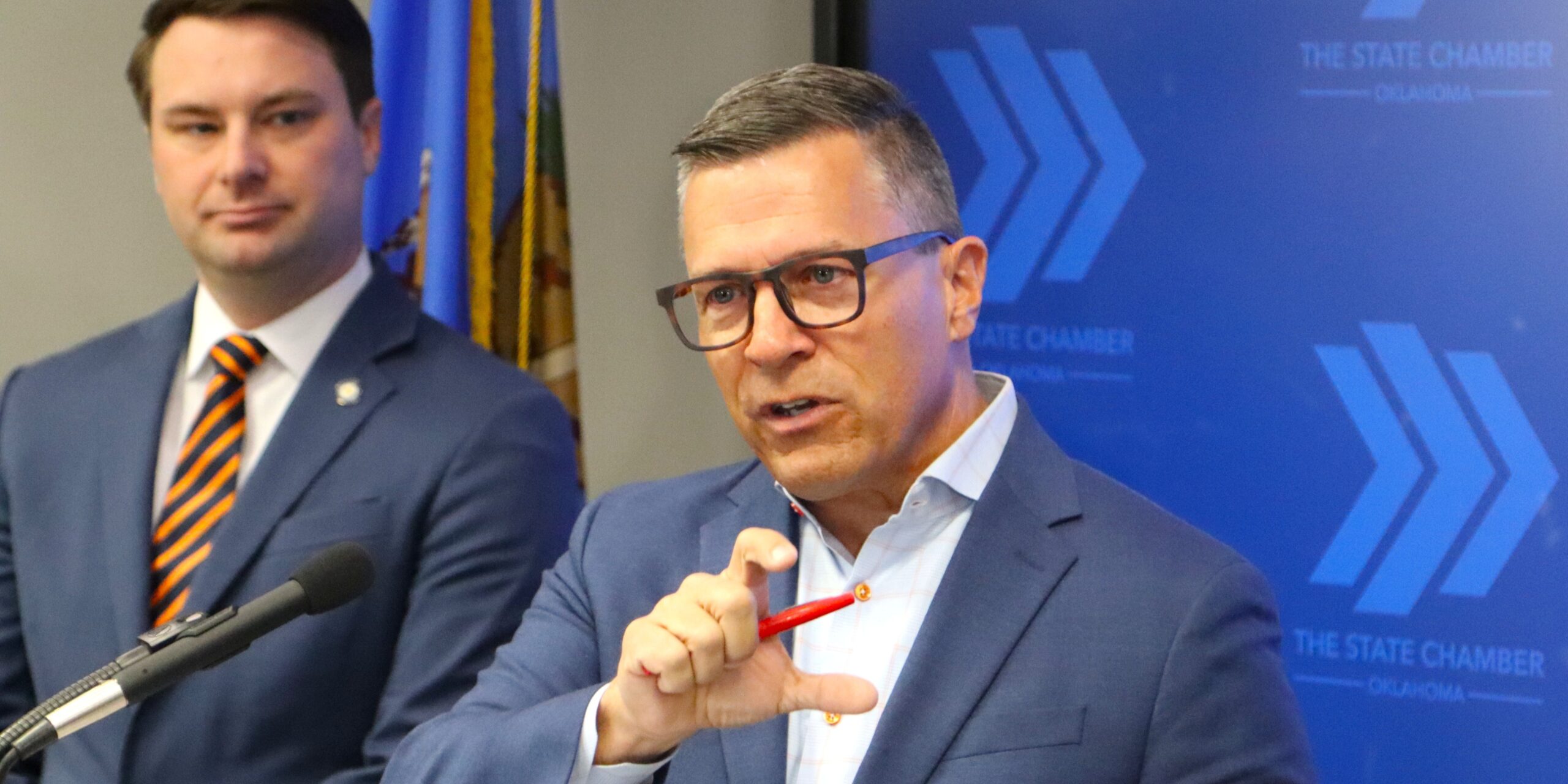
OKLAHOMA CITY (OBV) — The State Chamber of Oklahoma on Wednesday rolled out its 2026 legislative agenda with a clear message: Oklahoma’s economic fundamentals are strong, but the state must move faster on literacy outcomes and innovation capacity to stay competitive.
Chad Warmington, president and CEO of The State Chamber, said the agenda is guided by Oklahoma Competes, a framework launched in fall 2025 after the Chamber commissioned national analysis to benchmark the state and identify where policy can drive the next phase of growth.
“We hired some national firms to come in and help look at the data, help us understand where Oklahoma is and then how to move it to where we want it to be,” Warmington said.
Warmington said the analysis identified four focus areas: economic climate, infrastructure, education and workforce development, and innovation and entrepreneurship. He credited recent legislative work for progress in the first two.
“If you had a dashboard of green, yellow or red, economic climate [and] infrastructure would be blinking green,” Warmington said. “We are very competitive in those areas.”
The “work to do,” he said, is in the remaining two categories and that is where the Chamber and legislative leaders are aiming their 2026 agenda.
Literacy as the “foundation” for workforce and competitiveness
Warmington opened the press conference by framing early reading as the starting point for long-term workforce development.
“Third grade is the foundation on which everything is built for your educational and workforce journey,” he said.
House Speaker Kyle Hilbert said the state should treat literacy as a measurable, high-impact lever for improving education outcomes and breaking cycles tied to generational poverty and incarceration.
“For far too long as Oklahomans, we’ve accepted not mediocrity, not average, but blatant failure when it comes to education outcomes,” Hilbert said.

For far too long as Oklahomans, we’ve accepted not mediocrity, not average, but blatant failure when it comes to education outcomes.
– Speaker Kyle Hilbert
Hilbert argued that the most effective reforms won’t rely on intuition.
“The good news about this situation is we don’t have to trust our gut,” he said. “We can trust the data. We can trust the science. We can trust the results.”
Hilbert pointed to Oklahoma’s current performance as unacceptable — and said the state should adopt stronger expectations for what students must demonstrate before moving forward.
“Right now in Oklahoma, 30% of our fourth graders can’t read at a second-grade level,” he said. “Fourth graders should not be reading at a first-grade level.”
Sen. Adam Pugh, chair of the Senate Education Committee, said successful literacy policy has to include what happens at home, what happens in teacher training, and what happens in the classroom when students begin to fall behind.
“It starts by getting appropriate material and books that kids are interested in into parents’ hands as early as possible,” Pugh said.
Pugh also emphasized workforce as the throughline.
“This becomes an issue for our economic future, for our prosperity,” he said, adding that the state’s approach should focus on earlier identification and targeted intervention.
“There’s 947 elementary school sites around the state of Oklahoma, and our goal is to have a reading specialist in every single one of those sites,” Pugh said.
There’s 947 elementary school sites around the state of Oklahoma, and our goal is to have a reading specialist in every single one of those sites.
– Sen. Adam Pugh, chair of the Senate Education Committee
Foundation is in place, scale is the challenge
Warmington and legislators said Oklahoma is not starting from scratch, pointing to existing literacy initiatives, teacher recruitment efforts, and an emerging coaching model built around data.
“We’re not starting from scratch,” Warmington said. “We have some great things in place.”
During the Q&A, leaders repeatedly returned to implementation: policy only works if schools have the staff, tools, and training to execute it.
“What we do at the state Capitol… we put words on a piece of paper,” Hilbert said. “But if nobody actually goes and executes those words, that’s all they are: words.”
Warmington described visiting a school where literacy teams used real-time performance data to drive instruction.
“I saw a literacy coach and three literacy teachers in a literacy war room with the data that they needed in real time,” Warmington said. “I want every classroom that wants to have that type of system to be empowered.”
Warmington said the goal is to pair record education investment with reforms designed to help teachers succeed.
“The record investment we’ve made in education needs to be coupled with good policy reform to empower teachers to do what only a good teacher can do,” he said.
Innovation and entrepreneurship: Modernizing Oklahoma’s lab-to-market pipeline
The agenda’s second major pillar is improving Oklahoma’s ability to translate research into commercial growth.
Sen. Aaron Reinhardt said Oklahoma’s current technology transfer statute is outdated, limiting competitiveness and slowing down the commercialization pipeline.
“We have a very outdated technology transfer guidance statute brought about in 1989,” Reinhardt said. “Modernizing that guidance will provide clarity and confidence to researchers, to investors, and to our universities.”
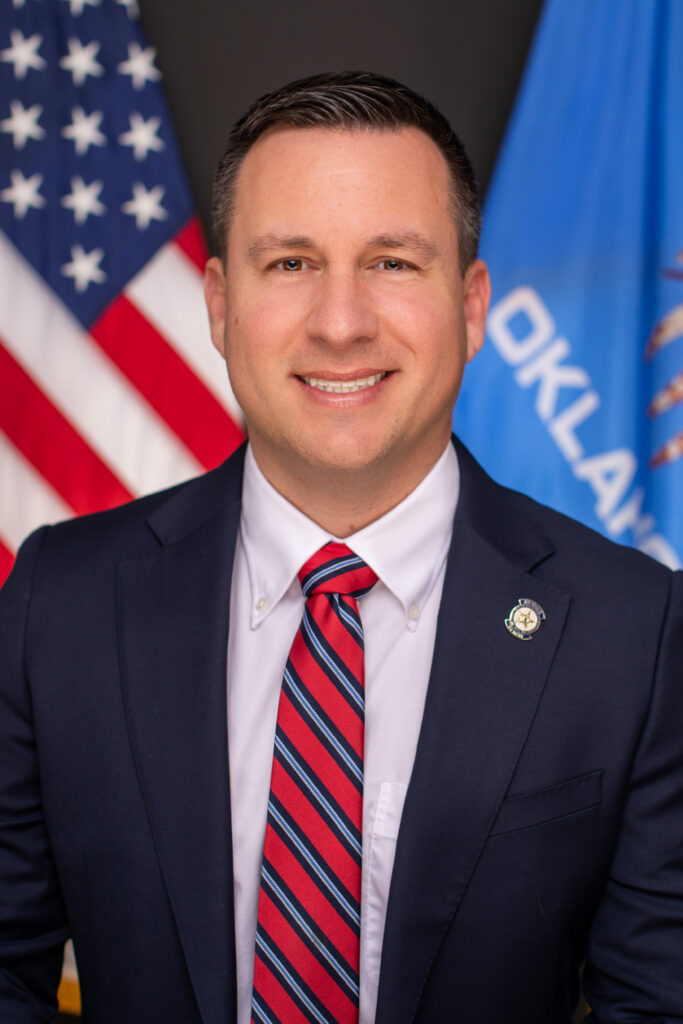
We have a very outdated technology transfer guidance statute brought about in 1989. Modernizing that guidance will provide clarity and confidence to researchers, to investors, and to our universities.
– Sen. Aaron Reinhardt
Speaker Pro Tempore Anthony Moore framed the initiative in practical terms: keep innovation, companies, and jobs in Oklahoma.
“We’ve got to turn these great research universities into companies and into jobs in Oklahoma,” Moore said.
Moore said the competition Oklahoma faces is increasingly regional and metro-driven.
“It’s not Oklahoma versus Texas,” he said. “It’s Oklahoma versus Dallas. It’s Oklahoma versus Kansas City.”
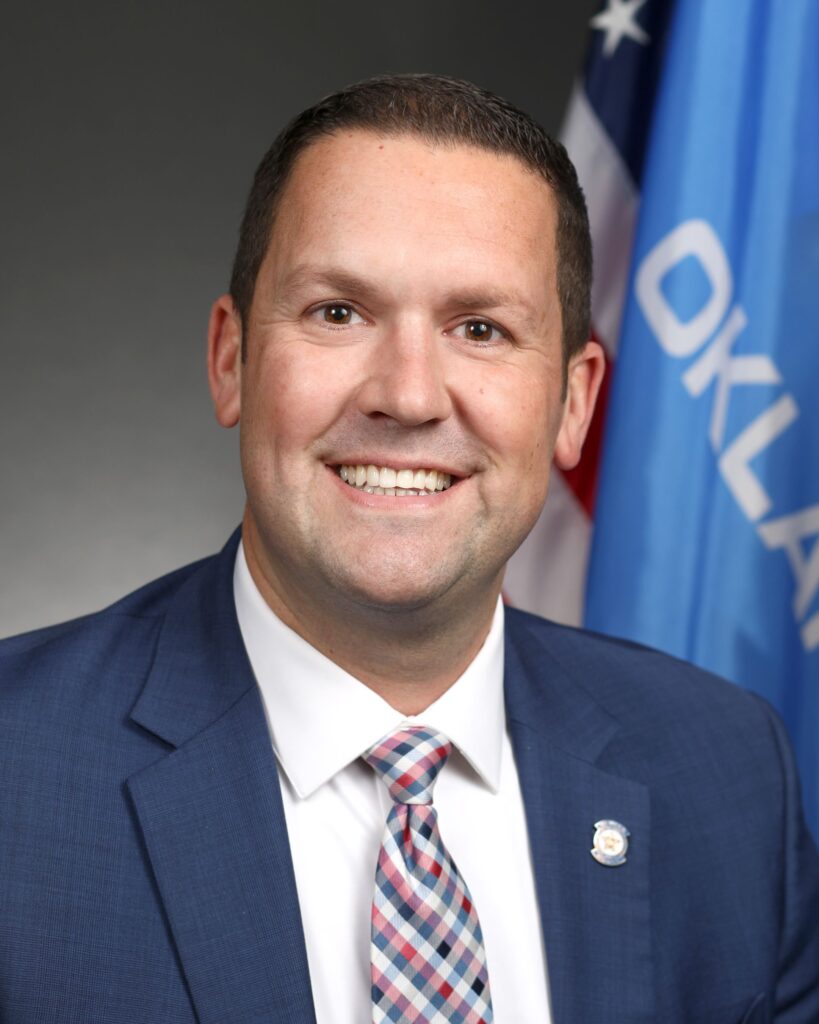
We’ve got to turn these great research universities into companies and into jobs in Oklahoma.
– Speaker Pro Tempore Anthony Moore
R&D and advanced industries: Rebuilding tools to compete
Sen. Kristen Thompson highlighted advanced industries and research capacity as key to wage growth and economic resilience — and warned that Oklahoma has fallen behind.
“We were the only state in the nation to lose advanced industry jobs over the last five years,” Thompson said. “The only state.”
Thompson pointed to a recently enacted research and development rebate program and said the state must keep building its “tools in the toolbox” to compete for modern, high-value industries.
“This is a national security issue,” she said, describing global competition in R&D and the need to expand Oklahoma’s capacity across public and private sectors.
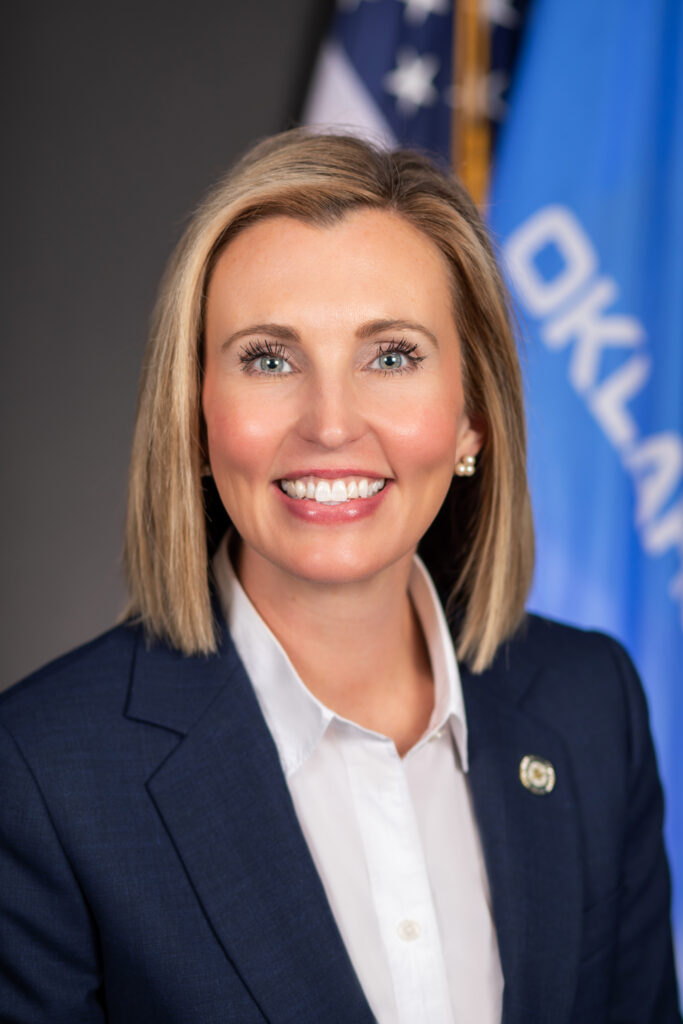
We were the only state in the nation to lose advanced industry jobs over the last five years. The only state.
– Sen. Kristen Thompson
Tax incentives: “Juice worth the squeeze” and better alignment with strategy
The agenda also includes a push to strengthen how Oklahoma evaluates tax incentives.
Sen. Chuck Hall, chair of Senate Appropriations, described incentives as taxpayer-backed investments that should be measured against clear economic goals — not just evaluated program-by-program in isolation.
“Oklahoma has an enormous amount of incentives and incentive packages,” Hall said. “I think it’s vital that we figure out whether or not the juice is worth the squeeze.”
Hall said his proposal would broaden evaluation criteria so incentives can be assessed against statewide objectives and compared to competitor states.
“Without these reforms, Oklahoma risks spending tax dollars on initiatives that do not increase competitiveness, wages or long-term economic viability,” Hall said.
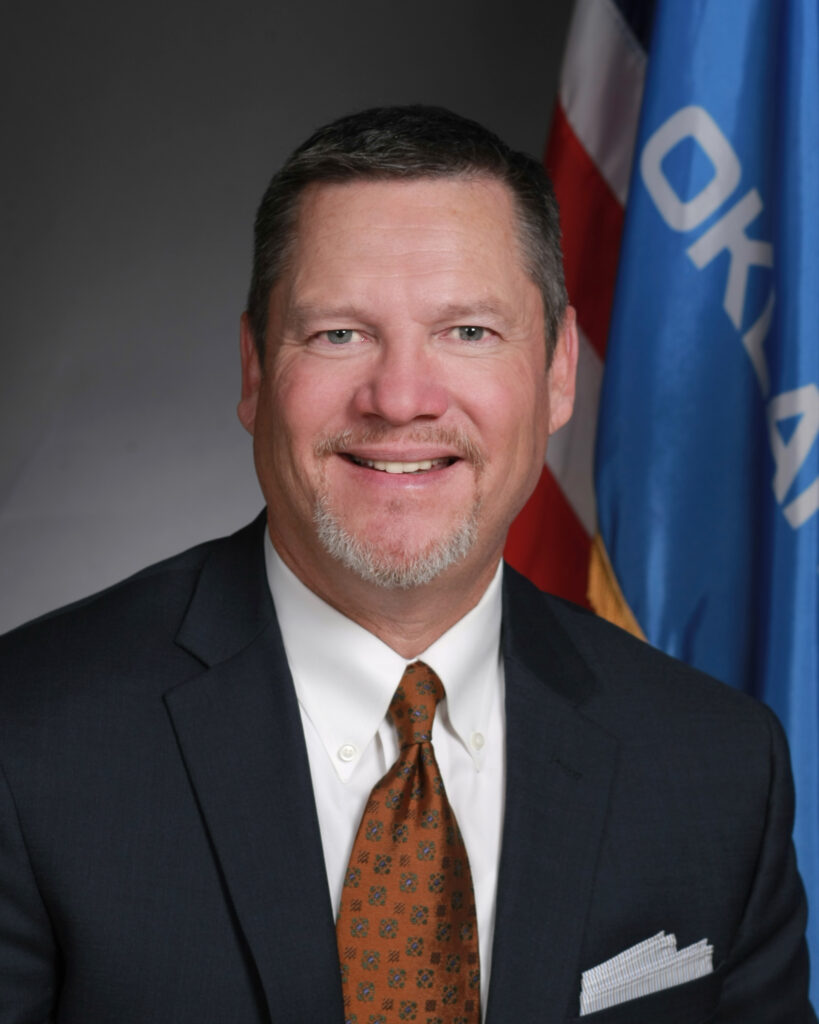
Without these reforms, Oklahoma risks spending tax dollars on initiatives that do not increase competitiveness, wages or long-term economic viability.
– Sen. Chuck Hall, chair of Senate Appropriations
Warmington also emphasized that Oklahoma has become more competitive in overall tax structure, but said policy debates should remain holistic rather than centered on a single category.
“When businesses look at a tax code, they don’t look at just one thing,” Warmington said. “They look at the overall tax code.”
What’s next
Warmington said the Chamber will work with legislative leadership throughout the 2026 session to advance the agenda’s priorities — especially literacy — and stressed that the effort will require sustained focus.
“This isn’t a one-year, one-fix shot,” he said. “This is going to be a journey to improve these outcomes, and The State Chamber of Oklahoma isn’t going to go away on these issues. We are going to be great partners. We’re going to work with anyone who’s willing to work with us to improve literacy outcomes.”

This isn’t a one-year, one-fix shot. This is going to be a journey to improve these outcomes, and The State Chamber of Oklahoma isn’t going to go away on these issues. We are going to be great partners. We’re going to work with anyone who’s willing to work with us to improve literacy outcomes.
– Chad Warmington, President and CEO of the State Chamber of Oklahoma