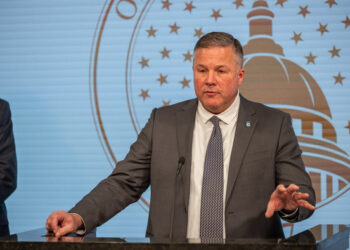








OKLAHOMA CITY (OBV) — Oklahoma’s economy is expected to keep growing in 2026, but at a slower, more cautious pace, according to economist Dr. Steven Agee, who says energy-sector softness and persistent inflation pressures are likely to shape the year ahead.
Agee said Oklahoma’s broader economic mix gives the state more insulation than in past cycles. While energy once dominated the state economy, it now accounts for roughly 12 percent, alongside growing contributions from health care, aerospace, technology, agriculture, and manufacturing. That diversification, he said, should help prevent a sharp downturn even if oil and gas activity remains muted.
“I think we will have growth,” Agee said. “But I think it’ll be slow growth.”
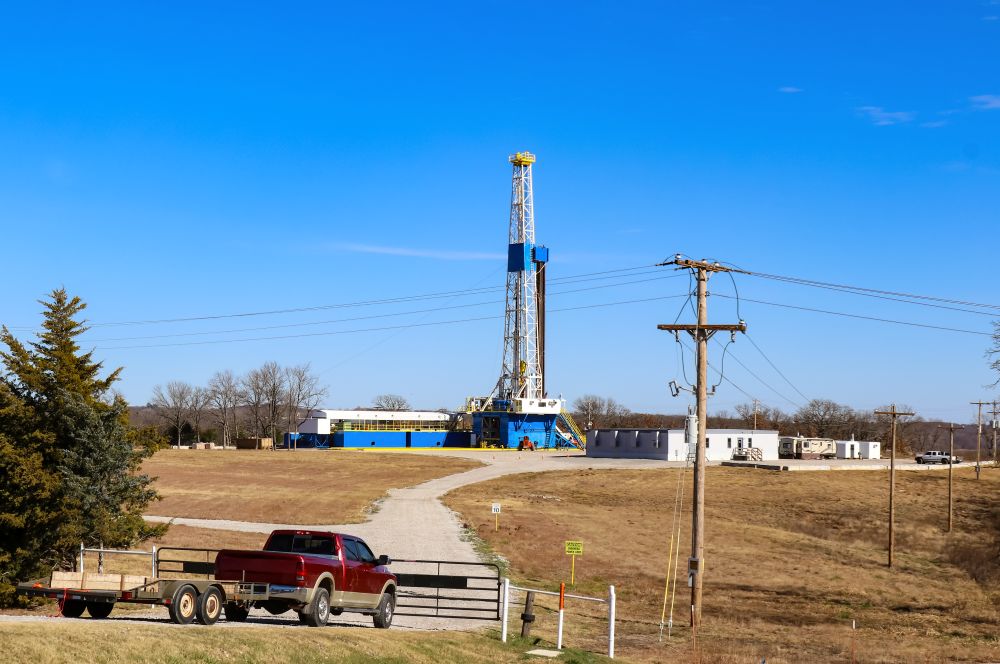
The biggest drag in the near term appears to be energy. Agee pointed to recent surveys from the Federal Reserve Bank of Kansas City and conversations with industry executives that suggest oil and gas producers remain hesitant to expand drilling. Firms in the Tenth District reported in late 2025 that they need oil prices near $61 per barrel to profitably drill new wells — a level that has left many companies waiting on the sidelines.
“There’s going to be weakness in the oil and gas sector going forward into this year,” Agee said.
That caution has broader implications for Oklahoma, even if it no longer defines the state economy. Agee noted that downturns in energy tend to show up first in oilfield services, making employment in that segment an early warning signal.
“Usually what happens when there’s a downturn, the first thing that gets hit are the service companies,” he said.
Beyond energy, inflation and interest rates remain key variables for business planning. National data released in January showed the Consumer Price Index rose 2.7 percent over the past year, with prices continuing to climb in categories like food, housing, and health care. Agee said those trends complicate decisions around hiring and capital investment.
“We’re still seeing persistent problems with inflation,” he said.
With the labor market cooling but not collapsing — December’s jobs report showed 50,000 jobs added nationally and unemployment at 4.4 percent — Agee said the Federal Reserve is likely to stay cautious. He does not expect rate cuts in the near term absent outside pressure.
“My prediction is we won’t see any movement in interest rates,” Agee said.
Looking beyond 2026, Agee sees productivity gains — particularly from automation and artificial intelligence — as a potential tailwind for Oklahoma industries, including manufacturing, logistics, and transportation. But he cautioned that technology gains alone won’t solve workforce challenges.
“Education, number one, education,” Agee said, arguing that improved outcomes in literacy, STEM, and workforce preparation will ultimately determine whether Oklahoma can capitalize on future growth.
For business leaders watching the year ahead, Agee offered a simple rule of thumb: keep an eye on the oilfield services sector. If activity there begins to slide, it could signal broader weakness ahead — even in a more diversified Oklahoma economy.