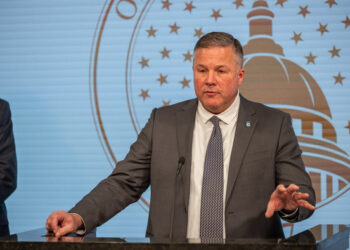






OKLAHOMA CITY (OBV) — Shifts in U.S. tariff policy could shape Oklahoma’s outlook in uneven ways, with near-term uncertainty weighing on growth even as longer-run opportunities emerge for goods production and logistics, according to Dr. Russell Evans, dean of the College of Business at the University of Central Oklahoma.
Evans said the new tariff regime is likely to reduce the U.S. trade deficit, which would boost GDP accounting in the short run. The Atlanta Fed’s GDPNow tracker, for example, showed a 5.1% estimate for 2025 Q4 as of Jan. 9.
Tariffs may also generate significant federal revenue early on, Evans said, though he noted those gains would fade if imports are displaced by domestic production.
“The uncertainty and unevenness of the policy is probably a net drag on growth,” Evans said.
Evans said Oklahoma inflation has been running below national measures and under 2%, and that tariffs have not had a broad impact on prices in the state so far, though some sectors could see sharper effects. He added that goods-producing employment has yet to fully recover from the pandemic, and that manufacturing employment has only recently returned to 2019 levels and could shed jobs through mid-2025, leaving the state “limping into the new year” in early 2026.
Looking ahead, Evans said Oklahoma could benefit if companies shift away from globally distributed supply chains toward fewer suppliers in allied markets, pointing to the state’s history in goods production and its central location for freight movement.
“Positioning for the longer run success will take deliberate action and coordination,” Evans said.

“Positioning for the longer run success will take deliberate action and coordination. We will need infrastructure investment, trade partners both import and export, deliberate programs to connect Oklahoma producers to new markets, and more to take advantage of the opportunity.”
– Russell Evans, Ph.D., Dean of the UCO College of Business