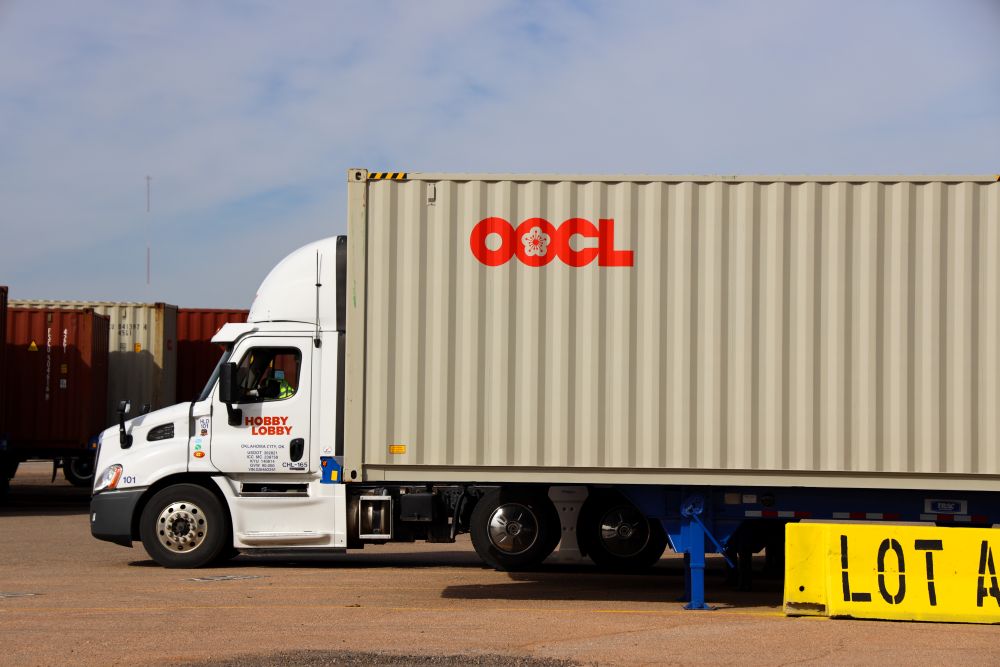





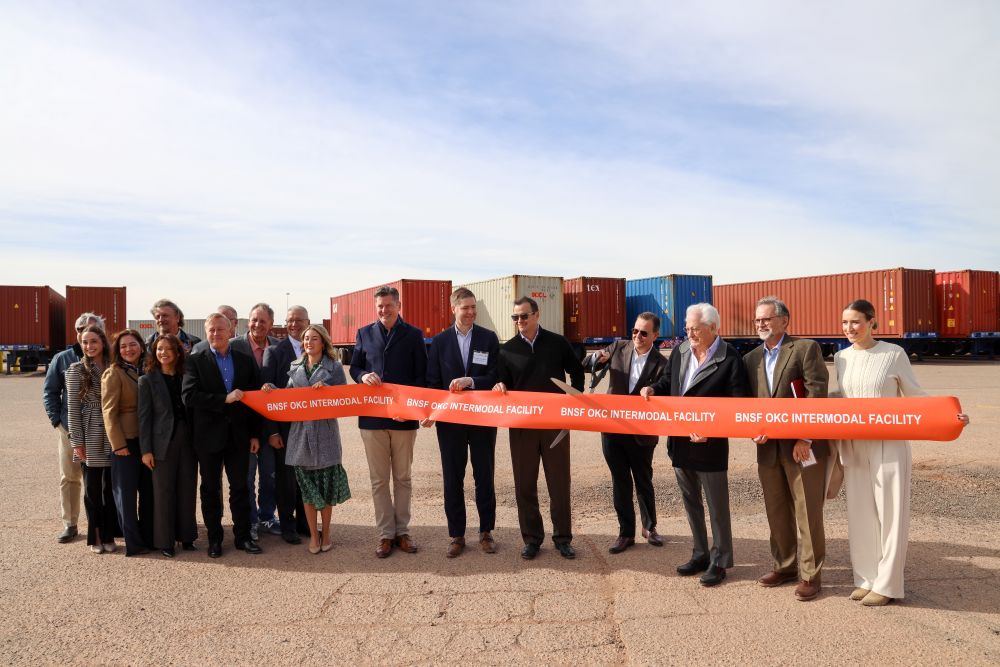

OKLAHOMA CITY (OBV) — Hobby Lobby and BNSF Railway marked the opening of a new intermodal rail facility in southeast Oklahoma City on Thursday, a project leaders said will shift freight movement away from long-haul trucking and strengthen the region’s logistics capacity.
City officials framed the facility as a practical supply-chain upgrade: containers that previously had to be unloaded in Dallas-Fort Worth and trucked north can now be lifted from trains in Oklahoma City, then moved a short distance by truck to their final destination.
Oklahoma City Mayor David Holt said the change will reduce heavy truck traffic on the I-35 corridor while improving freight efficiency for major importers.
“Instead of having to unload those cargo containers in Dallas, and come up I-35 on a truck, these products will now be able to come via train and get unloaded right here and just take a very short truck journey over to Hobby Lobby,” Holt said. “This would be a great asset to the economic infrastructure of our city.”
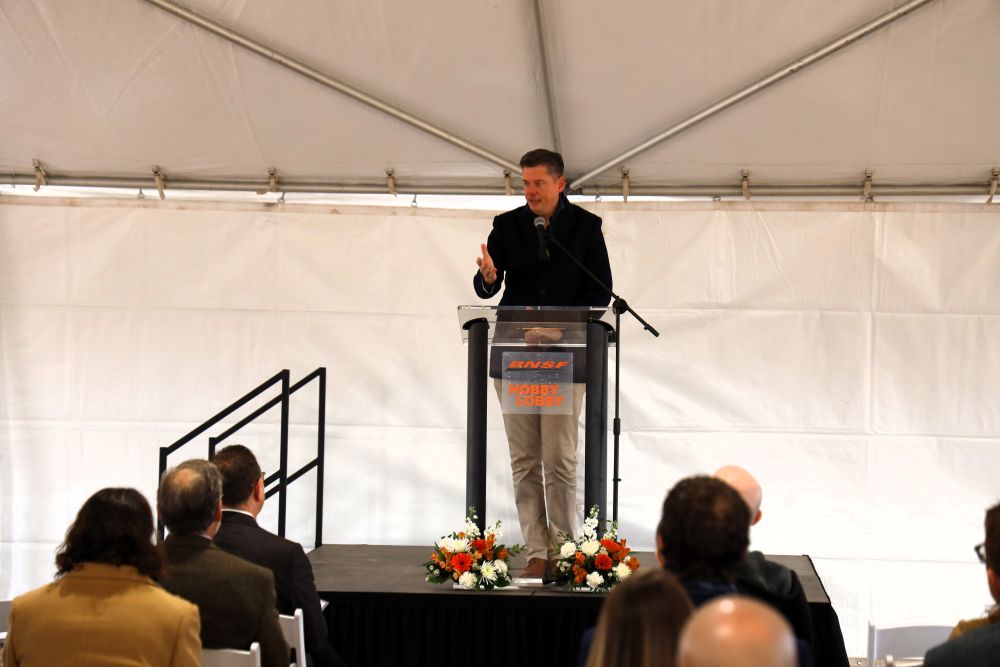
Instead of having to unload those cargo containers in Dallas, and come up I-35 on a truck, these products will now be able to come via train and get unloaded right here and just take a very short truck journey over to Hobby Lobby. This would be a great asset to the economic infrastructure of our city.
– Oklahoma City Mayor David Holt
The project connects directly to Hobby Lobby’s national distribution needs. The Oklahoma City-based, privately held retailer began in Oklahoma City in the early 1970s and has grown to more than 1,000 stores operating in 48 states, supported by an estimated 50,000 employees.
Company leaders said the new rail option supports faster, more predictable freight flows for goods moving into the Oklahoma City market.
ODOT Executive Director Tim Gatz emphasized the transportation impact of converting some freight trips from highway to rail, particularly along Oklahoma’s busiest north-south route.
“Everything that we can do in Oklahoma is such an all-of-the-above state. We’re going to use every tool in the toolbox to try to give our citizenry the best experience that we can on transportation,” Gatz said.
Everything that we can do in Oklahoma is such an all-of-the-above state. We’re going to use every tool in the toolbox to try to give our citizenry the best experience that we can on transportation.
– ODOT Executive Director Tim Gatz
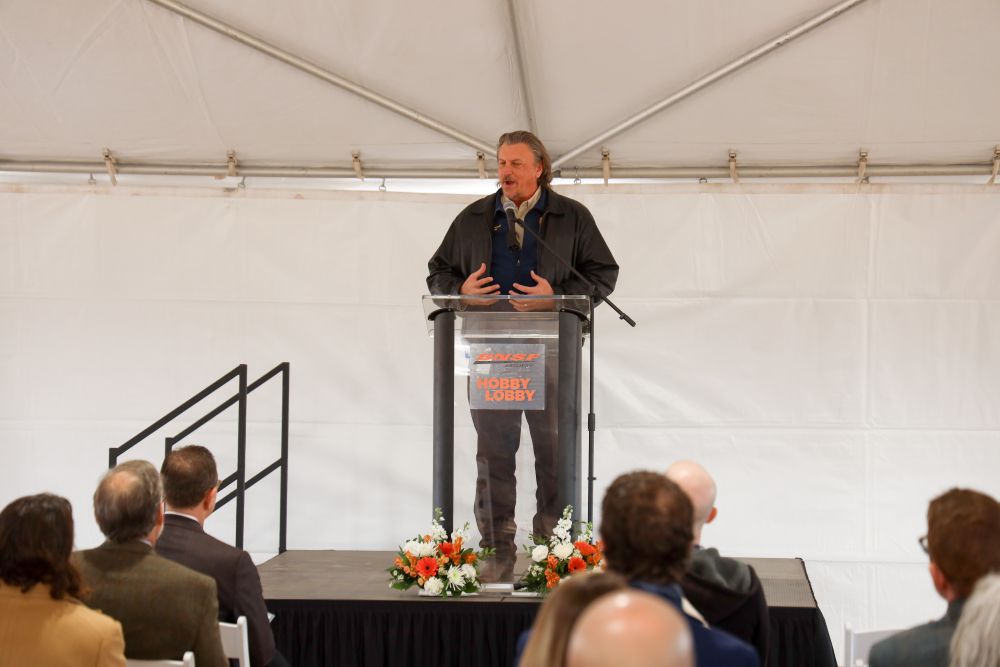
“This is another tool for the toolbox. It will make a difference on Interstate 35, and we need that.”
State freight planning documents have identified I-35 and I-40 as Oklahoma’s highest-truck-volume corridors, with multiple segments carrying more than 5,000 trucks per day.
Intermodal terminals function as transfer points, where shipping containers move between trains and trucks. BNSF describes itself as the nation’s largest intermodal railroad, operating a 32,500-mile network and handling more intermodal loads than competitors. In customer materials, the railroad also reports moving nearly five million intermodal shipments annually, underscoring the scale of containerized freight now tied into Oklahoma City through this new facility.
Speakers at the event described the site as already operational, with crews working to bring it online quickly after the concept was finalized. BNSF representatives credited partner coordination—including ocean-carrier logistics, equipment providers, and U.S. Customs and Border Protection—with accelerating the timeline and enabling container movements to begin shortly after construction and site readiness milestones were met.
While the facility was developed around Hobby Lobby’s freight volumes, officials also suggested it creates broader capacity for Oklahoma City-area importers and exporters over time.
International trade remains a smaller share of Oklahoma’s economy than many coastal states, but the state exported $7.7 billion in goods in 2024, according to the U.S. Trade Representative’s state trade summary, activity that depends heavily on reliable freight networks. Local leaders positioned the terminal as a piece of that infrastructure: a way to move more freight by rail, shorten drayage distances, and reduce congestion on major interstate routes.
By the numbers
- Hobby Lobby footprint: 1,000+ stores, operating in 48 states, with approximately 50,000 employees
- BNSF intermodal scale: 32,500 miles of network; BNSF calls itself the largest intermodal railroad
- Oklahoma freight corridors: State freight planning identifies I-35 and I-40 as top truck-volume routes, with key segments exceeding 5,000 trucks/day
- Oklahoma trade context: $7.7B in goods exports in 2024