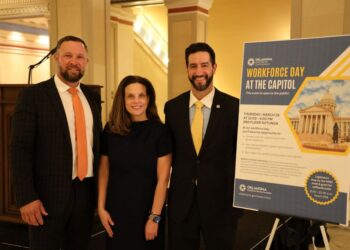







The State Chamber has policy committees for key areas of Oklahoma’s business climate, and the Workforce and Employment Committee focuses on ensuring employers have access to a strong, reliable, and well‑prepared talent pipeline. The committee reviews legislation affecting occupational licensing, employee benefits, workplace mandates, education pathways, training programs, and workforce system coordination. This spotlight highlights the chair who leads this work and helps guide member input on policies that strengthen workforce participation, improve talent development, and align education and training resources with employer needs.
OKLAHOMA CITY (OBV) — Workforce policy plays a central role in Oklahoma’s economic competitiveness, shaping how businesses recruit, train, and retain talent across industries. At The State Chamber, those issues are led by the Workforce and Employment Committee, which tracks legislation and regulations affecting employers while advancing strategies to strengthen the state’s labor pipeline.
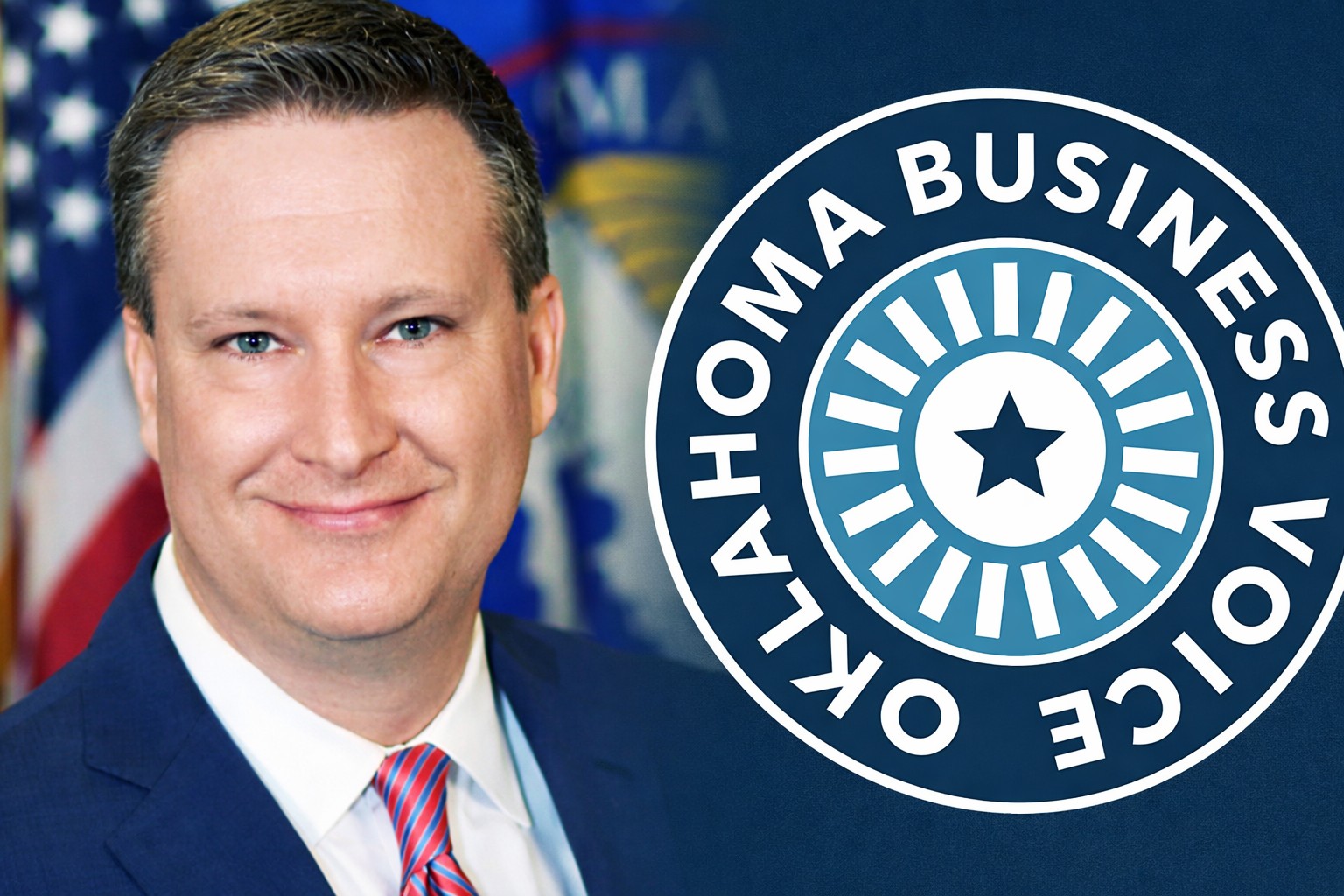
Oklahoma Business Voice sat down with this year’s committee chair, Todd Pauley, to discuss the committee’s priorities and what drives his advocacy for workforce development. Pauley, who also leads government and community relations for Boeing in Oklahoma, brings the perspective of a major employer with thousands of workers across the state. He emphasizes career readiness, STEM education, and alignment between education systems and employer demand as essential to Oklahoma’s long-term growth.
Below is the full transcript of the conversation.
Editor’s note: This transcript was edited for clarity and brevity.
Luke Reynolds: Todd, if you don’t mind, tell me a little bit about your work with Boeing and who you are.
Todd Pauley: I’m Todd Pauley with the Boeing Company. I provide government and community relations for Boeing here in Oklahoma. We have almost 4,500 teammates in the state now. About 3,500 are here in Oklahoma City, and another thousand are in Tulsa following the merger with Spirit AeroSystems. I also serve as the chair of this year’s Workforce and Employment Committee at the State Chamber.
Luke Reynolds: Tell me a little bit about your work with the committee and how it relates to your role at Boeing.
Todd Pauley: With close to 5,000 teammates in Oklahoma, workforce is extremely important to the continuity of our business and our ability to deliver systems and platforms to the warfighter and to our customers. It’s also critical to our ability to support platforms in a safe transportation environment and deliver safe, high-quality aircraft.
Knowledge and education are essential because the aerospace industry is unforgiving. It requires people to be trained properly and to have the necessary skill sets for us to be successful. That’s how we ensure transportation safety and provide the warfighter with what they need.
Luke Reynolds: Why is workforce and employment such a significant topic in Oklahoma right now, and why does it matter to the state’s economic environment?
Todd Pauley: Our teammates are our business. They’re our number one priority. They’re who we need and who we care about, and that’s how we get our mission done. It requires a trained, skilled workforce to accomplish our goals.
We want to be successful in Oklahoma. Our goal is to bring in the very best and brightest people into the workforce so we can meet the mission.
Luke Reynolds: Looking ahead, what are the top priorities for the Workforce and Employment Committee this year?
Todd Pauley: We’re always focused on being career ready—having the skills and education necessary to enter the workforce and be productive and successful.
At Boeing, aerospace and defense are our priorities. That sector is part of what we call the innovation economy. STEM—science, technology, engineering, and math—are critical skill sets not just for aerospace and defense, but across multiple industries in Oklahoma.
If we don’t have career-ready, STEM-capable students graduating from our schools, our economy won’t be successful. Businesses will look elsewhere for the talent they need.
Luke Reynolds: What personally draws you to this work around workforce, and what motivates you to stay involved?
Todd Pauley: I love aerospace and defense. It’s the number two industry in the state, and we want to see it continue to succeed. That means we have to look to the future.
If we want continued success, we have to focus on students in K–12. We need to get them excited about aerospace and defense and give them confidence that they can learn the skills necessary to succeed in this industry.
From there, it’s about continuing to build their skills—through K–12, CareerTech, higher education, or directly into the workforce—and encouraging lifelong learning so we stay innovative and competitive globally.
Luke Reynolds: One last question. If you could give one piece of advice to someone early in their career, what would it be?
Todd Pauley: Give it everything you’ve got from the start. Ask lots of questions. Talk to your peers and reach out to people who are doing what you think you want to do.
Learn about their work, because you may find you’re not interested in what you thought you were—or you may discover something you didn’t even know existed. Keep asking questions, keep learning, and stay engaged. Active participation really matters.