





The State Chamber has policy committees for key areas of Oklahoma’s business climate, and the Infrastructure Committee focuses on the systems that keep people and products moving efficiently throughout the state. The committee reviews legislation affecting transportation networks, broadband deployment, water and wastewater capacity, aviation, turnpikes, and advanced mobility technologies. This spotlight highlights the chair who leads this work and guides member input on policies that support long‑term infrastructure investment, reliability, and economic growth.
OKLAHOMA CITY (OBV) — Infrastructure may be easy to overlook when it’s working, but for Kermit Frank, it’s the foundation that makes economic growth possible.
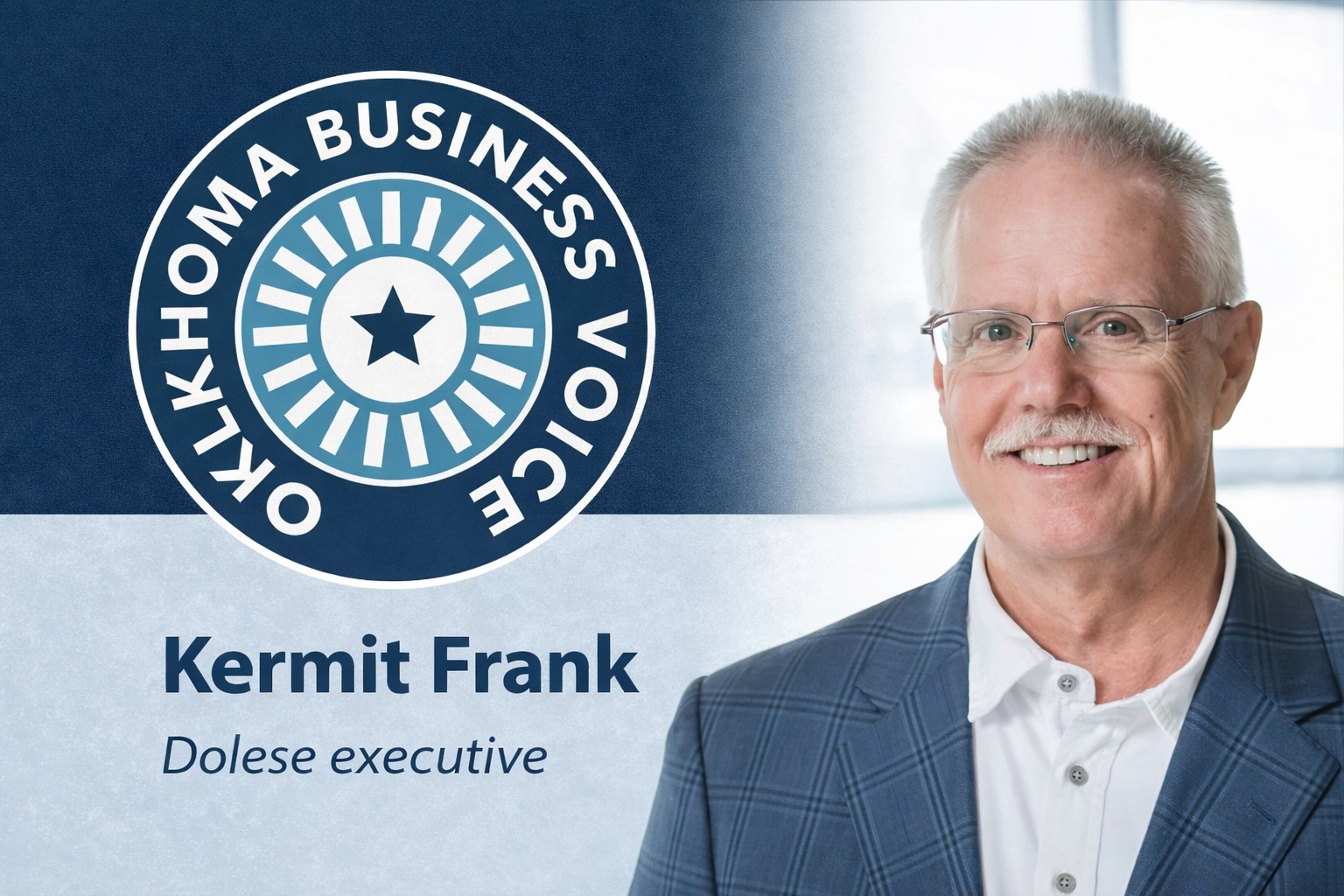
As vice president of community and government relations for Dolese Bros. Co. and chair of The State Chamber’s Infrastructure Committee, Frank brings decades of industry experience to policy conversations shaping how Oklahoma moves people, goods, and data across the state.
“I’m Kermit Frank. I’m vice president of community and government relations for Dolese Bros. Co… We’ve been operating in Oklahoma since before statehood.”
Dolese, founded in 1902, supplies the crushed stone, sand, and concrete that underpin roads, bridges, and development statewide. Frank has spent more than four decades with the company, starting in operations and working his way into leadership — a career path that mirrors his practical approach to infrastructure policy.
That experience shapes how he defines the work of the Infrastructure Committee.
“The concept of infrastructure has changed a lot… It used to mean roads and bridges. Now it includes broadband, water and wastewater systems, ports, waterways, and even the electrical grid.”
Frank says infrastructure decisions ripple across nearly every aspect of Oklahoma’s economy — from workforce readiness to business recruitment — which is why the committee brings together voices from construction, engineering, utilities, transportation, and broadband.
“This is where we create the talking points and strategies that guide advocacy during the legislative session.”
One of the committee’s top priorities remains protecting long-term transportation planning, including ODOT’s eight-year construction work plan — a system Frank describes as essential for accountability and predictability.
“It’s an accountability system that says, ‘If you give us this funding, we will build these projects.’ That transparency matters.”
Frank also points to funding mechanisms like the turnpike system as examples of how Oklahoma leverages infrastructure investment efficiently.
“More than half of the dollars generated by Oklahoma’s turnpikes come from out-of-state drivers.”
Beyond roads, Frank emphasizes broadband as essential economic infrastructure — particularly for rural communities and workforce development.
“Without high-speed internet everywhere, you can’t have economic development.”
Asked what advice he gives young professionals interested in public policy or infrastructure, Frank keeps it simple.
“If you have a job, do it to the best of your ability… Advancement comes from performance, not expectation.”
For Frank, that same principle applies to infrastructure itself: steady investment, disciplined planning, and long-term commitment — the kind of work that doesn’t always grab headlines, but quietly keeps Oklahoma moving forward.