







OKLAHOMA CITY (OBV) — “I’m excited about where workforce is today,” Trae Rahill says.
That said, Rahill, chief executive officer of the Oklahoma Employment Securities Commission, isn’t selling hype.
He’s describing a system that’s swapping the “unemployment office” label for something more useful to business. A no‑cost staffing partner with a bias for outcomes.
Rahill’s “secret sauce” is deceptively simple.
“My preferred style is to work through people. I love people, and I have a tremendous amount of energy that I gain from developing and assembling teams to get things done,” he says.
Inside OESC, Rahill deflects credit to staff.
“They’re the reason for most of our success because they’re the ones doing all the work,” he says.
Step outside the agency and he sees himself as one of many catalysts—finding who’s good, who’s ready, and getting them pointed at the same outcome.
The core shift is mindset.
“We have shifted our focus to be a free staffing agency to anyone who needs help,” Rahill says. “Employers are our most important customers.”
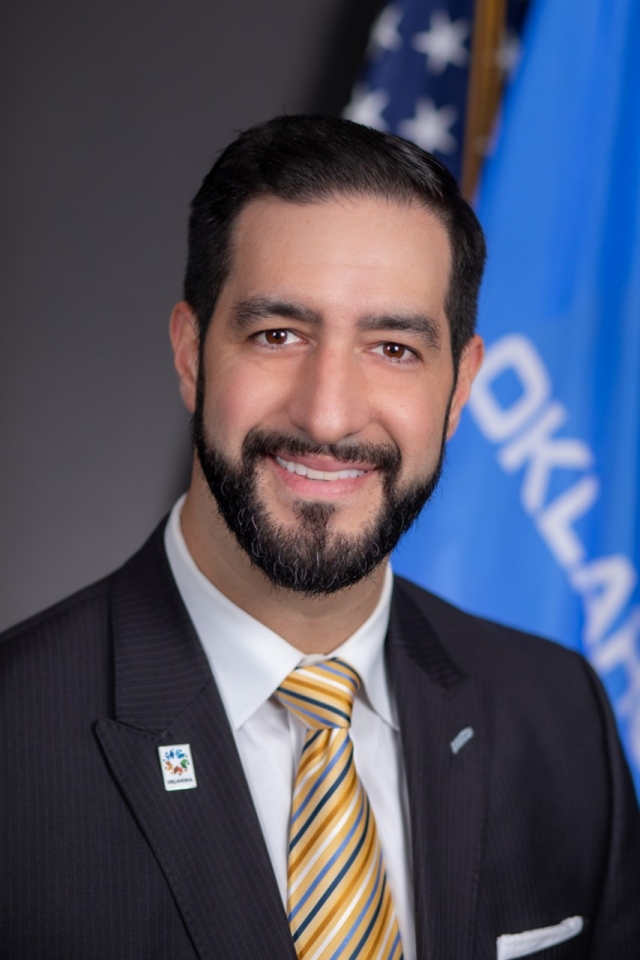
“We have shifted our focus to be a free staffing agency to anyone who needs help,” Rahill says. “Employers are our most important customers.”
That means inviting businesses to be “specific and selfish and choosy” about skills, then engineering services backward from the outcome—placement, retention, wage growth—rather than stopping at compliance boxes.
Rahill’s blunt about why the change was needed.
For too long, OESC looked like paper forms and slow processes, which fed the idea that the agency leaned toward claims rather than solutions.
The fix isn’t just speed.
It’s purpose.
“We don’t want a system that just does that thing we do right now faster,” he says. “We want a system that uses what we learn to reduce the need for those claims in the first place.”
On the inside, Rahill says that technology and performance management are doing heavy lifting.
He says OESC has been rolling out new tools and scorecards that reward what works and coach what doesn’t. The tech footprint is large—“We have 29 technology projects going on inside the agency right now,” he notes—and the goal is practical. Fewer hand‑offs, fewer errors, and less time to value for employers and job‑seekers.
The collaboration piece is where OESC’s modernization push turns from agency project to statewide operating system.
Last year, OESC convened a broad coalition—state agencies, tribes, nonprofits, and education partners—for a months‑long planning sprint that produced co‑located service pilots, a common intake, and shared definitions of outcomes. The idea: put front‑line teams “knee to knee” with people and employers in the same physical spaces, so problems get solved in hours and days, not months.
Rahill is clear‑eyed about the politics.
“I hate politics,” he says. “I combat them with information and education.”
His bet is that transparency, data and delivery beat narrative noise over time. He also believes great workforce work makes downstream systems lighter—when people land in the right job with the right support, some social‑service needs fade on their own.
Asked about the long game, Rahill talks stewardship, not tenure.
He plans to “stay the course” on the employer‑first posture while scaling co‑location and modernizing the agency’s core systems. He points to succession planning and says the team is being built to outlast any single leader.
What he wants most is simple.
Faster service, clearer pathways, and talent pipelines that work, especially for small and rural employers who can’t afford friction.
The reset isn’t finished. But it’s a different story than the one most people expect from a place once known as “the unemployment office.” Something that sounds more like a business proposition.
Bring OESC your talent problem and they’ll help you solve it.