





The State Chamber has policy committees for key areas of Oklahoma’s business climate, and the Economic Development Committee focuses on policies that attract investment, create jobs, and strengthen communities statewide. The committee reviews legislation and programs tied to business incentives, site readiness and permitting, tax and regulatory competitiveness, workforce and talent pipelines, entrepreneurship and capital formation, rural and urban development, and company recruitment and retention. This spotlight highlights the chair who leads this work and channels member input into policies that drive long‑term growth, competitiveness, and opportunity.
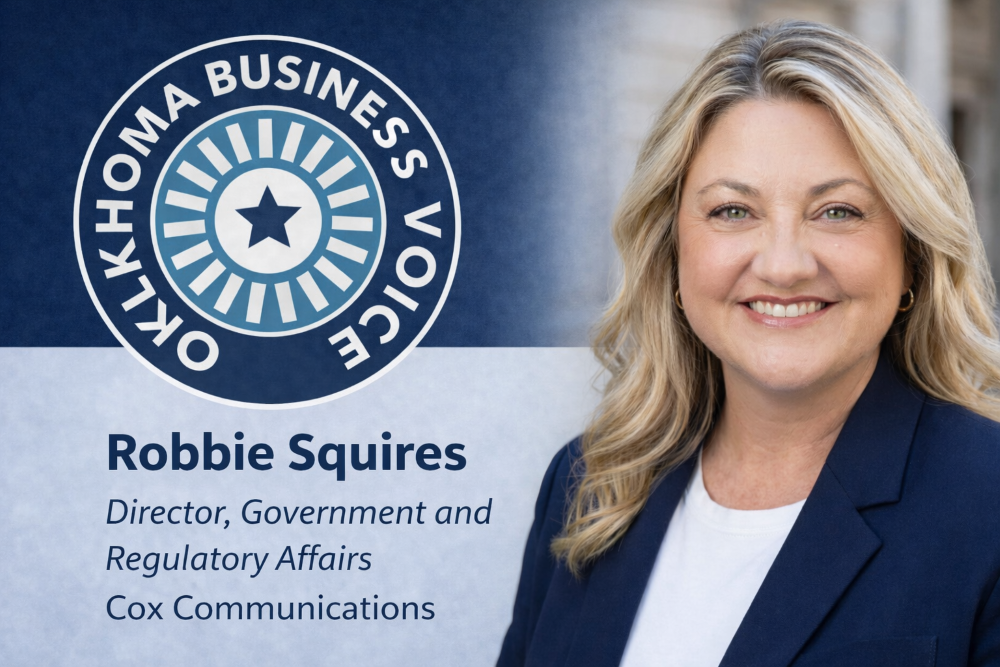
OKLAHOMA CITY (OBV) — For Robbie Squires, the case for economic development starts with aligning public policy to long‑horizon investments that make Oklahoma a place where companies grow and families stay. As a member‑leader active in The State Chamber’s economic development work, Squires says the committee’s role is to “put the right pieces of the puzzle [in place] to pave the way for business investment, both for existing businesses like ours and those looking to relocate.”
Working on government relations at Cox, Squires describes a day‑to‑day focus on ensuring lawmakers understand how connectivity decisions translate into opportunity across the state. “I work with lawmakers to make sure that they are making decisions that foster connectivity and therefore opportunity in our state.”
Why it matters
Squires says the committee’s value is in coordination — giving business a unified policy voice and a disciplined forum to pressure‑test ideas. “The State Chamber exists as the coordinated voice of business. With this particular committee, I think it’s essential for setting policies to ensure that businesses like mine and others can make those investments, creating opportunity for our state.”
The motivation is personal, Squires adds. “I’m invested — I’m raising children here. I’ve made a life here. And so for me, economic development is ensuring that we’re making the decisions today that are going to impact the future for them tomorrow.”
That includes stepping into issues that don’t always map neatly to a single sector. “If we’re not willing as business leaders to… engage in issues that aren’t directly impacting our industry… we’re not leaving a lot for [our kids]. We have to be willing to be brave, to engage, and get messy on the issues, so that we can leave what’s best for our kids in the future.”
What strong economic development looks like
For Squires, economic development is “really about creating opportunity.” That means clear rules of the road for capital, talent, and innovation. “For a company like Cox, who invest millions in our state each year, I can tell you that we have to have the right policies in place to make businesses feel good about those type of investments.” The levers include tax structure, education systems that support employees’ families, workforce pipelines, and right‑sizing regulation. The goal: “Investment by each of our businesses leads to opportunity for all Oklahomans.”
A call for broader member engagement
Squires urges companies across sectors to raise their hands this session. “Oftentimes we sit on the back burner and we expect that the work will get done… or maybe we don’t see a direct correlation to our specific industry. But the fact is, we all need to engage. We all need to be educated, and we all need to be willing to raise our hand and align together as we go forward and push these issues. Because as opportunity presents itself here in Oklahoma, all of our businesses thrive.”
Looking ahead
Squires points to Oklahoma’s cost advantages and policy climate as a strong base — and says the state’s next wins will come from disciplined follow‑through on big priorities like rural broadband and education. “Oklahoma is an incredible place to raise a family and to operate a business — from our low cost of living to our very business‑friendly environment. People are starting to notice that we’re doing it right here. But that’s not all we have to do to win on the economic development front… We’ve done a really good job of taking a tough look at some other issues and investments that need to be made, both from rural broadband to education. And eventually those decisions will pay off.”
Squires frames it with a long‑view example: the coming Route 66 centennial. “Who would have thought those people who were paving the ground back then to connect the east to the west… would have ever thought that, you know, 102 years later, we would be hosting the Olympics right here in our state. The decisions we’re making now are creating opportunities for that next generation.”