Business leaders urge Oklahoma to invest in talent, innovation and quality of life
Chad Warmington called for stronger workforce and innovation outcomes as Williams outlined hiring challenges and a proposed downtown Tulsa investment.
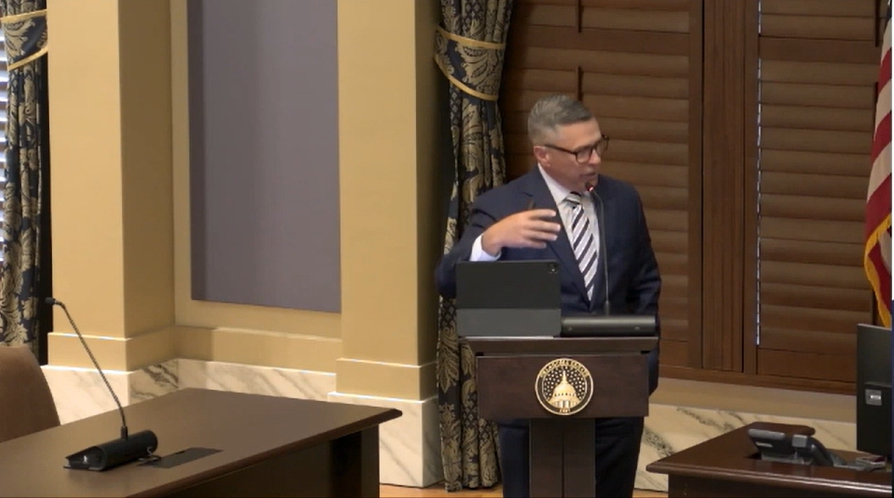
OKLAHOMA CITY (OBV) — Oklahoma needs stronger schools, a deeper workforce and more innovative industries to turn its competitive business costs into faster economic growth, business and community leaders told lawmakers Tuesday.
Chad Warmington, president and CEO of The State Chamber of Oklahoma, said the state has made meaningful progress on taxes, regulations and its legal environment. But those gains have not resolved the education and workforce challenges that limit employers’ ability to expand.
“We don’t just win by being the cheapest state,” Warmington said.
The Oct. 20 Senate study, “State Attractiveness to Living and Working,” was requested by Sen. Dave Rader and Reps. Mark Lawson and Meloyde Blancett. The Senate Economic Development, Workforce and Tourism Committee heard from business executives, educators and community leaders about attracting investment and keeping talent in Oklahoma.
Warmington said workforce and education have repeatedly ranked as employers’ leading concerns in the Oklahoma Business Leaders Poll. The 2026 survey of 401 business owners and executives found that 74% identified education and workforce as a top issue for business growth, while 77% identified child care access as a key barrier to workforce participation.
He also pointed to a gap in advanced industries. A slide in his presentation showed Oklahoma’s employment in those industries declining 2.5% from 2019 to 2025, compared with an 8.1% increase nationally.
The State Chamber’s Oklahoma Competes initiative focuses on four fundamentals: economic climate, education and workforce, infrastructure, and innovation and entrepreneurship. Warmington said the state has opportunities to expand advanced manufacturing and technology businesses, but must follow through on its plans and improve the skills and health of its workforce.
Williams President and CEO Chad Zamarin described what that challenge means for a growing employer. He said the company expects to hire 1,500 employees across its operations this year but will struggle to hire 150 in Tulsa and Oklahoma.
“We hire and grow where the talent is and where the talent wants to be,” Zamarin said.
He urged lawmakers to strengthen public education and workforce preparation, support housing and amenities, and measure mental health and homelessness programs by outcomes. He also called for a sustained funding approach to economic development.
During questions, Zamarin described a proposed first phase of downtown Tulsa investment totaling about $850 million. He said it would bring thousands of residents, a soccer stadium, two hotels and two corporate headquarters downtown. Private investors could provide most of the investment, he said, with public support helping address infrastructure such as parking and utilities.
The proposal illustrated a broader theme of the hearing: attracting workers requires both career opportunities and communities where they can see a future.
Urban economist Richard Florida said Oklahoma should connect its business climate with a strategy for attracting people, treating housing, public safety, workforce development and quality of place as parts of the same competitiveness effort.
Justin Harlan, managing director of Tulsa Remote, said the program’s experience shows the importance of helping newcomers build community connections. He urged support for parks, arts, downtowns and housing alongside efforts to attract workers.
Kian Kamas, managing director of Tulsa Innovation Labs, called for targeted investments in industrial sites, talent and capital. She said Oklahoma can build on strengths in aerospace, energy and manufacturing by addressing the specific barriers that keep companies from testing products, expanding production and reaching customers.
University of Tulsa President Stacy Leeds urged employers to connect with students well before graduation through paid internships, apprenticeships, co-ops and applied projects. Those relationships help students find careers and give them reasons to stay in Oklahoma, she said.
Chancellor Sean Burrage said helping more Oklahomans complete degrees and credentials would strengthen the workforce. He pointed to efforts to align public higher education programs and funding with employment outcomes.
Zack Stoycoff, president and CEO of Healthy Minds Policy Initiative, urged better coordination between mental health treatment and housing services. CityCare President and CEO Rachel Freeman called for preventing avoidable housing loss, expanding deeply affordable housing and funding support that helps people remain housed.
Tulsa Mayor Monroe Nichols urged stronger state-city partnerships and funding tied to results, including housing, educational attainment and reductions in homelessness.
Warmington said Oklahoma’s response to early literacy challenges showed that focused action is possible. He praised lawmakers’ work on reading policy and urged them to sustain that commitment while addressing other barriers to growth.
“Let’s focus on the fundamentals that we know that matter,” he said.