Stitt’s final State of the State: “Not done yet,” with a New Push for Spending Caps, Tax Changes and Education Reforms
In remarks heavy on fiscal policy and education reforms, Stitt argued Oklahoma’s competitiveness hinges on spending restraint, workforce readiness, and “secur[ing] our state’s future.”
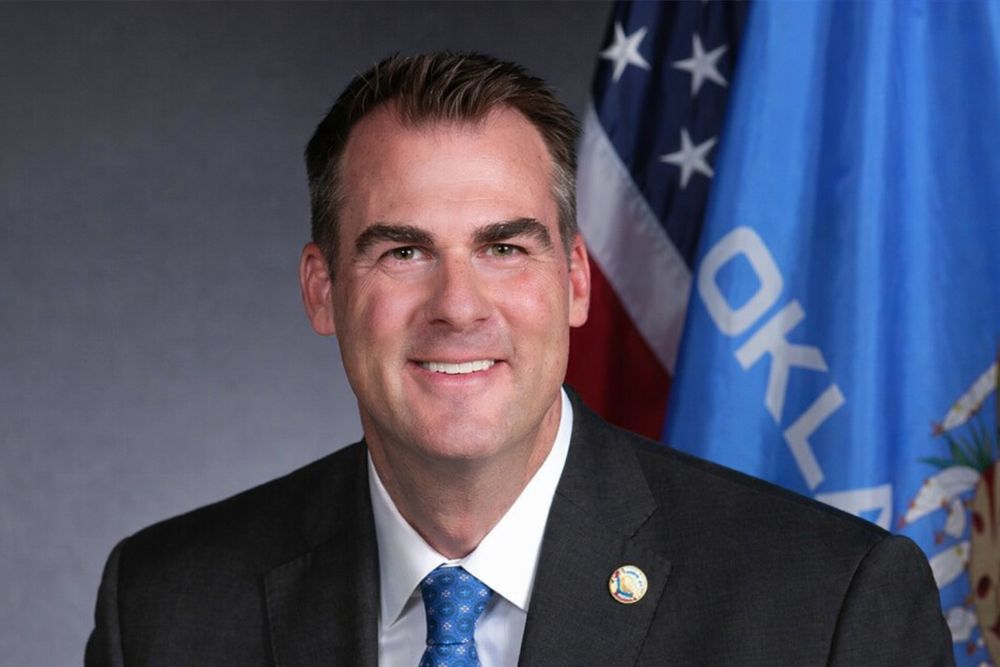
As he enters his final legislative session, Gov. Stitt used his last State of the State address to frame his seven years in office as a “turnaround” — and to ask lawmakers for one more round of structural policy changes aimed at taxes, spending discipline, education, and public safety.
“It has been one of the greatest honors of my life to serve as your Governor,” Stitt told legislators and statewide officials during his opening remarks, adding, “The state of our state is the strongest it’s ever been. And ladies and gentlemen, we’re not done yet.”
The speech leaned heavily into the governor’s long-running themes: limited government, business growth, and a view of Oklahoma as “the epicenter of the American Dream.” Stitt said he first laid out a goal in 2019 “to be a top ten state,” and he argued Oklahoma’s recent momentum should be protected through guardrails on recurring spending and additional tax relief.
“We’ve gone from budget deficits to historic savings,” Stitt said, while pointing to a record he described as combining higher education investment with broad tax cuts. “At the same time, we’ve cut taxes by $1.6 billion dollars and let Oklahomans keep more of their money.”
Fiscal policy: codifying caps and building an endowment
At the center of the address was a renewed push to constrain state spending growth — not just through statute, but through a constitutional amendment.
Last year, Stitt said, lawmakers helped deliver “the Path to Zero income tax – effectively capping spending in statute to protect taxpayers.” Now, he wants to “preserve this progress” by sending a state question to voters.
“Let’s codify a 3% annual cap on recurring spending growth in our Constitution and lock in future cuts with ironclad rules,” he said.
Stitt also used the speech to criticize what he described as spending growth driven by lawmakers over his objections: “Over the years, I’ve vetoed multiple spending bills that have added to our recurring expenses, yet many of those vetoes were overridden,” he said, claiming veto overrides “have cost the taxpayers nearly $800 million in my time as Governor.”
The governor also pitched a longer-term savings strategy: creating a Taxpayer Endowment Fund using existing cash reserves.
“Today, I call on this Legislature to create the Taxpayer Endowment Fund—seeding it with $750 million dollars of existing savings,” Stitt said. “Let’s imagine what’s possible – $750 million invested today can turn into $3.2 billion in just 20 years, generating sustainable revenue every year.”
Tax and cost-of-living pressures: property taxes and “Dream Accounts”
Stitt framed Oklahoma’s population growth and housing demand as good news with a downside: rising property tax burdens. “As our property values rise, so do property taxes,” he said, arguing that relief should be permanent rather than short-term.
“I’m calling for a state question that freezes property tax growth across the board,” Stitt said.
He also floated a new savings-account concept for children, built around the idea of “Trump Accounts,” and suggested Oklahoma add seed funding for every child born this year.
“If we RE-appropriate $12 million dollars of existing funds, we can add $250 dollars to every Oklahoma kid’s account this year,” he said, while also calling on private-sector partners to participate.
Education: literacy, open transfer, charters, and expanding the tax credit
While early parts of the speech centered on taxes and spending, Stitt argued education remains the foundation of Oklahoma’s workforce and competitiveness.
“We know that when you’re young, you learn to read, then as you get older, you read to learn,” he said. “No career pathway program, no workforce initiative, no intervention later in school can succeed if students cannot read well.”
From there, the governor emphasized school choice and competition as the mechanism for improving outcomes, tying those reforms to open transfer policies, charter school access, and expansion of the Parental Choice Tax Credit.
“It’s their money anyway,” Stitt said. “Let the money follow the student. Put parents in charge. Encourage competition and excellence.”
Stitt also took direct aim at the state’s high school sports governance structure, arguing it is undermining open transfer in practice. “It’s time to eliminate the OSSAA and secure our progress with open transfer,” he said.
In another governance-related proposal, Stitt urged lawmakers to move from an elected to an appointed state superintendent model, arguing it would reduce political churn and improve alignment. “That’s why Oklahoma’s next Governor should have the authority to appoint the Superintendent of Education,” he said.
Public safety and “One Oklahoma”
Stitt returned to a public-safety theme that has increasingly defined the back half of his tenure, including his administration’s approach to medical marijuana oversight.
“One of the greatest threats to public safety is the out-of-control marijuana industry,” Stitt said. “Send the marijuana issue back to the vote of the people and shut it down.”
The governor also revisited the state-tribal jurisdiction issues following the U.S. Supreme Court’s McGirt decision, calling on lawmakers and voters to defend “One Oklahoma” and “state sovereignty.” “All laws should apply equally to all Oklahomans. No exceptions,” Stitt said, while arguing the issue will continue to “split our state… unless we address it head on.”
The business community’s response
Chad Warmington, president and CEO of the State Chamber of Oklahoma, said the governor’s address underscored principles that matter to Oklahoma’s business climate — while also raising a broader competitiveness question for the state.
“The Governor’s State of the State focused on fiscal restraint, tax relief, and individual freedom,” said Warmington. “Those principles matter to Oklahoma’s business climate. The next question for the state however is how those themes position Oklahoma to compete in a fast-moving national and global economy. States that are winning are pairing strong fiscal management with aggressive investments in talent, innovation, and workforce alignment. That is why the State Chamber launched Oklahoma Competes, a data-driven framework focused on strengthening the fundamentals that drive long-term economic competitiveness. Oklahoma can acknowledge progress while also being honest that keeping pace will require a sharper focus on education, innovation, and competing successfully with states that are moving faster. We can’t wait to get to work with Governor Stitt and legislators to move Oklahoma forward.”
In closing, Stitt framed the session as a final chance to institutionalize the “turnaround” he has campaigned on since 2018 — and to set the next governor up with what he called stronger tools for spending restraint, education policy, and long-term competitiveness.
“The turnaround started here in 2019,” Stitt said. “It’s been an amazing journey. It’s up to us to preserve the American Dream for the next generation.”