OKCPS showcases AI reading tool at Coolidge Elementary
State lawmakers, education leaders and State Chamber staff visited Coolidge Elementary to see how Amira Learning is supporting early literacy instruction.
OKLAHOMA CITY (OBV) — State lawmakers, education leaders, and State Chamber of Oklahoma staff visited Coolidge Elementary this week to see how Oklahoma City Public Schools educators are using an AI-powered reading platform to support early literacy.
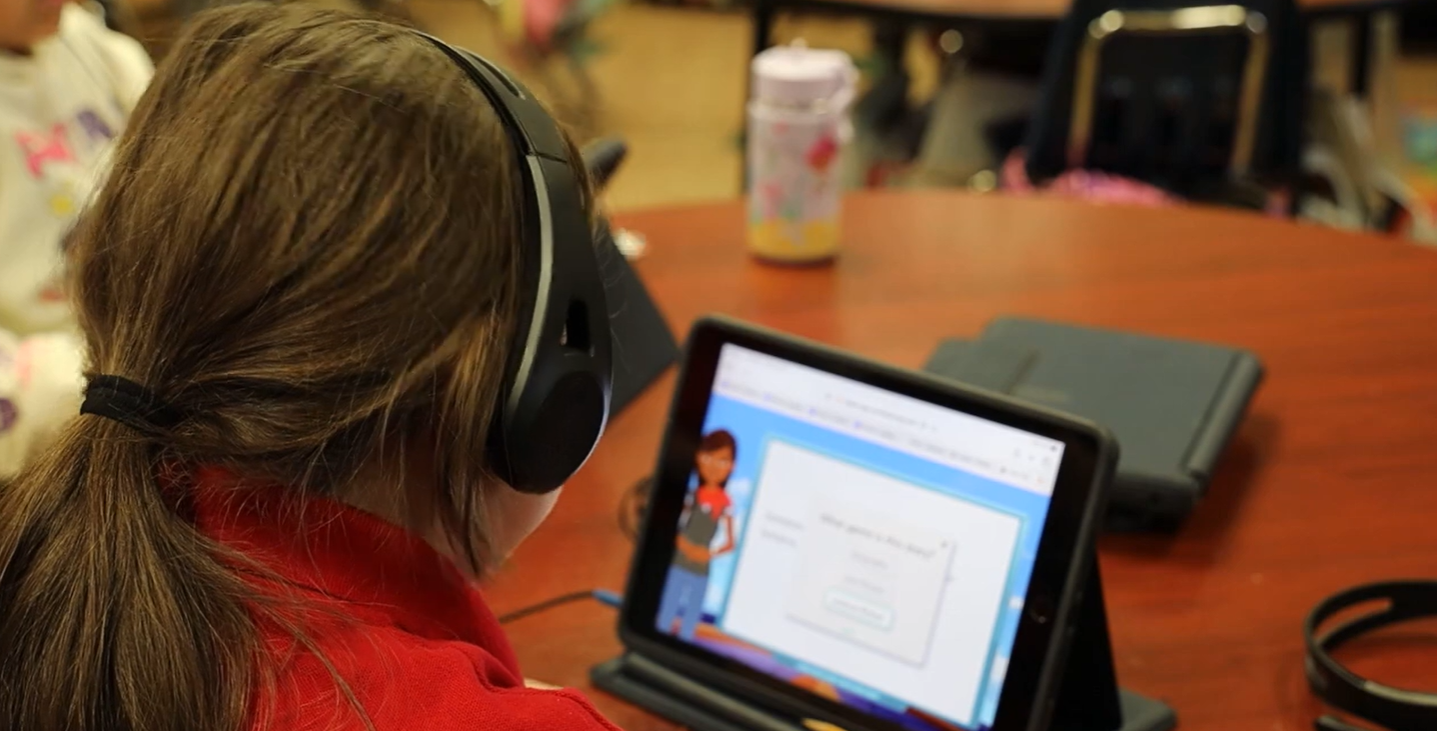
The visit highlighted Amira Learning, a reading assistant that allows students to practice reading independently while receiving real-time feedback. The platform also gives teachers immediate data on student progress, helping identify where students may need additional support.
“It’s one thing to know about a program,” Dr. Katrina McDaniel with Oklahoma City Public Schools said. “It’s another thing to see students actually interacting with it at school.”
McDaniel said Coolidge educators are using Amira to provide students with additional reading support while teachers work with small groups or individual students.
“Today we are really excited to share the success that Coolidge Elementary is having with early childhood reading, specifically using Amira as a tutor for students to interact with when the teacher is working with students at the teacher table,” McDaniel said. “When the teacher is not available, Amira provides in-time tutoring for students to read with.”
The demonstration comes as Oklahoma continues to place renewed emphasis on early literacy, including the recent passage of SB 1778, a sweeping update to the Strong Readers Act. The State Chamber supported that legislation as part of its Oklahoma Competes agenda, which connects stronger education outcomes with workforce development and long-term economic competitiveness.
Joe Siedlecki with Amira Learning said the visit was intended to give civic and state leaders a closer look at how the platform works in classrooms.
“We’re really trying to expose civic leaders and state leaders to what Amira can do,” Siedlecki said. “At a high level, Amira is the world’s first, most widely used, most effective AI-powered reading assistant.”
Siedlecki said the platform helps students practice reading at the right level of challenge while giving teachers more precise information about student needs.
“It helps kids learn how to read,” Siedlecki said. “It creates an opportunity for them to practice reading at the appropriate level of challenge and get the help that they need.”
He said Amira also supports teachers by giving them immediate data they can use to guide instruction.
“She’s assisting the students learn how to read by helping tutor them,” Siedlecki said. “She’s assisting teachers by giving them immediately updated data down to the phoneme level, if necessary, so that the teachers can use that to further drive tailored instruction outside of the tool.”
McDaniel said the data gives educators another way to diagnose reading needs and target interventions.
“This is another data point that we’re able to use to diagnose what skill students might be lacking in order to become fluent readers,” McDaniel said. “Amira is able to give us real-time data that we are then able to take and support with our teachers, using that data plus their data from their own diagnostics, to give students the interventions they need.”
The visit gave civic and state leaders a chance to see how classroom technology is being used alongside teacher-led instruction. For business and education advocates, the demonstration showed how targeted tools can support Oklahoma’s broader push to improve reading outcomes and prepare more students for long-term academic success.