House passes HB 1161 to add cost studies for health mandates
Bill would let legislative leaders request actuarial-style impact reports before votes on new coverage requirements.
OKLAHOMA CITY (OBV) — The Oklahoma House advanced HB 1161 on Feb. 9, approving a framework to analyze the social, medical and financial effects of proposed health insurance mandates before they become law. The bill passed on third reading, 61–26, and now moves to the Senate.
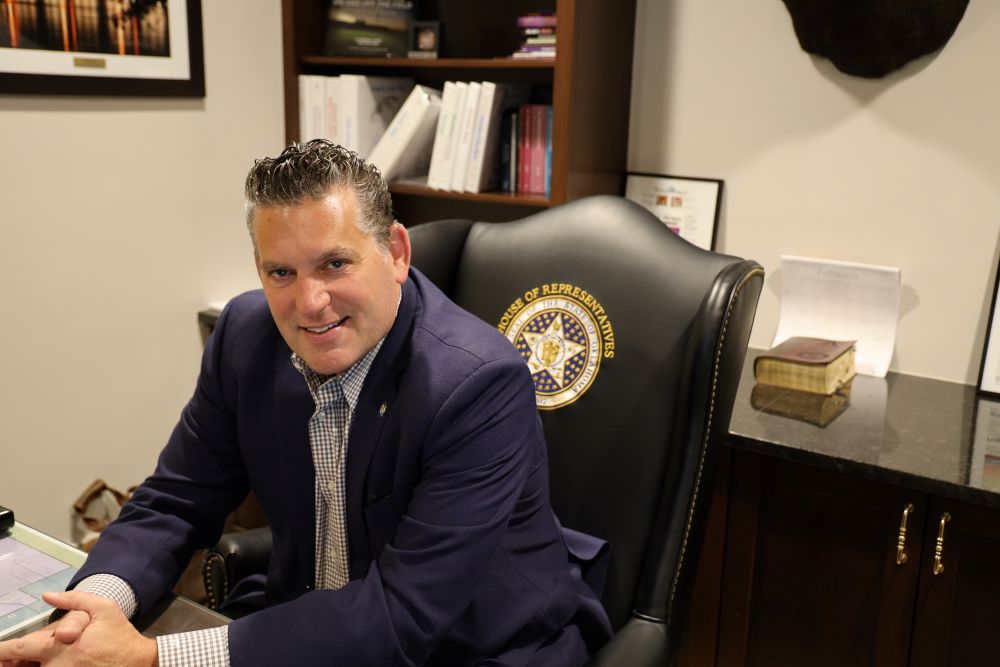
Authored by Rep. Mark Tedford, R‑Jenks, the measure allows the Speaker of the House or the Senate President Pro Tempore to direct the Legislative Service Bureau to send bills that contain health‑plan mandates to the Oklahoma Insurance Department for an impact analysis.
OID would have up to 60 days to return a written report that evaluates public health implications, medical evidence and likely effects on premiums, providers and market stability.
The reports must be shared with the bill author, committee leadership, and posted publicly on the legislative website. The bill limits referrals to six per fiscal year, split evenly between chambers, unless the Insurance Commissioner approves more.
If enacted, HB 1161 would take effect Nov. 1, 2026.
How HB 1161 would work
- Who can request an analysis: Speaker of the House or Senate President Pro Tem (or their designees) via the Legislative Service Bureau.
- Who conducts it: Oklahoma Insurance Department, with authority to hire third-party actuarial experts and consult other agencies.
- What the report covers: Social impact, medical efficacy and financial impact, including premium effects and market stability. Due within 60 days.
- How many per year: Six total, equally divided between chambers; more only with the Insurance Commissioner’s written approval.
- Transparency: Reports must be provided to the author and relevant chair and posted to the Legislature’s public website.
- Effective date: Nov. 1, 2026.
“It’s about better information”
Rep. Tedford frames the bill as a data-first tool.
“It’s a bill that empowers the Legislature to request the Oklahoma Insurance Department to run actuarial studies for any bill that has a healthcare mandate. If a bill mandates that a health plan cover a certain coverage, that has a cost to the whole system. The idea is to know the cost for that one mandate. Right now, we often don’t.”
“Ultimately, the bill is just about getting better data on what type of legislation we’re passing.”
He linked the concept to a familiar practice at the Capitol.
“Whenever we pass something that has a fiscal impact to the state, we already require an impact study. We’re already doing it for government spend. In healthcare, we’re making a change that could have an impact on costs, and we’re not getting that.”
Asked about the constituent benefit, he was direct:
“It would prevent us as a Legislature from passing policy that might cost them higher premiums. That would be the benefit to the constituents.”
From mandate to request
Tedford said initial pushback focused on the early version that required an analysis before mandates could advance.
“There was concern that the requirement would effectively kill or considerably slow mandates, waiting for the study to get done. There were a lot of process questions—how long would the studies take, when would we order them, who would order them.”
He said the breakthrough was removing the requirement and capping the number of reports the department would run in a year.
“The biggest difference maker was removing the mandate. Now, the bill doesn’t restrict any legislation from being passed even without the study. If the study is slow or inconclusive, we could still pass the mandate.”
“The bill allows for six total. This would be for the biggest bills—the ones we feel could have the biggest impact. Many other bills could be passed without these ordered on them.”
According to the engrossed text, the OID may contract with third-party actuarial firms and consult other state agencies. Analyses are due within 60 days and must cover three areas: social impact, medical efficacy and financial impact.
Will it lower premiums?
Tedford tempered expectations.
“I don’t know if this will have an effect of reducing premiums, but it could slow the pace of increases. How much is the increase due to mandates we passed, and how much is due to increasing cost? There’s probably a little of both.”
“Health plans are still free to cover these services voluntarily. We don’t need a mandate to force them to do it, especially for a new treatment that could be cost saving.”saving.”
Success, he said, looks like using the reports—whatever they conclude.
“Success would be that both houses order the reports, get reports back and use them—have better data. I don’t want to characterize the bill as attacking mandates. It’s more about having better information.”
The ERISA gap—and why it matters
Tedford emphasized a nuance often missed in debates over state mandates.
“A state mandate only applies to state plans, Medicaid and the ACA. It does not apply to [ERISA] plans. Over time, [ERISA] self-insured plans are available to smaller employers—even down to 50 employees. The number of private plans that any state mandate applies to has shrunk to like 22%.”insured plans are available to smaller employers—even down to 50 employees. The number of private plans that any state mandate applies to has shrunk to like 22%.”
“If we add mandates onto that 22% and not to [ERISA] plans, the delta becomes significant. People think they’re going to get the coverage, and then they don’t, because their employer is in an [ERISA] plan.”
“On the ACA, if we add a mandate that exceeds federal required coverages, there’s a real risk the feds will call back that cost to us.”
Cost, market stability and the private insurance runway
Tedford, who owns an insurance agency, said the aim is to keep the private market viable by avoiding unintended cost shocks.
“Keeping costs low is a real issue for the viability of a private market. If health insurance gets more and more expensive, a private market option is not going to be viable.”
“There’s a medical loss ratio, so the health plans get their cut. They get their 15% of every dollar. If you add mandates and the cost goes up, they’re getting 15% on a higher piece of the pot. The mandate doesn’t really impact the health plan as much as people say health plans don’t want it because they’re greedy.”
In earlier fiscal discussions, staff noted that similar mandate reviews in other states can cost roughly $10,000–$60,000 per analysis, with Oklahoma’s non-appropriated Insurance Department expected to absorb the cost under the cap on studies.
HB 1161 was engrossed and sent to the Senate on Feb. 10, where it awaits committee assignment and consideration.