Oklahoma incentive review backs business expansion programs, calls for changes to tax breaks
Consultants praised programs that help Oklahoma employers invest and expand, while recommending changes to the capital gains deduction, stronger reporting, and repeal of the ethanol fuel credit.
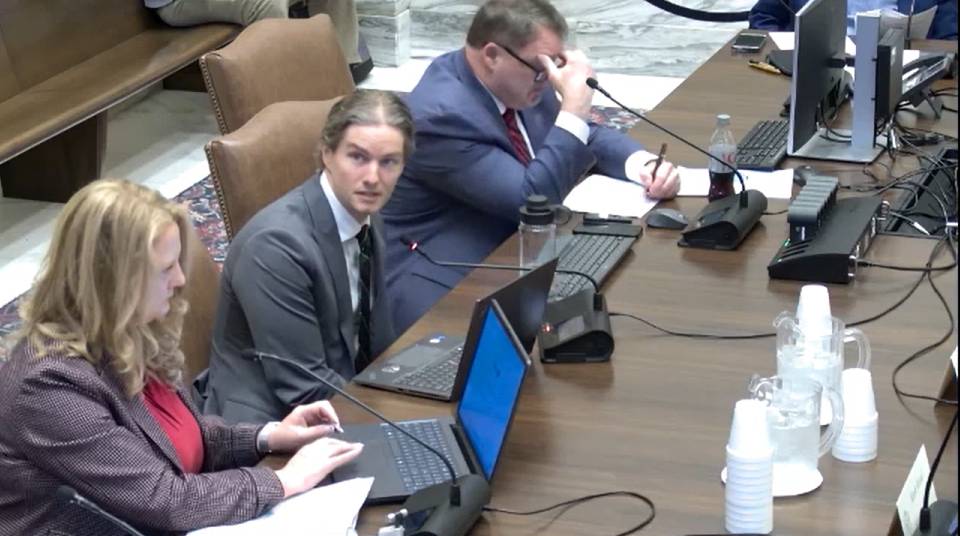
OKLAHOMA CITY (OBV) — Oklahoma should preserve several incentives that help businesses buy equipment, expand operations, and compete for investment, according to consultants who presented a sweeping review of state economic development programs Thursday.
The review also called for changes to the state’s capital gains deduction and data center exemption, along with repeal of an ethanol fuel tax credit that consultants said offers little competitive benefit to Oklahoma.
PFM Group Consulting presented draft evaluations of 10 incentive programs and categories to the Oklahoma Incentive Evaluation Commission on Oct. 8. Commissioners did not vote on the recommendations. A public hearing is scheduled for Oct. 22, ahead of a decision-making meeting Nov. 12.
Much of the discussion centered on a practical question: Does an incentive help a business make an investment it otherwise would not make?
For smaller Oklahoma employers trying to purchase equipment or improve production, PFM Director Randall Bauer said the answer can be clear.
“They’re cash-based operations where if they can’t pull together the cash to do it, they’re just not going to do it, or they’re going to delay doing it,” Bauer said.
“This particular incentive allows them to do something that improves their operations, and ultimately benefits the state’s economy.”
Bauer was discussing Oklahoma’s pooled finance programs, which support business expansion and infrastructure. They include the Business Expansion Incentive Program, the Oklahoma Innovation Expansion Program, and a public-private partnership financing program.
PFM recommended retaining the programs with modest administrative changes. Its draft report found that $397.1 million in funding supported more than $2.5 billion in capital investment from 2020 through 2025.
Demand increased particularly for the Oklahoma Innovation Expansion Program, which helps businesses make smaller investments to develop products or increase capacity. Awards grew from $7.4 million in 2020 to $61.7 million in 2025, while applications increased 24% from 2025 to 2026.
Bauer said the State Chamber and the Oklahoma City and Tulsa chambers helped evaluators connect with businesses using the programs. Those conversations produced strong feedback on the innovation expansion program’s administration.
“This program gets very high marks from its users,” he said.
The recommended improvements include a centralized application database that would help Commerce direct businesses to the appropriate program and reduce repeated paperwork.
The consultants also recommended keeping the Quick Action Closing Fund, which helps Oklahoma compete for major business investments, while expanding public reporting on results.
Since 2021, recipients made approximately $1.45 billion in capital investments and received $22.9 million in awards, according to the draft evaluation. Participating businesses created roughly 1,150 jobs and retained more than 1,000. The average wage associated with those jobs was nearly $80,000 in 2025.
PFM recommended publishing more information about expected and actual investment, employment, and wages.
Bauer cautioned against assigning all of a project’s economic benefits to the closing fund alone. Businesses often receive several incentives, making it difficult to separate the effect of each. Although he said he believed the fund produced a net benefit, he questioned treating the report’s $2.45 in tax revenue per award dollar as the fund’s standalone return.
The capital gains deduction received a more critical assessment.
The deduction allows qualifying gains from the sale of Oklahoma property and business interests to be excluded from state taxable income. PFM estimated that individual claims accounted for $801.6 million in forgone state revenue from 2019 through 2024. Corporate claims could not be isolated in the available data.
The consultants recommended narrowing eligibility, considering a cap, and tying the deduction to specific economic goals. Their recommendation shifted from repeal in the previous evaluation to restructuring the program this year.
During the discussion, Bauer suggested that a more targeted approach could better support entrepreneurs who establish, operate, and eventually sell Oklahoma businesses. A commissioner also emphasized the importance of encouraging business formation and investment as Oklahoma competes with neighboring Texas.
Data centers raised a different set of questions about infrastructure and public costs.
PFM recommended retaining the computer services and data processing sales tax exemption with modifications. The report called for tracking the value of exempt purchases and considering requirements addressing water consumption and electricity supply.
Bauer said long-term power agreements could help protect other utility customers from costs left behind if a large data center stops operating after a utility builds infrastructure to serve it.
Housing and rail infrastructure also drew support. Consultants recommended retaining the affordable housing tax credit and the Strategic Industrial Development Enhancement Act, which supports rail-related investment.
The housing evaluation identified 27 projects encompassing 3,518 units supported by state credit allocations from 2021 through 2025. PFM connected the program’s value to communities’ ability to attract and retain workers.
The ethanol fuel retailer tax credit received a recommendation for repeal. Consultants argued that Oklahoma’s limited ethanol production and the credit’s weak connection to the state’s economic development priorities made it difficult to justify.
Businesses will have an opportunity to weigh in before the commission decides which recommendations to send to the governor and Legislature.
The public hearing begins at 10 a.m. Oct. 22 in Senate Conference Room 4S.9 at the Capitol. Written comments and requests to speak must be submitted by Oct. 20, at least 48 hours before the meeting. Comments can be submitted through the commission’s evaluation feedback page. Oral presentations are generally limited to three minutes.