




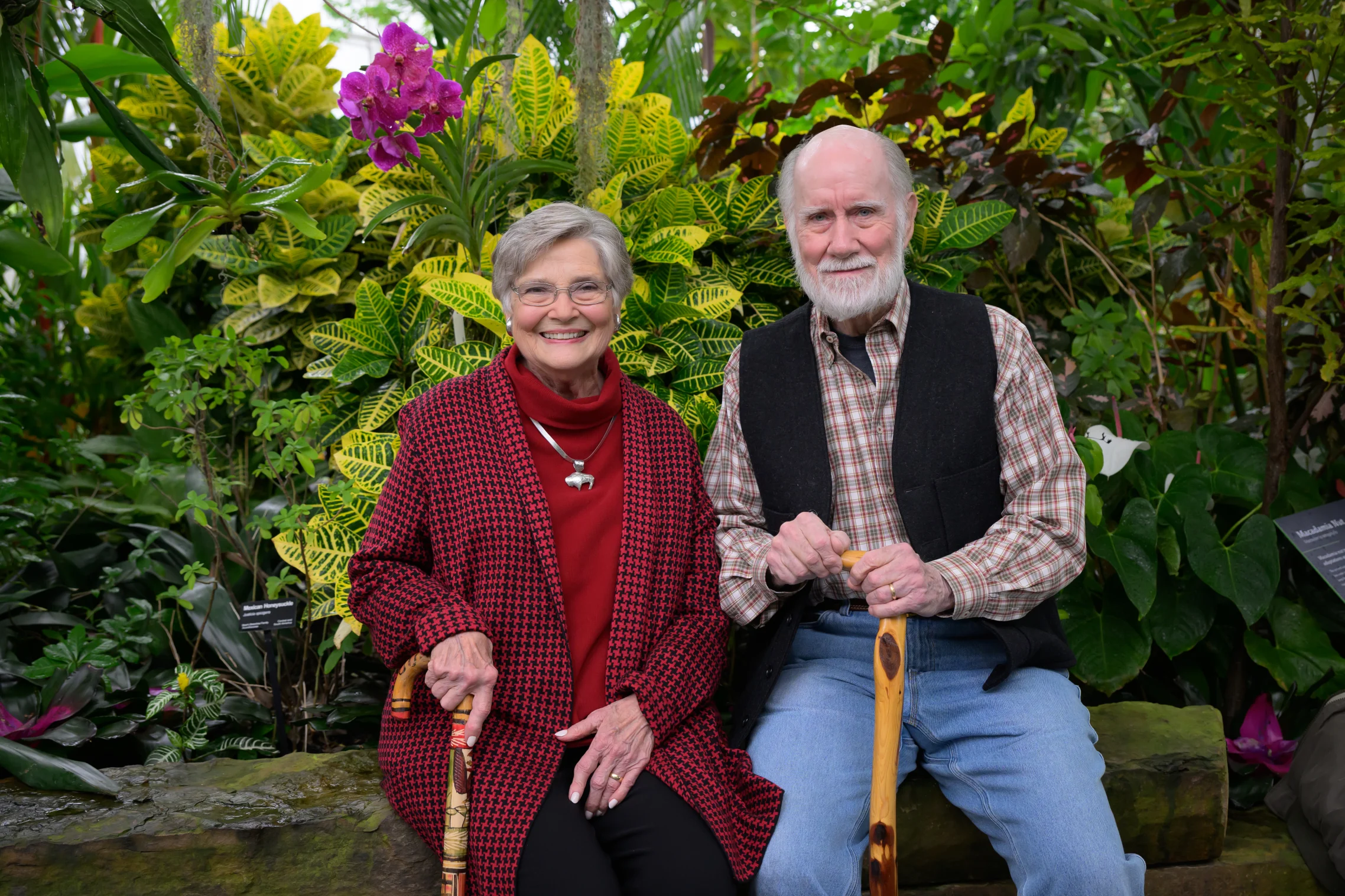

When Sandy Roark turned 60, a strange bruise between her fingers signaled something was wrong. Multiple doctors in Shawnee — and then two oncologists — couldn’t explain it.
“I noticed some bruising between my fingers and knew that was not right,” she said.
A specialist at the National Institutes of Health finally provided an answer: paroxysmal nocturnal hemoglobinuria, a rare bone‑marrow disorder that causes the body to stop making healthy red blood cells. “He told her she was one in a million,” her husband, Mack, recalled.
With the treatments available at the time, experts said she had about two years.
Sandy began weekly blood transfusions, but the disease took a toll.
“I was totally depleted of energy. Just wiped out,” she said.
Despite worsening symptoms, the Roarks searched for anything that could offer hope. Seven years later, her NIH doctor told her a new medication had become available and arranged an infusion.
“As soon as I got the first one, I could tell the difference. By the second one, most of the symptoms were gone. It’s like night and day… a miracle drug that saved my life.”
The drug that reversed her decline had roots close to home. The therapy was developed in laboratories at the Oklahoma Medical Research Foundation.
“Basic science research that is conducted here at OMRF goes on to become discoveries that can actually be taken into the market and turn into life‑saving drugs,” said Dr. Hemangi Pakala, director of OMRF’s Office of Technology Ventures.
OMRF’s “bench‑to‑bedside” pipeline helps ensure that scientific breakthroughs don’t sit unnoticed.
“Scientists are so good at what they do, but they tend to get absorbed in the experiments in their labs,” Pakala said. “Very often they don’t realize that they have this amazing discovery they need to take out into the world. That’s where offices like ours become central.”
She said the path from academic discovery to commercial therapy is long — and it can stall without support.
“A vast majority of FDA‑approved drugs came from academia. Drug development is arduous and takes several years. The last thing we want is for these technologies to flounder in the lab.”
Today, at 86, Sandy still receives regular infusions but lives without symptoms. She stays active, and she says she’s living proof of the impact research institutions can have.
“I’m still here. And I have no symptoms,” she said. “So you think I love OMRF? You bet I do.”
Photo courtesy OMRF.