California wage study offers warning as Oklahoma weighs SQ 832
A UC Santa Cruz working paper found California’s $20 fast-food wage was followed by fewer worker hours, higher menu prices, expanded automation and pressure on independent restaurants.
OKLAHOMA CITY (OBV) — As Oklahoma voters prepare to decide State Question 832, new research from the University of California, Santa Cruz is adding fresh evidence to a central warning from Oklahoma business advocates: mandated wage increases can create consequences far beyond the hourly rate.
The UC Santa Cruz article highlights a working paper from economics lecturer Stephen Owen and a team of undergraduate researchers examining California’s $20 minimum wage for fast-food workers.
The California law took effect in April 2024 and applied to employees at franchise restaurants with 60 or more locations statewide. UC Santa Cruz noted that the policy remains contested, with labor groups arguing it improves financial security for low-wage workers and business groups warning it forces employers to raise prices and hire fewer workers.
The researchers interviewed business owners and managers representing more than 100 fast-food franchise restaurants, reviewed financial and hiring records, observed operations and conducted interviews with independent restaurant owners in Santa Cruz to examine spillover effects.
“Based on what we’ve found, I think this legislation is a classic case of ‘no good deed goes unpunished,’” Owen said in the UC Santa Cruz article. “There are unintended consequences and knock-on effects, and overall, I think the results have definitely not been as positive as policymakers had been expecting.”
The working paper has not been peer reviewed, a fact noted by UC Santa Cruz. But its findings provide a timely case study as Oklahoma voters consider SQ 832, which would raise the state minimum wage to $15 by 2029 and then, beginning in 2030, automatically increase the wage each year based on CPI-W, a federal inflation index.
The ballot title says those annual increases would continue indefinitely and would not require approval from Congress or the Oklahoma Legislature.
Policy experts say the California findings show why voters should be cautious.
“SQ 832 asks voters to look only at the wage rate and ignore the workplace reality around it,” said Adam Maxey, vice president of government affairs at The State Chamber of Oklahoma. “California’s experience shows why that’s dangerous. A higher mandated wage can come with fewer hours, fewer opportunities, higher prices, and faster automation. Those are real tradeoffs, especially for small businesses and entry-level workers.”
The California research found that the higher wage made fast-food jobs more attractive to applicants, but employer demand for labor moved in the opposite direction.
Owen’s team reviewed applicant data from a Burger King franchise group operating more than 50 California locations and found a sharp increase in job applications after the wage increase. August 2024 saw a 400% increase in applications compared with the same month in 2023, and applications remained elevated into early 2025.
At the same time, records reviewed by the team showed fewer hours available for workers. Burger King locations tied to one franchise owner in coastal markets reported a more than 21% decline in shift work from October 2023 to October 2024. Across 18 McDonald’s franchise locations in California’s Central Valley, total labor hours declined nearly 12% across comparable 12-month periods, equivalent to 62 full-time job-years.
“When I first met with the student researchers for this project, I drew them a supply and demand curve of labor, with an equilibrium point and then asked them what happens with an artificial wage increase caused by a binding minimum wage law, and they showed me how labor demand would reduce,” Owen said. “This is something they’re studying in their textbooks. What happens to demand for labor when you increase the minimum wage is not really an arguable question; it’s more about whether that is better or worse for society.”
The effects for workers were mixed. The UC Santa Cruz article says many fast-food workers now earn more per hour, but many are working fewer hours, limiting gains in total earnings. Reduced hours also meant fewer employees qualified for benefits, and many franchises eliminated overtime that had previously helped longer-term employees increase take-home pay.
The study also found evidence of higher prices. Owen said the wage increase raised labor costs by about 25%, which could raise total operating costs by about 9% if businesses made no other changes. The research found franchised fast-food restaurants increased menu prices by approximately 8% to 12% from September 2023, reflecting a combination of labor-cost pass-through and other inflationary pressures.
“Restaurants are a notoriously tough business, with slim margins, so if you have to raise labor costs, which is a significant portion of operating costs, it won’t be long before some will go under,” Owen said. “Businesses can absorb increased costs to a certain extent, but the question is for how long. I would argue that we will likely see closures ahead.”
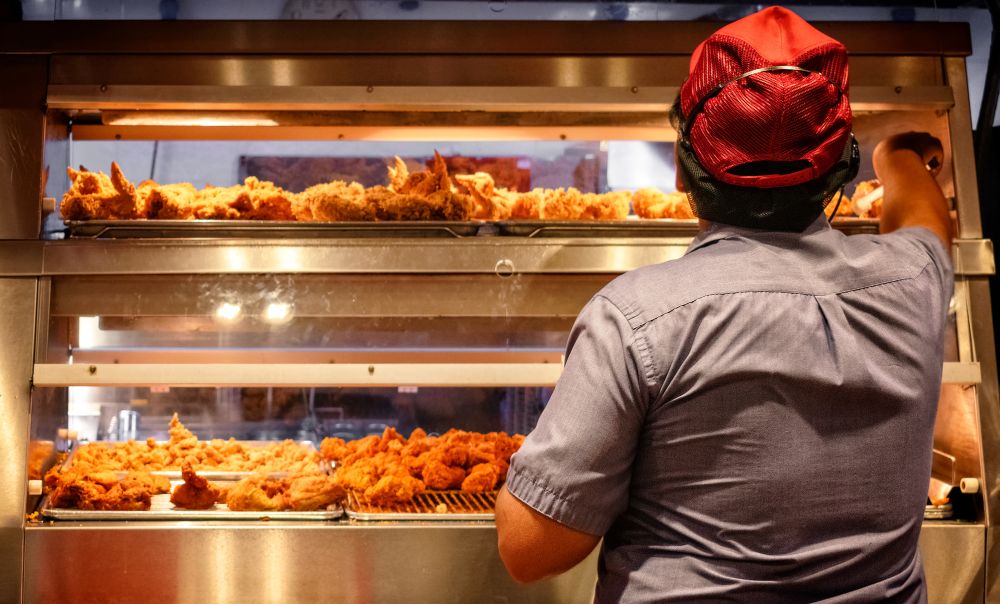
Automation was another major finding. Researchers observed fast-food franchises investing in ordering kiosks, mobile app ordering, AI voice-ordering systems and automated dishwashing. The working paper also discusses broader automation trends at companies such as Chipotle and Sweetgreen, where robotics and automated kitchen systems are being tested or expanded.
“Competitiveness in the fast food industry has always been about progressions in sophistication and efficiency, so the industry is really ripe for automation,” Owen said. “Is what we’re seeing a natural, organic adoption of these technologies in fast food? I think there’s definitely an element of that, but I would argue that it has been accelerated by introduced wage pressures.”
The California policy and SQ 832 are not identical. California’s law is sector-specific, while SQ 832 would apply more broadly. But Maxey said the underlying lesson is relevant for Oklahoma because employers still face the same basic choices when costs rise by mandate.
“The California findings should set off alarms in Oklahoma,” Maxey said. “That was one sector. SQ 832 would put similar pressure across the economy. If the result in fast food is fewer hours, higher prices and faster automation, voters should ask what happens when those same pressures hit restaurants, farms, childcare providers, retailers, nonprofits, and local service businesses statewide.”
The spillover effects may matter most for small businesses.
The UC Santa Cruz article said independent restaurants in Santa Cruz that were not directly covered by California’s fast-food wage law still reported pressure to raise wages and menu prices to compete for employees, raising concerns about long-term sustainability.
SQ 832 would go beyond raising the wage floor.
The official ballot title says it would also eliminate several exemptions in the current Oklahoma Minimum Wage Act, including exemptions for part-time employees, certain students and individuals under 18, farm and agricultural workers, domestic service workers, newspaper vendors or carriers and feedstore employees.
For Oklahoma business advocates, the California study reinforces a broader argument: SQ 832 should be judged not only by the wage it promises, but by the decisions employers may be forced to make in response.
Owen offered a similar caution about the limits of minimum wage policy as a tool to help low-income workers.
“The working poor struggle to get by in California, and that’s a fact,” Owen said. “So if we’re serious about helping the working poor, then I think it makes a lot more sense and would ultimately be more effective for the government to focus on other types of policies, such as deregulation to promote business growth and targeted income assistance to families working at or below the poverty line.”
Oklahomans will vote on SQ 832 on June 16.