Oklahoma launches strategy to compete for space industry growth
The plan centers on testing, manufacturing, research, and maintenance rather than competing directly with coastal launch hubs.

OKLAHOMA CITY (OBV) — Oklahoma officials released a statewide strategy Monday aimed at attracting space industry jobs, investment, and federal contracts as the global space economy expands.
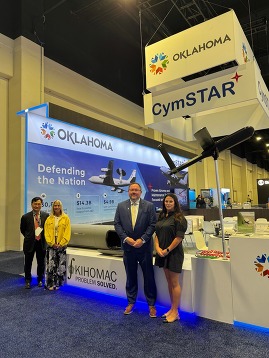
The Oklahoma Department of Aerospace and Aeronautics and the Oklahoma Space Industry Development Authority announced the strategy during the Oklahoma Breakfast ahead of the Farnborough International Airshow.
The plan focuses on areas where state officials say Oklahoma already has a competitive advantage, including space hardware testing and certification, propulsion technology, microgravity research, advanced manufacturing, and maintenance of reusable spacecraft.
“Oklahoma isn’t starting from scratch,” Lt. Gov. Matt Pinnell said. “We’re building our legacy and creating the next aerospace frontier right here in the heartland.”
The strategy calls for creating the Oklahoma Advanced Space Innovation Sector, or OASIS, within the state’s existing aerospace agencies. The framework would connect aerospace activity in Oklahoma City, Tulsa, and the Infinity One Spaceport in western Oklahoma.
Officials said OASIS would coordinate workforce development, research, public investment, and private-sector growth without establishing a new state agency.
The strategy builds on Oklahoma’s existing aerospace and defense industry, which state officials said supports more than 120,000 jobs and generates $44 billion in annual economic activity.
Oklahoma also is home to the FAA Mike Monroney Aeronautical Center, Tinker Air Force Base, American Airlines’ Tulsa maintenance operation, and an FAA-licensed inland commercial spaceport.
Rather than competing primarily for launches, Oklahoma plans to pursue work involving manufacturing, testing, certification, research, and long-term maintenance.
“Leaning on our existing strengths within the broader aerospace ecosystem, these focus areas will allow Oklahoma’s space story to succeed over the next decade,” ODAA Executive Director Grayson Ardies said.
The state recently attracted operations from Agile Space, Dawn Aerospace, and Quantum Space. Quantum Space selected Tulsa for a new manufacturing facility.
The plan also seeks to extend industry growth beyond Oklahoma’s metropolitan areas by connecting smaller manufacturers, machine shops, and suppliers to space-related projects.
State and local incentives would be tied to benchmarks such as job creation, private investment, contracts, and operational performance. The strategy also calls for using state resources to attract additional federal and private capital.