Ceremonial signing marks new pathway to CPA licensure in Oklahoma
House Bill 4317 adds a new route to certification as Oklahoma works to address a shortage of accounting professionals.
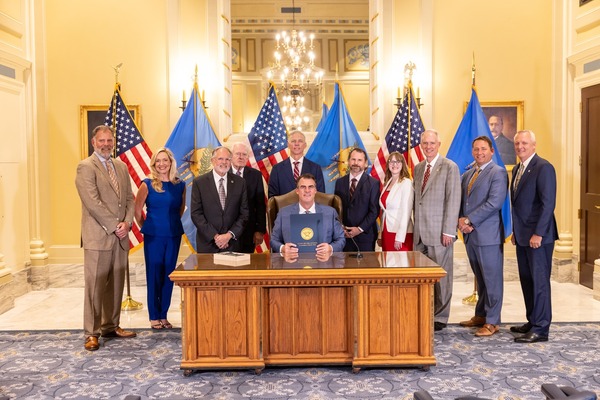
Gov. Kevin Stitt joined lawmakers and representatives from the Oklahoma Society of CPAs and Oklahoma Accountancy Board for a ceremonial signing of legislation updating the state’s CPA licensure requirements.
House Bill 4317, authored by Rep. Gerrid Kendrix, R-Altus, establishes three pathways to CPA certification:
- A master’s degree with an accounting concentration, one year of supervised work experience, and passage of the CPA exam
- A bachelor’s degree with an accounting concentration, 30 additional academic hours, one year of supervised work experience, and passage of the CPA exam
- A bachelor’s degree with an accounting concentration, two years of supervised work experience, and passage of the CPA exam
Candidates must also pass an ethics examination and criminal background check before receiving certification.
Kendrix, a CPA with more than 30 years of experience, said the changes will help address Oklahoma’s shortage of accounting professionals while preserving the standards expected of the profession.
“We need to make sure our licensing requirements are preparing students for the workforce, not simply requiring them to take more classes and pay more costs,” Kendrix said. “This legislation helps us move toward a system that emphasizes mentorship and real-world experience, while still maintaining the higher education path for those who choose it.”
Blaine Peterson, president and CEO of the Oklahoma Society of CPAs, called the legislation the most significant change to CPA licensure in Oklahoma in a generation.
“By updating the pathways to CPA certification, we are widening the door for talented students and professionals seeking to enter this profession without compromising the standards that protect the public,” Peterson said. “This legislation is workforce development in action in our state.”
Peterson said the changes will strengthen Oklahoma’s accounting talent pipeline, support businesses and communities that rely on CPAs, and help the state attract and retain skilled professionals.
According to the Oklahoma Society of CPAs, 44 states passed some form of expanded CPA licensure pathways during 2025 and 2026, and the remaining states are expected to consider similar changes in 2027.
HB 4317 also allows the Oklahoma Accountancy Board to grant certificates to qualifying CPAs licensed in other states. The law takes effect Nov. 1.