Oklahoma marks 25 years of right to work
The 2001 vote followed decades of debate and a statewide campaign for worker choice and business recruitment.
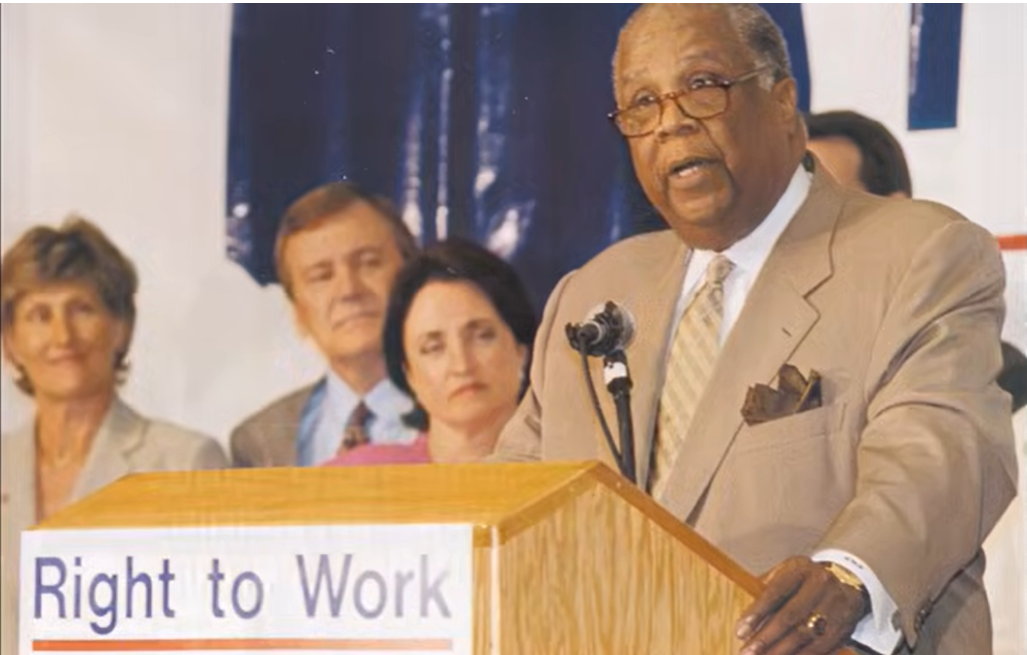
Mary Fallin knew the right-to-work campaign was getting through when a senator wanted the business cards to stop.
Fallin, Oklahoma’s lieutenant governor during the push for passage, recalled a senator confronting her about Chamber members sending their cards to his office. He wanted her to tell them to quit. The business community made its point.
“The chamber was absolutely central in the right to work fight that we had for decades in the state,” Fallin said in a State Chamber video commemorating the organization’s centennial.
On Sept. 25, Oklahoma marks 25 years since voters approved State Question 695, securing right-to-work protections in the state Constitution. For the business leaders and elected officials who fought for passage, the anniversary recalls a campaign that paired individual choice with a broader ambition to make Oklahoma more competitive for jobs and investment.
The amendment prohibits requiring workers to pay union dues or equivalent fees as a condition of employment. Workers can choose to join and financially support a union, and collective bargaining continues in right-to-work states. The protection concerns whether those payments can be compulsory.
“Right to work is about freedom to choose whether or not to join a union,” J.C. Watts said in footage included in the centennial video.
Oklahoma’s first statewide vote on the issue came in 1964, when an initiative petition placed right to work on the ballot. Voters rejected it, with 51.66% opposed. Oklahoma and Tulsa counties both voted against the proposal. Thirty-seven years passed before another statewide vote.
By the time Frank Keating became governor in 1995, right to work was a central part of his argument for improving Oklahoma’s business climate. He described the absence of the law as a disadvantage in recruiting employers.
“What right to work will do for us is put us back on the map,” Keating said in archival footage. “It’s very difficult to sell Oklahoma because you’re culled when you don’t have right to work.”
Getting the issue before voters required years of legislative work. Former state Sen. Jim Dunlap, who served as Senate Republican floor leader from 2001 to 2003, recalled the sustained effort to secure a vote.
“So for seven years, we worked very hard to get it to the floor to vote,” Dunlap said.
Another leader was the late state Sen. Mike Fair, a former House member who became president of Oklahomans for Right to Work in 2000. He also chaired LUV Oklahoma, a political action committee whose name stood for “Let Us Vote.” The State Chamber named him its Legislator of the Year in 2001 for his work on the measure.
In archival footage included in the video, Fair explained that the law prevents requiring a person to “pay union dues or payments in lieu of union dues in order to hold the job.”
Ron Cupp, who served as a State Chamber senior vice president from 1981 to 2011, recalled the negotiations and compromises that accompanied the legislative effort. Cupp described working to bring Democrats and Republicans behind the same proposal, with both sides making concessions.
In 2001, lawmakers sent a constitutional amendment to voters and ultimately scheduled a September special election. Keating’s support was joined by that of former governors David Boren and George Nigh, both Democrats.
Once the question reached the ballot, the campaign expanded across the state. The State Chamber’s centennial history credits an effort involving 58 local chambers, Keating, and campaign strategist Marc Nuttle. The organization reports raising $6.2 million during the successful push, which concluded more than 15 years of Chamber work on the issue.
The arguments reached voters through television advertising as well as direct appeals from business owners and elected officials. Supporters emphasized both the freedom to decide whether to support a union and the opportunity to compete for employers considering other states.
Kirk Humphreys, then Oklahoma City’s mayor, connected the recruitment argument to the interests of workers.
“A rising economy helps everyone in the state,” Humphreys said in footage included in the video. “If we get the right to work, it’ll help the working man more than it does the rich man.”
On Sept. 25, 2001, two weeks after the Sept. 11 terrorist attacks, voters approved SQ 695 by 447,072 votes to 378,465, or 54.15% in favor. Oklahoma and Tulsa counties supported the amendment. Subsequent court challenges left its core protections in place, although some provisions were preempted by federal law. Oklahoma became the nation’s 22nd right-to-work state.
For participants in the campaign, the vote marked a change in how Oklahoma presented itself to employers.
In the centennial video, Senate President Pro Tempore Lonnie Paxton described right to work as an early step in Oklahoma’s effort to build a more business-friendly reputation. He connected its passage to the reforms that followed, including changes to the state’s civil justice system.
Richard Ratcliffe, who chaired the State Chamber’s board in 1995, emphasized the law’s continuing reach. He described right to work as one of the most consequential measures of his experience because it affects so many people and remains in force over time.
House Speaker Kyle Hilbert made a similar point about its relevance to future investment. Companies considering where to locate, he said, look for states and communities with policies that support growth. He described right to work as part of Oklahoma’s positioning for the next 25 years.
State Chamber President and CEO Chad Warmington described right to work as “a key component in the portfolio we lay out to the world as we compete to grow our economy in the 21st century.”