When child care falls through, Oklahoma businesses feel it
An Oklahoma interim study examined how child care shortages affect hiring, employee attendance, and business growth, and the role employers could play in expanding access.
An Oklahoma interim study examined how child care shortages affect hiring, employee attendance, and business growth, and the role employers could play in expanding access.
A business can offer a job, find a qualified applicant, and agree on a start date. Whether that person can show up may depend on an opening at a child care center.
For Oklahoma employers, that problem routinely reaches the people making hiring decisions.
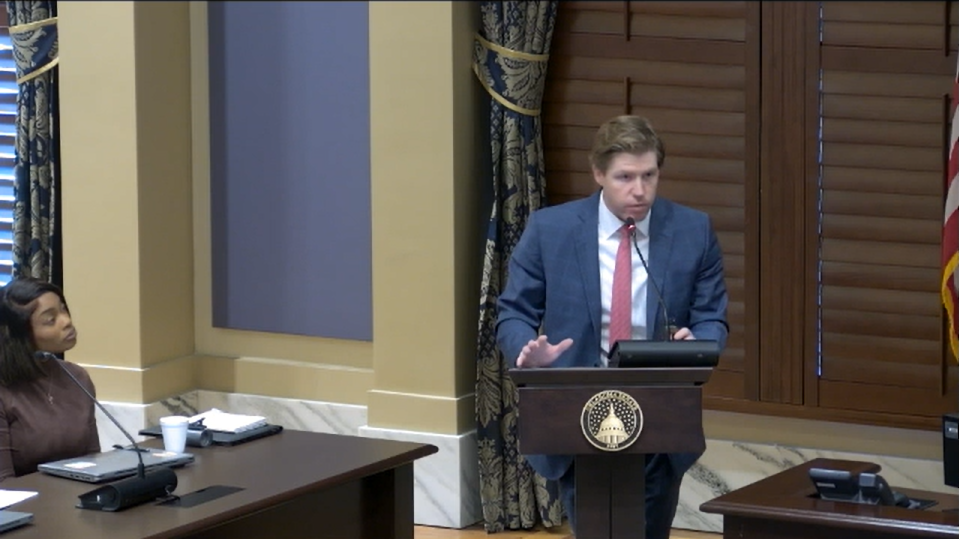
“We can’t fill this position,” Adam Maxey, vice president of government affairs for the State Chamber of Oklahoma, told lawmakers Thursday, describing the concerns employers bring forward. “And the response is childcare.”
The 2026 Oklahoma Business Leaders Poll surveyed 401 business owners and executives in early spring. Seventy-seven percent identified child care access as a barrier to workforce participation. Eighty-one percent said they planned to hire.[2]
Those ambitions depend, in part, on whether working parents can find and afford reliable care.
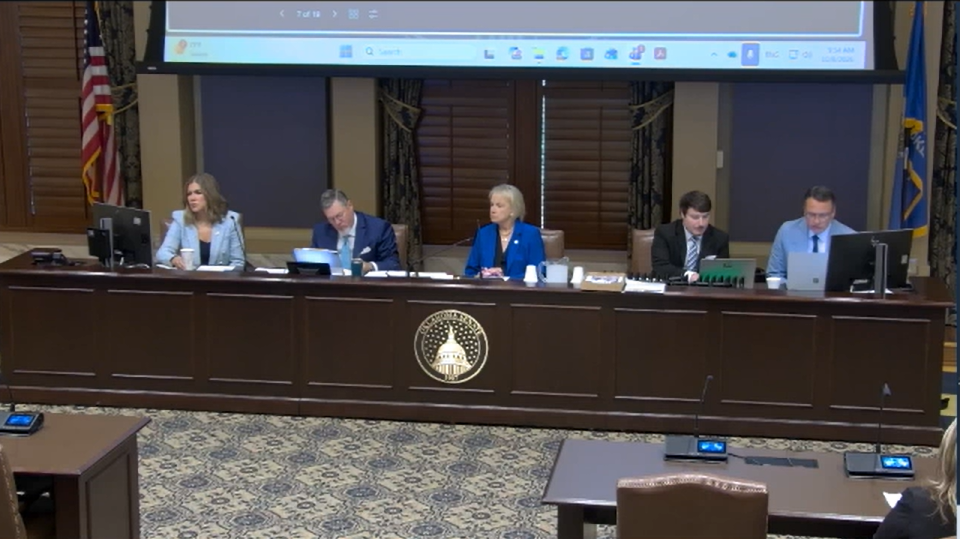
That connection brought business advocates, researchers, child care providers, and state officials together for an Oct. 8 interim study before the Senate Health and Human Services Committee. Sen. Chuck Hall and Rep. Suzanne Schreiber convened the study on child care regulations and reimbursements.[1]
“Our childcare is our workforce infrastructure,” Schreiber said. “Nothing happens in the employment world without a strong childcare industry.”
The testimony described a workforce problem with several connected parts: parents who need care to work, providers who need employees to open classrooms, and businesses whose ability to grow depends on people being available to fill their jobs.
The effect on the workday
An unfilled position is one way the problem shows up. An employee who cannot get to work because care falls through creates another.
In the Greater Oklahoma City Chamber’s 2023 child care study, 61% of 564 respondents reported taking unplanned vacation time or paid time off because care was unavailable. Thirty-seven percent reported reducing or changing their work hours for more than a few days. The survey targeted the Oklahoma City workforce with children; its findings describe those respondents.[3]
For an employer, those disruptions can mean revising a schedule, finding someone to cover a shift, or losing hours from an employee the business already recruited and trained. For a parent, the same disruption can mean using up leave or taking home a smaller paycheck.
The study also found that 95% of respondents said employer child care benefits would make a position more attractive. That finding describes what surveyed workers value; it does not measure the results of a particular benefits program.[3]
A 2023 ReadyNation estimate put Oklahoma’s annual economic losses from infant and toddler child care disruptions at $1.2 billion, including lost earnings, productivity, and tax revenue. The state estimate uses Oklahoma’s share of gross domestic product to allocate a national model. It offers a sense of economic scale, rather than a direct count of losses at Oklahoma companies.[4]
Maxey told lawmakers that business leaders want to participate in solutions. He described child care access as a recurring concern in the annual poll and a constraint on the decisions parents can make about work.
An employer role in expanding access
Employer participation was one of the options discussed at the hearing. Schreiber pointed to opportunities to bring additional contributors into the child care system.
“We think about bringing in other payers, our employers,” she said.
For a business considering that role, the practical questions start with its workforce: Is cost keeping employees from using available care? Are there openings near the workplace or employees’ homes? Do providers operate during the hours employees need?
The Oklahoma City Chamber study identified flexible scheduling and partnerships with providers among the approaches businesses could consider. Those options address different problems, from accommodating a pickup time to helping employees secure care.[3]
Federal tax policy provides another potential tool for qualifying employers. Beginning in 2026, the employer-provided child care credit generally covers 40% of qualifying child care expenditures, increasing to 50% for eligible small businesses. Annual limits are $500,000 and $600,000, respectively.[5]
According to IRS guidance, qualifying expenses can include contracts with child care facilities or intermediaries that arrange care. An employer does not necessarily need to build its own center. Eligibility and expenditure rules apply; an unrestricted employee stipend should not be assumed to qualify.[5]
The federal credit is an existing option employers can evaluate as state discussions continue. Thursday’s hearing did not enact a new employer program or establish the funding terms of one.
A classroom needs a teacher
Employers’ ability to help also depends on whether providers have care available. A contribution toward tuition has limited reach when a community lacks a staffed classroom.
Tracy Meeuwsen, program director at the Avedis Foundation, described nine months of research and conversations with providers in the Shawnee area. Some had room to serve more children but could not find enough employees to open the classrooms.
“A slot without a teacher isn’t a slot for a family.”
Tracy Meeuwsen | Avedis Foundation
That distinction matters when policymakers count the supply of care. A licensed space describes how many children a program may serve. It does not necessarily represent an opening a working parent can use tomorrow.
Stephanie Lippert, deputy director of the Oklahoma Partnership for School Readiness, described the difficulty of raising wages when families already struggle with tuition. She told lawmakers child care workers often earn about $11 to $14 an hour.
For parents, Lippert cited average annual infant care prices of about $13,000 in Tulsa and Oklahoma counties as of June 2026. That is roughly $1,080 a month for one child.
“When parents are at their lowest earning potential, and expected to carry such a high financial burden in order to be in the workforce, something is out of balance,” she said.
Cynthia Osborne, executive director of Vanderbilt University’s Prenatal-to-3 Policy Impact Center, explained why those pressures are difficult to resolve. Caring for young children requires substantial adult attention, and providers must cover the cost of that labor.
“It’s labor intensive. You cannot automate this,” Osborne said.
Raising tuition can put care beyond a family’s reach. Keeping wages low makes it harder to hire the teachers who could open another classroom. Both affect whether an employer can count on a parent being available to work.
Lippert also described a recruitment and retention pilot that helps child care employees with care for their own children. Helping a teacher afford to remain in the profession can help a provider keep a classroom open.
The policy choices ahead
Provider reimbursement was another part of the hearing. Janell Wheat, a board member of the Licensed Child Care Association of Oklahoma, and Mac McCrory, a member of the Oklahoma Child Care Association, called for changes they said would make state subsidy payments more predictable.
Oklahoma Human Services officials outlined the costs of those proposals. Katie Demuth, the agency’s chief of staff, said expanded absence payments or a move toward paying based on enrollment would require additional funding.
“The reality of many of the ideas put forward today, as it relates to childcare subsidy, is they have a cost associated,” Demuth said.
Those reimbursement proposals address how the state pays providers serving eligible families. Employer participation raises separate questions about how businesses can help their employees obtain care. Both were discussed; lawmakers made no funding decisions at the study.
Jaesha Quarrels, director of Child Care Services at Oklahoma Human Services, also described work to reduce administrative burdens while maintaining safety, including adjustments to monitoring visits and equipment inventory requirements.
Keeping people at work
Hall said the presentations would inform his work with colleagues on the coming legislative budget. Schreiber thanked the State Chamber for working with her across party lines and said discussions would continue on policy, regulation, and employer participation.
For businesses, the usefulness of those efforts will show up in everyday decisions: whether an applicant can accept a position, whether a parent can work the required hours, and whether an experienced employee can stay.
Reliable care helps turn an accepted job offer into a first day at work. It helps an employee stay on the schedule. For Oklahoma businesses trying to grow, those are practical measures of whether the next round of policy is working.
Sources and reporting notes
- Oct. 8, 2026 hearing agenda. IS 2026-43, Childcare Regulations and Reimbursements, Senate Health and Human Services Committee. Quotations and hearing accounts come from testimony at the study. Senate Room 535 video page
- 2026 Oklahoma Business Leaders Poll. 401 Oklahoma business owners and executives surveyed in early spring 2026. Workforce participation comparison, printed page 11. These percentages describe respondents’ views, are not shares of workers, and do not add to 100.
- Greater Oklahoma City Chamber child care study. 2023 Child Care Study Summary and Community Action Plan, pages 4–5: 564 respondents in a survey targeting the Oklahoma City workforce with children. Local survey results, not statewide prevalence.
- ReadyNation economic impact estimate. 2023 infant and toddler child care estimate. State estimates allocate the national $122 billion model by state GDP share. Oklahoma’s $1.2 billion estimate is also cited in the Oklahoma City Chamber report. Includes earnings, productivity, and tax revenue; not employer losses alone.
- IRS employer-provided child care credit. Tax year 2026 and later. Section 45F rules for qualifying expenditures, eligible small businesses, and annual caps. Consult the guidance for eligibility and claiming requirements.
Reporting through Oct. 8, 2026. Hearing accounts are attributed to the speakers. The two surveys cover different populations and years; their results are not combined. The interactions display reported survey findings and do not estimate an individual business’s losses.Senate Room 535 video page.