OU regents pick Hilliary clears Rules as Senate eyes R&D, tech transfer
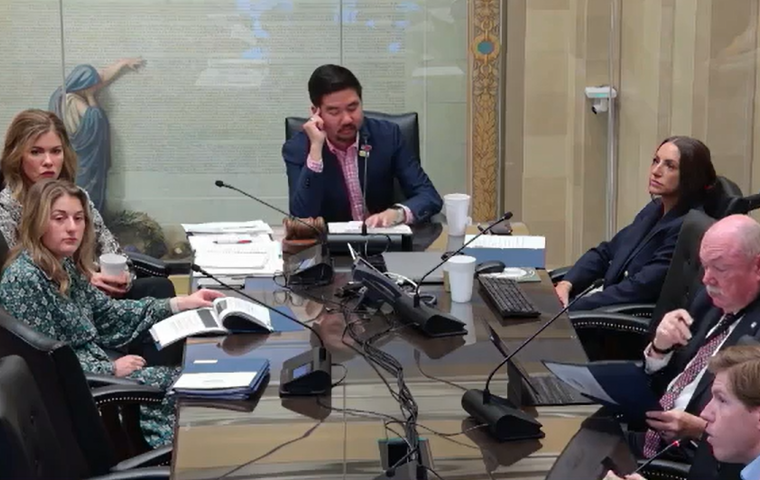
Hilliary’s nomination moved out of Senate Rules as Sen. Kristen Thompson tied OU’s AAU ambitions to economic growth and the state’s broader push to convert research into jobs.
EDITOR’S NOTE: This story was updated April 22 to reflect that SB 1530 became law without the governor’s signature.
OKLAHOMA CITY (OBV) — Dustin Hilliary’s appointment to the University of Oklahoma Board of Regents advanced Monday after clearing the Senate Rules Committee, where discussion quickly broadened beyond governance to the state’s research-and-development strategy and commercialization pipeline.
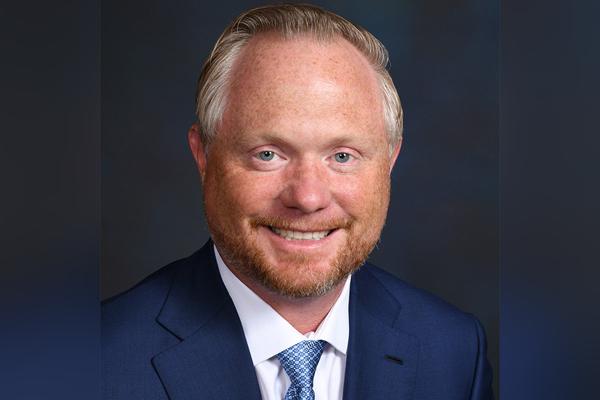
Hilliary, a telecommunications executive and OU alumnus, told lawmakers the OU system’s three universities—the University of Oklahoma, Rogers State University and Cameron University—are “big economic drivers” and outlined priorities centered on enrollment growth, first-generation students and adult degree completion.
He also pointed to the flagship university’s progress toward a 40,000-student enrollment goal and argued that sustained investment in higher education delivers long-term economic returns.
The most significant exchange during the hearing came from Sen. Kristen Thompson, who pressed Hilliary on research and development capacity and OU’s pursuit of Association of American Universities (AAU) status.
Thompson framed R&D as “the last true pillar of the economy that we have not conquered,” arguing that AAU designation is less about prestige than access to large-scale federal research dollars and downstream job creation.
“What I need this legislature to understand is that AAU is not just an accreditation, it’s not a piece of paper,” Thompson said. “It is access to billions of dollars of funds. This could actually change the economy of the state of Oklahoma. $212 million annually, over 2,200 jobs, $2.17 billion in regional economic impact.”
Hilliary agreed, telling the committee that increased research funding could drive industry spinouts and attract new employers across Norman, Oklahoma City, and Tulsa.
That R&D focus mirrors recent legislative movement on technology transfer and commercialization, including SB 1530, which became law without the governor’s signature April 21, and SB 1670, which has advanced but is still moving through the process. Together, those measures aim to strengthen how university research is evaluated, managed and moved into the private sector, a link lawmakers increasingly see as essential if higher education investment is to translate into new companies, higher wages and regional growth.
Taken together, the discussion aligns with the State Chamber’s Oklahoma Competes framework, which identifies innovation and entrepreneurship as a core pillar of long-term competitiveness alongside workforce, infrastructure and economic climate.
As Hilliary’s nomination moves to the full Senate, lawmakers signaled that governance appointments, research investment and tech transfer policy are increasingly being viewed as interconnected pieces of the same economic strategy.
“A degree in Oklahoma isn’t just an education. It’s a $20,000 year step towards opportunity, stability, and stronger Oklahoma,” Hilliary said.