Senate advances SB 1778 literacy overhaul with House amendments, sending measure to governor
The Strong Readers Act rewrite standardizes early screening, expands interventions and reporting, and sets a 2027–28 retention trigger tied to third-grade reading proficiency
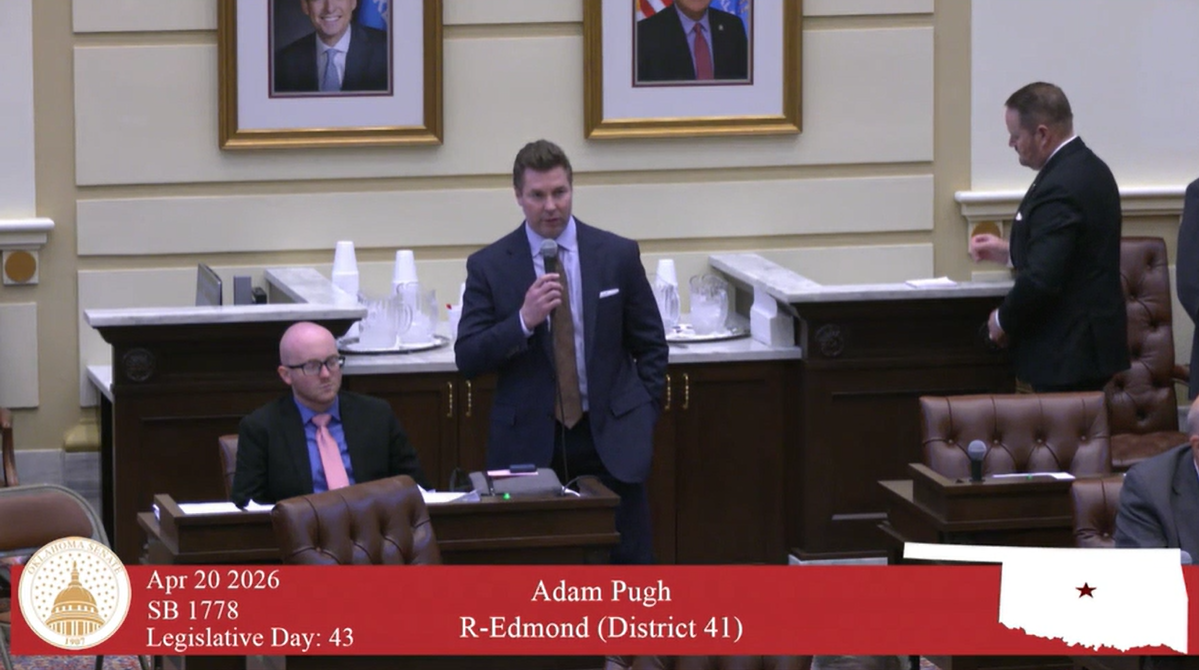
OKLAHOMA CITY (OBV) — The Oklahoma Senate on Monday adopted House amendments to Senate Bill 1778 and passed the revised Strong Readers Act package, moving the sweeping early-literacy measure to the governor for consideration.
The bill is authored by Sen. Adam Pugh, R-Edmond, and carried House coauthors including Speaker Kyle Hilbert.
In closing debate, Pugh framed SB 1778 as a long-running priority focused on raising reading outcomes.
“Members, there’s probably not been a bill or a policy topic that I have spent more time working on than literacy since the day I became education chair six years ago,” Pugh said. “I worked very hard to raise our literacy rates, and many of you have been a part of that. So thank you for making this piece of legislation the best that it can be. Thank you for answering my questions and giving me feedback — that goes for my House colleagues as well, who played a vital role, because nothing in this building just happens on one side. I think this will be the strongest literacy bill in the country.”
The House-amended version formalizes legislative intent that Strong Readers be implemented within a multi-tiered system of supports (MTSS) framework and strengthens core literacy instruction requirements, while also directing a shift to a single statewide screening instrument selected by the State Board from options evaluated and ranked by the Office of Educational Quality and Accountability and approved by the Commission for Educational Quality and Accountability.
SB 1778 expands intervention requirements by directing individualized reading intervention plans to specify the intensity of instruction and by prohibiting required intervention time from occurring during math instruction.
Beginning with the 2027–28 school year, the bill sets a third-grade promotion requirement tied to reading proficiency on the statewide English Language Arts assessment (or an approved alternative assessment) and establishes good-cause exemptions, including certain students with disabilities whose IEP indicates statewide assessment participation is not appropriate and certain English learners based on time in program.
The measure also revises Strong Readers funding structure by creating a base literacy allocation for K–3 and supplemental weighted funding tied to Tier 2 and Tier 3 interventions, and it creates a Strong Readers Revolving Fund to accept private and tribal donations designated for specific schools, districts or regions.