







State Question 832 is best known for its proposed path to a $15 minimum wage. But the measure also includes a mechanism for what happens after that.
Under the official ballot title, Oklahoma’s minimum wage would rise on a schedule to $15 per hour in 2029. Beginning in 2030, it would then increase annually based on changes in the cost of living as measured by the Consumer Price Index for Urban Wage Earners and Clerical Workers, or CPI-W, or any successor index.
The ballot title says those annual increases would continue indefinitely and would not require approval from Congress or the Oklahoma Legislature.
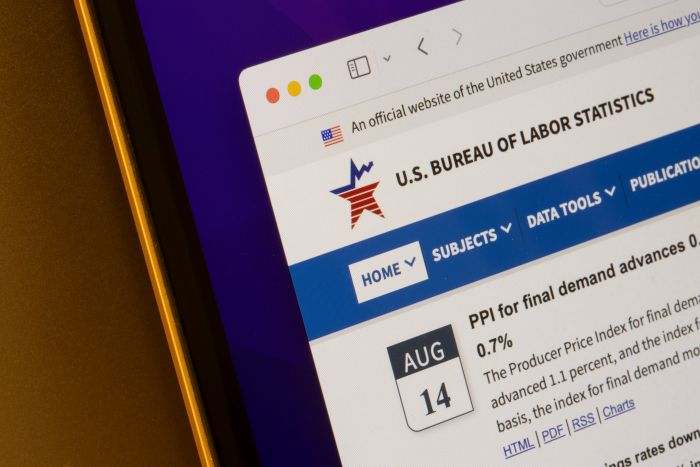
CPI-W is one of the inflation indexes published by the U.S. Bureau of Labor Statistics. BLS describes it as a monthly measure of the average change over time in prices paid by urban wage earners and clerical workers for a market basket of consumer goods and services.
What makes CPI-W distinct is the population it is designed to represent. BLS says CPI-U, the broader Consumer Price Index for All Urban Consumers, covers more than 90 percent of the U.S. population. CPI-W covers approximately 30 percent. Both indexes are built from price data collected by BLS, but they represent different population groups and are weighted based on those groups’ spending patterns.
That distinction is one reason the State Chamber has raised concerns about the automatic escalator in SQ 832.
“Voters deserve to know that SQ 832 is not a gradual increase,” said Adam Maxey, vice president of government affairs at the State Chamber of Oklahoma. “It ties future increases to CPI-W, a federal formula that is whose calculation is underpinned by the cost-of-living giant metros like New York and San Francisco. Miami, OK and Miami, FL are two very different places and Oklahomans should be skeptical of policy that ties our rural communities to policy decisions made in big cities on the coasts.”
The geography of CPI also matters. BLS says monthly CPI indexes are available for the United States, the four census regions, the nine census divisions and some local areas. But not every metro area has its own published local CPI index. BLS pages for both Oklahoma City and Tulsa point users to the South Region consumer price index rather than a separate Oklahoma City or Tulsa CPI release.
Oklahoma City does appear in BLS’s broader CPI geographic sample, but it is not published as its own standalone local CPI index in the way places such as Dallas-Fort Worth and Houston are reflected in BLS Southwest regional CPI materials. Tulsa does not appear in the same CPI geographic sample list.
In practical terms, CPI-W is not simply a generic synonym for inflation. It is a specific federal index, representing a specific population group, that SQ 832 would use to calculate automatic annual minimum-wage increases after Oklahoma’s wage floor reaches $15 per hour in 2029.
That makes CPI-W one of the key mechanics inside SQ 832. The scheduled increases would get Oklahoma to $15. CPI-W would determine what happens next.
SIDEBAR:
Why rent matters in the CPI-W formula
CPI-W is built from a market basket of consumer goods and services, including food, transportation, medical care, energy, and shelter. In the index named in SQ 832 for automatic annual minimum-wage increases beginning in 2030, shelter is one of the largest categories.
In BLS’s December 2025 relative-importance table for CPI-W, shelter accounted for 33.594% of the index.
For comparison, Zillow Rental Manager listed the following average rents for all bedrooms and all property types, last updated April 26, 2026:
| Market | Average rent |
| San Francisco, CA | $3,927 |
| New York, NY | $3,610 |
| Miami, FL | $3,100 |
| United States | $2,000 |
| Dallas, TX | $1,900 |
| Houston, TX | $1,863 |
| Oklahoma City, OK | $1,350 |
| Tulsa, OK | $1,300 |
Zillow identifies the figures as Zillow Rentals data. The rental figures are provided as a market comparison and are not CPI inputs.
BLS’s CPI sample treats some metro areas as stand-alone markets and others as part of a broader sample. In the West South Central division, Dallas-Fort Worth and Houston are stand-alone CPI markets. Oklahoma City is included in the sample, but not as a stand-alone market. Tulsa is not listed as a sampled market.