
Oklahoma makes ‘Bell to Bell, No Cell’ permanent
Gov. Kevin Stitt signed HB 1276 into law, extending a statewide school cell phone restriction that began as a one-year pilot backed by Sen. Ally Seifried.
OKLAHOMA CITY (OBV) — Nearly 60,000.
That is roughly how many phone notifications a high school of 1,000 students might expect its students to receive during a single school day.
Not texts after practice. Not late-night scrolling. Not the digital avalanche waiting when students get home.
Just the pings, buzzes, banners, lock-screen flashes, group chat updates, social media alerts, game reminders, and app notifications competing for attention between the first bell and the last.
Research from Common Sense Media found teens received a median of 237 phone notifications per day, with about a quarter arriving during school hours. For a school of 1,000 students, that translates to nearly 60,000 school-day notifications.
Oklahoma is now trying to silence them.
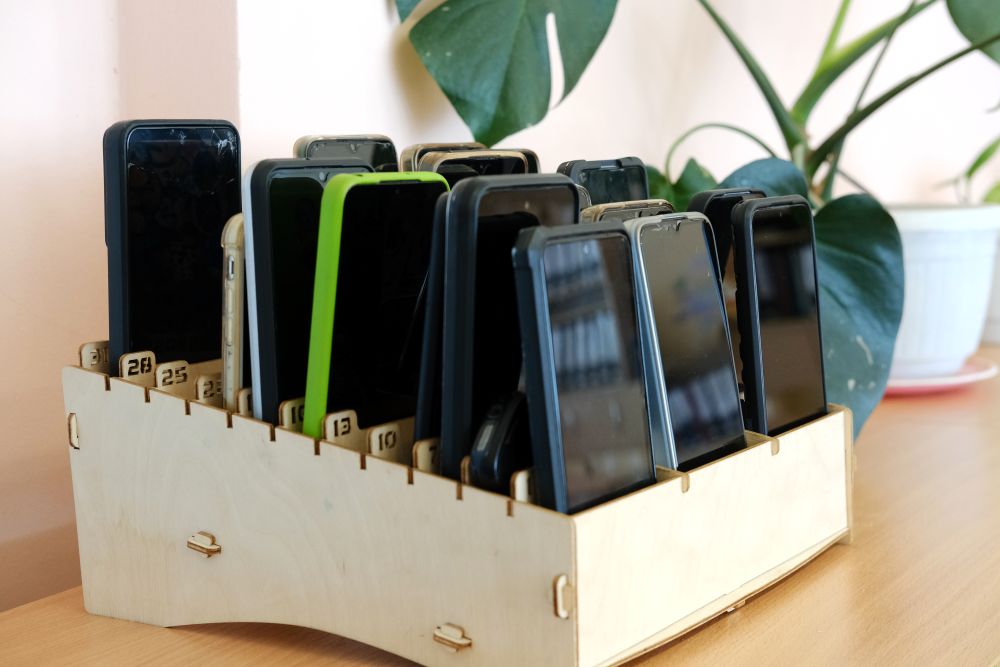
Gov. Kevin Stitt signed House Bill 1276 into law, making Oklahoma’s statewide “Bell to Bell, No Cell” policy permanent. The law requires school districts to adopt policies prohibiting student cell phone use on campus during the school day, with exceptions for emergencies and documented medical needs.
“In 2024, I challenged every school in Oklahoma to go phone-free so our kids could put their focus back in their studies instead of on their screens,” Stitt said. “Today, we’re making that vision permanent in state law.”
The permanent law follows last year’s Senate Bill 139, which required public school districts to adopt “bell to bell” cell phone policies for the 2025-26 school year. That measure was designed as a one-year restriction, giving lawmakers, school districts, families, and students time to see whether a statewide approach would work.
Sen. Ally Seifried, R-Claremore, who carried the original one-year bill and helped lead the permanent version, said she initially expected more resistance.
“We passed Senate Bill 139 last year. It was a compromise, and it said for one year, we’re going to restrict cell phones from bell to bell, the start of the first bell to the end of the last bell,” Seifried said. “My promise was we’d reevaluate.”
Seifried said she thought August, when the policy first took effect, would be difficult. Instead, she said, parents, schools, and students began reporting positive changes almost immediately.
“I anticipated August being challenging because I thought people would be frustrated and emailing me, you know, how dare you?” Seifried said. “But it was amazing. I mean, it even surpassed anything I could have anticipated.”
She said some of the most meaningful feedback came not from political advocates, but from parents simply noticing a difference at home.
“They were just sharing it because it was affecting their life, not necessarily because it was a state law,” Seifried said. “They were just surprised.”
By fall, Seifried said districts began asking lawmakers to keep the policy in place. While districts could have adopted their own phone restrictions locally, she said the statewide law gave schools consistency and cover.
“What we really talked about was how, by it being a state law, it gave everyone the cover that they needed,” Seifried said. “It was implemented all across the state, and everyone was in it together. So I think that’s why it was so successful.”
HB 1276 passed the Senate 41-5 in April, extending the state’s requirement that every public school district have a “bell to bell” policy prohibiting students from having cell phones in school.
In the governor’s announcement, Seifried said the policy has already changed classrooms across Oklahoma.
“This policy has already made a tremendous difference in classrooms across the state by reducing distractions, cutting down on bullying, keeping kids focused on learning throughout the school day and ensuring they develop the social skills to interact with their peers face-to-face,” Seifried said.
For Seifried, the issue is not only academic. It is also social.
She said high school students she met at the Capitol often surprised her by supporting the restriction, even when she expected them to oppose it.
“Kids inherently know it’s not normal to be as connected as we have been, but they don’t know how to get away from it because that’s all they’ve ever known,” Seifried said. “I think they really have appreciated that freedom, and they’ve made new friends and they’re trying new things.”
Seifried said the policy gives students space to experience something older generations often took for granted: boredom, quiet, face-to-face conversation, and time to think without reaching for a screen.
“It’s okay to be bored,” Seifried said. “It’s okay to have a thought and sit there and kind of daydream for five to 10 minutes and not just be scrolling.”
The law also fits into a broader education agenda from Stitt and lawmakers focused on academic outcomes, instructional time, early literacy, teacher pay, and classroom expectations.
“We’ve invested in reading, we’ve raised the bar on academic standards, and we’re seeing results,” Stitt said. “Kids need the opportunity to chase their American Dreams, and that starts in a distraction-free learning environment.”
Seifried said removing phones is only part of the work. She said lawmakers have also begun asking what schools should add back into students’ days when technology is removed, pointing to efforts to increase recess time and encourage more hands-on learning.
“It’s not just enough to remove a cell phone from schools,” Seifried said. “What do you want to add to it?”
For Oklahoma schools, the answer lawmakers landed on is now permanent: from the first bell to the last, the school day belongs to students, teachers, and learning — not the phone in a backpack.