
Oklahoma employers make the case for sharing child care costs
AAON and Tulsa airport leaders described the staffing consequences of unreliable care as House lawmakers examined a voluntary program splitting costs among employers, families, and the state.
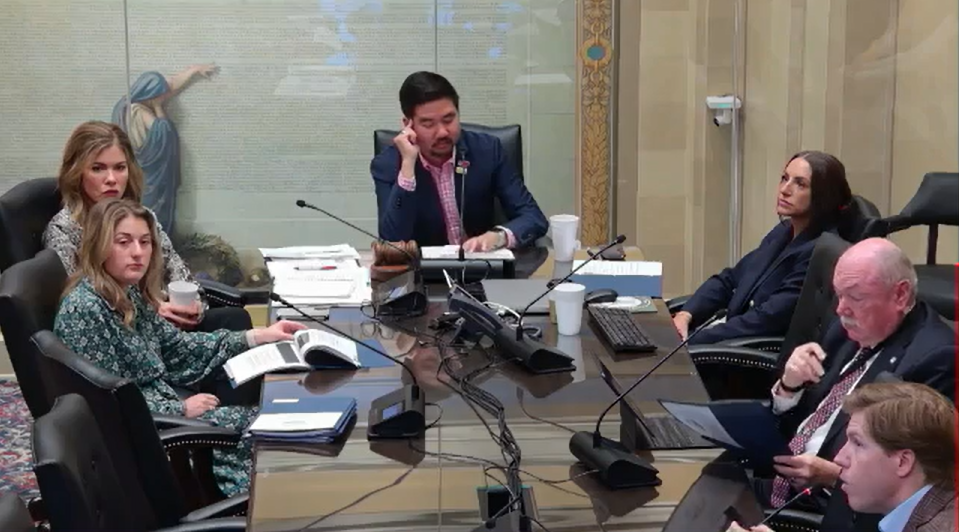
OKLAHOMA CITY (OBV) — For Oklahoma employers trying to keep production lines moving and flights on schedule, child care is becoming a business decision.
Representatives of AAON, Tulsa Airports Improvement Trust, and the State Chamber of Oklahoma told House lawmakers Oct. 14 that unreliable or unaffordable care keeps employees from working, complicates recruitment, and can discourage workers from accepting promotions.
They appeared during an interim study examining employer participation in child care costs, including a voluntary “tri-share” model that would divide the expense among businesses, families, and the state.
“We don’t have people coming to work because childcare is a problem. We’re missing production deadlines because childcare is a problem,” said Adam Maxey, vice president of government affairs for the State Chamber.
The discussion built on issues examined during an Oct. 8 Senate study, covered in OBV’s “When child care falls through, Oklahoma businesses feel it.” The 2026 Oklahoma Business Leaders Poll found that 77% of surveyed business owners and executives identified child care access as a barrier to workforce participation. Eighty-one percent said they planned to hire.
Wednesday’s testimony focused on how employers could help address that gap and what would make participation practical.
Maxey said businesses should decide whether the investment makes sense for their workforce. Their participation could also give child care providers a predictable source of revenue, helping them hire teachers and open classrooms that otherwise remain unused.
“So it can have an anchor tenant effect on some of these availability issues that we talk about, all voluntary and all based in an employer’s belief in their community, as well as meeting their workforce needs,” he said.
For Tulsa-based HVAC manufacturer AAON, those needs extend across long shifts and families struggling to coordinate care.
Carol Bush, the company’s government relations manager, said an employee survey identified cost, transportation, and access to specialized care as recurring challenges. Some parents work opposite shifts to cover child care. Others face deciding whether one parent should leave the workforce.
One employee reported traveling 25 miles in the opposite direction from work to reach affordable, safe care, Bush said.
Employees expressed interest in on-site child care, but the company faces its own space constraints.
“I can tell you right now, there is no way we can do that. We are busting at the seams,” Bush said.
AAON is considering whether changes to shift schedules could help employees, she said. The company is also interested in participating in a tri-share program and providing feedback on its operation.
Tulsa airport leaders described a similar challenge in an industry whose schedules rarely fit traditional child care hours.
Alexis Higgins, CEO of Tulsa Airports Improvement Trust, said airport shifts can begin at 3:30 a.m. Delayed flights can keep employees working well past their scheduled departure time.
A survey of workers at airport-based businesses identified proximity, reliable care, and availability during varied shifts as priorities. The trust explored an on-site facility, but providers needed upfront construction funding that Higgins said the airport could not supply from its restricted revenues.
The trust instead offers its own employees a dependent care match of up to $2,500 while continuing to pursue funding for a facility. Higgins said a proposed center would need at least 40 children to make the finances work, with room to expand to 120.
“My goal is to make sure planes can land and take off,” Higgins said. “And in order to do that, make sure our customers have a great experience, we have to have a workforce there to provide that service.”
The testimony underscored two connected challenges: helping families pay for care and ensuring a staffed classroom is available.
At the earlier Senate study, Avedis Foundation program director Tracy Meeuwsen described that distinction plainly: “A slot without a teacher isn’t a slot for a family.”
Lawmakers also questioned how income eligibility would affect employees who accept overtime or promotions. Rep. Suzanne Schreiber said the proposal could help workers moving beyond existing subsidy eligibility, but its design must avoid creating another abrupt loss of assistance.
Maxey said that concern is especially relevant for hospitals, manufacturers, and other employers whose workers pick up additional shifts.
“I don’t believe we should ever set up an incentive that’s a disincentive to work,” he said.
Contribution levels, eligibility, funding, and administration remain questions for lawmakers as they develop the proposal.