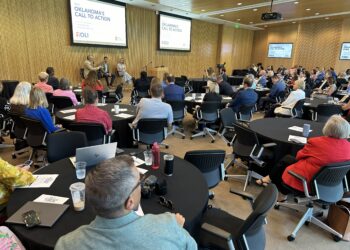






OKLAHOMA CITY (OBV) — Oklahomans are giving the state’s education system low marks at the same time lawmakers are moving a wave of school reforms from debate to implementation, according to the 2026 Oklahoma Education Poll from the Oklahoma Center for Education Policy at the University of Oklahoma.
The poll, fielded in March, surveyed 1,165 Oklahomans and has a margin of error of less than three percentage points. The report describes a public that is broadly dissatisfied with the current state of education but open to significant policy changes aimed at strengthening schools and improving student outcomes.
Only 13% of respondents gave the state an A or B grade for managing Oklahoma’s K-12 education system, while nearly two-thirds gave the state a D or F. Local schools fared better, but not by much: 29% gave their local schools an A or B, down from 41% two years ago.
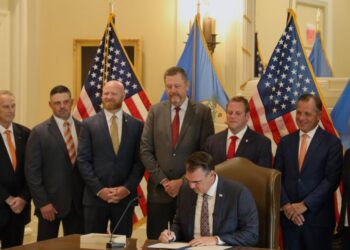
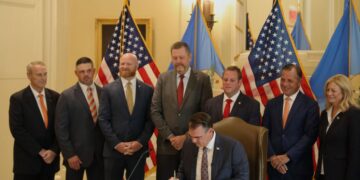
The findings arrive during one of the most active education policy sessions in recent memory. Gov. Kevin Stitt signed SB 1778, a major Strong Readers Act overhaul, into law April 21. The law strengthens early literacy efforts through statewide reading screenings, targeted interventions, teacher training, parent communication and third-grade retention requirements for students who continue to struggle with reading.
The State Chamber supported SB 1778 as part of its Oklahoma Competes agenda, which identifies education and workforce as core pieces of the state’s long-term competitiveness strategy. The Chamber has argued that stronger early literacy outcomes are foundational to workforce development, career readiness, and economic growth.
“The advancement of SB 1778 reflects the real momentum building around literacy across Oklahoma,” State Chamber President and CEO Chad Warmington said after the bill was signed. “This policy will strengthen our competitiveness regionally and nationally. When we get early childhood literacy right, everything else gets easier from workforce development to long-term economic growth.”
That policy appears to align with public opinion. The OU poll found that 70% of Oklahomans support requiring third-grade students who are not reading at grade level to repeat third grade, while 23% oppose the idea. Annual state testing received even stronger support, with 76% in favor and 20% opposed.
The Strong Readers Act also included significant state investment. Legislative leaders said the budget includes more than $43 million for reading instruction and interventions, along with additional funding for teacher training academies, reading-at-home initiatives and statewide math and reading screeners.
The same public appetite for classroom-focused reform shows up in other parts of the poll.
House lawmakers sent HB 1276, the permanent “Bell to Bell, No Cell” student cellphone ban, to the governor’s desk on Tuesday. The bill would require districts to adopt policies prohibiting students from using cellphones on campus during the school day, while allowing emergency and medical exceptions and giving local districts flexibility in implementation.
“Bell to Bell, No Cell has worked wonders in classrooms across Oklahoma,” said Senator Ally Seifried, R- Claremore, and senate author of the bill. “With fewer distractions from cellphones and social media, students are engaged and focused on their schoolwork again. Making this permanent is the right move for Oklahoma kids, and I look forward to seeing academic outcomes continue to improve the longer this policy is on the books.”
The poll found 64% of Oklahomans support banning students from using cellphones in class, while 33% oppose the policy. Support was strongest among Republicans at 74%, but it also drew support from 61% of independents and 54% of Democrats.
Lawmakers also moved on recess. Stitt signed SB 1481 into law, doubling the minimum daily recess requirement for public school students in kindergarten through fifth grade from 20 minutes to 40 minutes beginning next school year. The law also prohibits schools from taking away recess as punishment.
While the poll did not ask directly about recess, it did find support for broader student and instructional reforms. Sixty-three percent of respondents supported requiring Oklahoma schools to offer a 180-day school year, while 25% opposed the idea.
Oklahomans also expressed strong support for more education investment. Seventy-one percent said teacher salaries should increase, and 70% said government funding for public schools should increase. Respondents were told public school teachers in Oklahoma are paid an average of about $60,000 a year and that the state spends about $12,600 per student before answering those questions.
Support for teacher performance pay was also strong. Sixty-eight percent of respondents supported offering more pay to teachers whose students make large gains on state tests, while 24% opposed the idea.
The poll suggests Oklahomans are not simply asking for more spending or only for tougher accountability. They appear to want both.
The strongest consensus areas were tied to measurable academic expectations, classroom focus and teacher support. Annual testing, third-grade reading retention, teacher pay increases, school funding increases, student cellphone limits and performance-based teacher compensation all received majority support.
The politics become more complicated on governance and school choice.
Oklahomans overwhelmingly opposed making the state superintendent a governor-appointed position. Only 26% supported the idea, while 62% opposed it, making it the least popular proposal included in the poll. The result comes after a year of public debate over state education leadership and whether Oklahoma should continue electing the superintendent or move to an appointed model.
School choice produced more divided results. Charter schools received 51% support and 35% opposition. The private school tax credit was nearly split, with 48% support and 44% opposition. Equalizing charter school funding was essentially dead even, with 43% support and 44% opposition.
The poll also found 53% support for combining two small adjoining districts into one larger district, while 32% opposed the idea. Support was lower in small towns and rural areas, where school districts often serve as central community institutions.
Party differences remain sharp on some questions, but not all. Republicans were more supportive than Democrats of most specific policy reforms included in the poll, especially school choice, restroom and locker room policies, and making the state superintendent appointed. But the report found smaller partisan gaps on third-grade retention, teacher performance pay, annual state testing, a longer school year and district consolidation.
That matters because many of the education bills moving this session fall into areas where public support appears less polarized than the broader politics of education might suggest.
The report’s central conclusion is straightforward: Oklahomans think schools need to improve, and they are willing to consider major changes.
“Overall, the message appears to be clear: the state’s schools need to improve, and the public is open to significant reform,” the report states. “Oklahomans want better schools, not more of the same.”
For policymakers, the poll offers a useful snapshot of the public mood. Voters are not satisfied with the status quo. They support more investment in teachers and schools. They also support stronger expectations, more accountability and policies aimed at improving classroom focus and early academic outcomes.
The harder question is what happens next.
With SB 1778 now law, a permanent cellphone ban awaiting action from the governor, and new recess requirements set to take effect next school year, Oklahoma’s education debate is shifting from whether to reform to how well those reforms are carried out.
The poll suggests the public is ready for change.
Now the state has to deliver results.