THE CALL TO LAUNCH
The call to launch: How Maurice Compton built Ready 3
Maurice Compton and state Sen. Adam Pugh turned a connection at the University of Oklahoma into a growing, veteran-led company supporting military customers across the United States and abroad.
Begin the story↓READY3
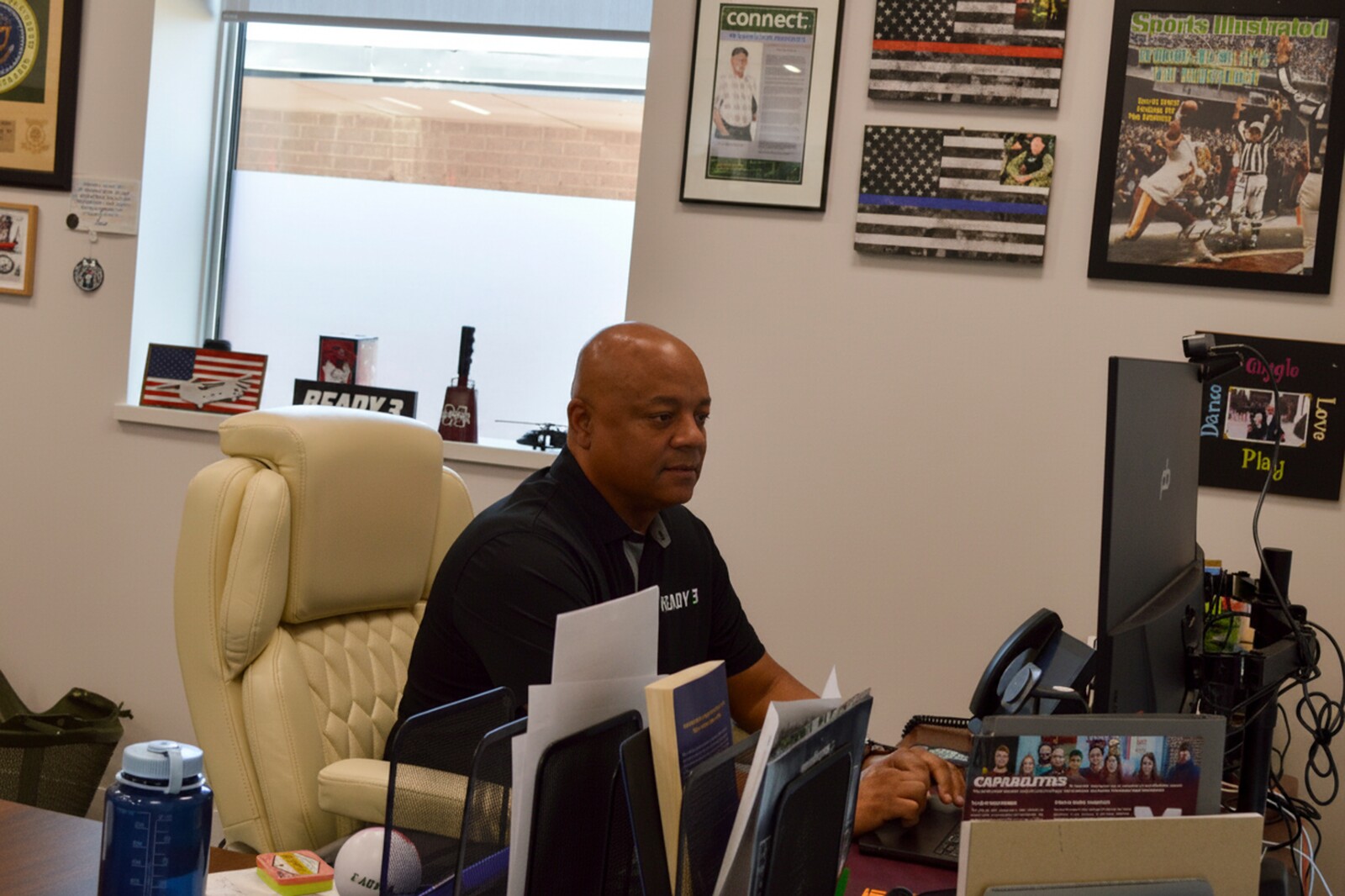
Maurice Compton at Ready 3’s Oklahoma City headquarters.
Spend five minutes with Maurice Compton and you know what he is about.
The walls are crowded with photographs, military insignia, American flags, framed clippings, family photos, mementos, and a Sports Illustrated cover.
Elsewhere in Ready 3’s Oklahoma City headquarters, the company’s name stretches across a wall. Nearby, a conference room wall is etched with a photograph of a fellow Marine killed in a helicopter crash during the invasion of Iraq.
The office is full of personality. The purpose running through it is unmistakable.
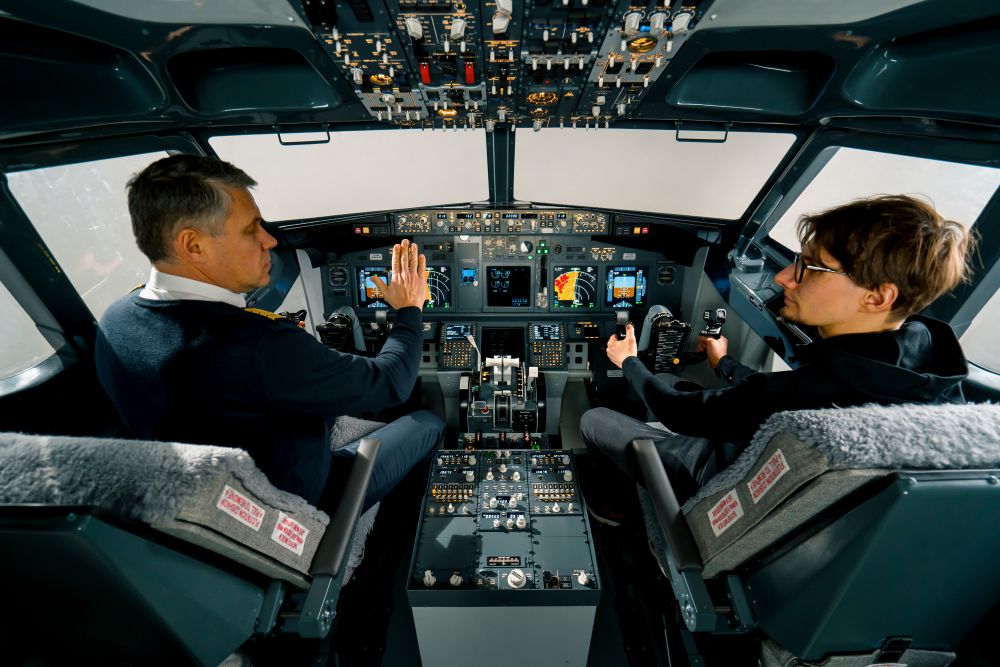
The company’s name comes from Compton’s years as a CH-46E crew chief in the Marine Corps.
“Ready 3 is the last communication between a pilot and aircrew before we start any mission,” Compton said.
The phrase came immediately before the crew started the aircraft and prepared to launch during casualty evacuation missions in Iraq.
The final call before launch
The phrase came immediately before the crew started the aircraft and prepared to launch during casualty evacuation missions in Iraq.
Compton said those missions gave the phrase its urgency. The work at Ready 3 carries different stakes, but the company brings that same readiness and sense of responsibility to its customers.
The phrase eventually became the name and operating philosophy of the defense solutions company Compton founded in Oklahoma City in 2021.
Keeping complex systems ready
Compton bristles slightly at the term “defense contractor.” A contract may be the mechanism, but it does not adequately describe the work.
Ready 3 specializes in sustainment, helping defense agencies keep aircraft, equipment, training systems, data, and supply chains operational after the government buys them.
“We don’t design or make those systems. What we do is assist the agencies and components of the Department of Defense in sustaining them through logistics, contracting, and making sure we maintain a good readiness posture.”
Its public portfolio includes work supporting F-35 life-cycle logistics, Air Force training systems across more than 15 bases, T-7 maintenance training, and warehouse modernization for the Marine Corps.
Six disciplines. One standard.
Select a capability to see how it contributes to readiness.
From one employee to 48
Compton’s wife first pointed him toward the University of Oklahoma’s Executive MBA in Aerospace and Defense program.
“She already had her master’s degree. She said, ‘This is right up your alley. Plus, you need to catch up.’”
Compton applied without expecting to be admitted. Once he entered the program, an idea he had carried for years began to look possible.
Halfway through the program, he sat working on a paper late one night. He already had the pieces of a company prepared. He simply had not committed.
“I said, ‘You know what? Forget it. Here we go.’ I hit the button, and everything started rolling.”
During the program, Compton met state Sen. Adam Pugh, R-Edmond. Pugh joined Ready 3 about a year after its launch and now serves as an owner and chief growth officer.
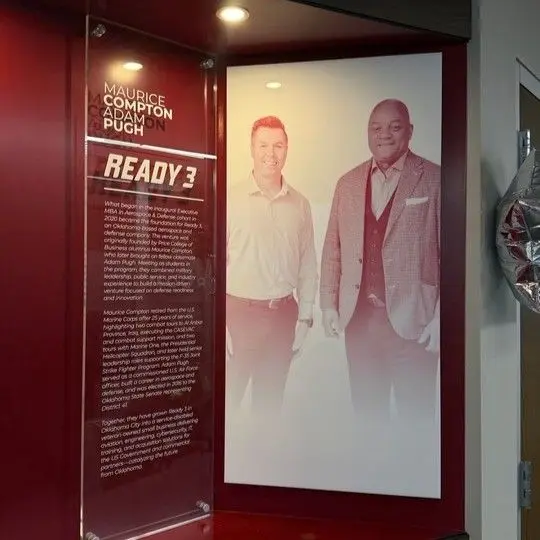
Compton said Pugh helped introduce him to Oklahoma’s business and defense networks as the company found its footing. OU recently honored Compton and Pugh with a permanent display at the Gene Rainbolt Graduate School of Business recognizing their impact on the program and continued support for its students.
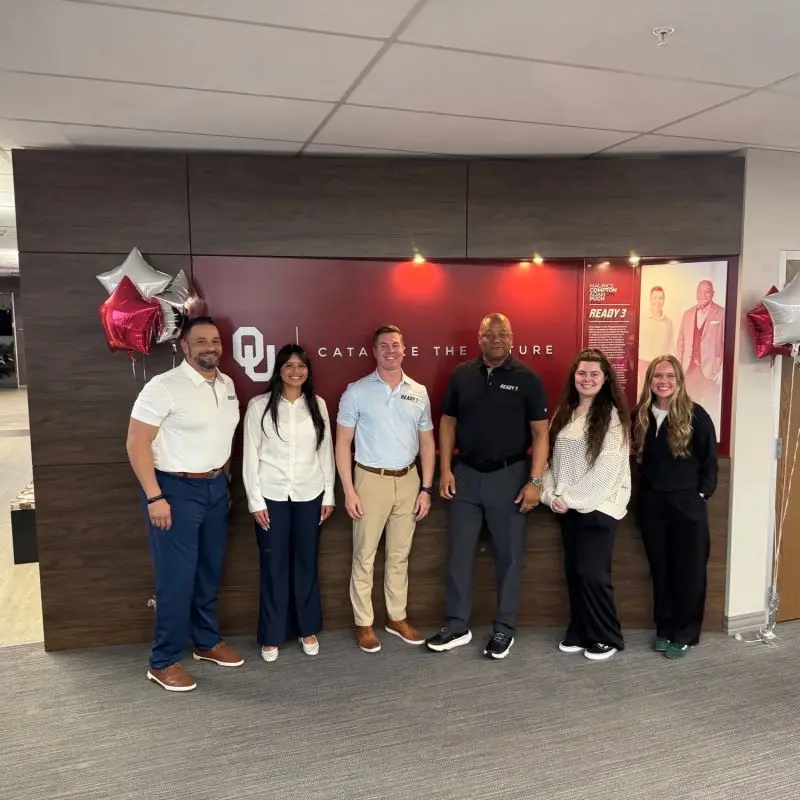
Ready 3 began with one employee. It now employs 48 people in 11 states and supports defense customers around the world. Compton estimated that 42 of them are veterans.
Asked whether the growth surprised him, Compton did not hesitate.
“No. I have a lot of belief in ourselves and what we’re going to do. It was more gratifying.”
The company has a low turnover rate, which Compton attributes to its mission, culture, and treatment of employees.
“I hire you to do a job. Do your job. We don’t micromanage.”
Ready 3 does not place names or titles on its office doors.
“We’re just people doing work,” he said.
Building in Oklahoma
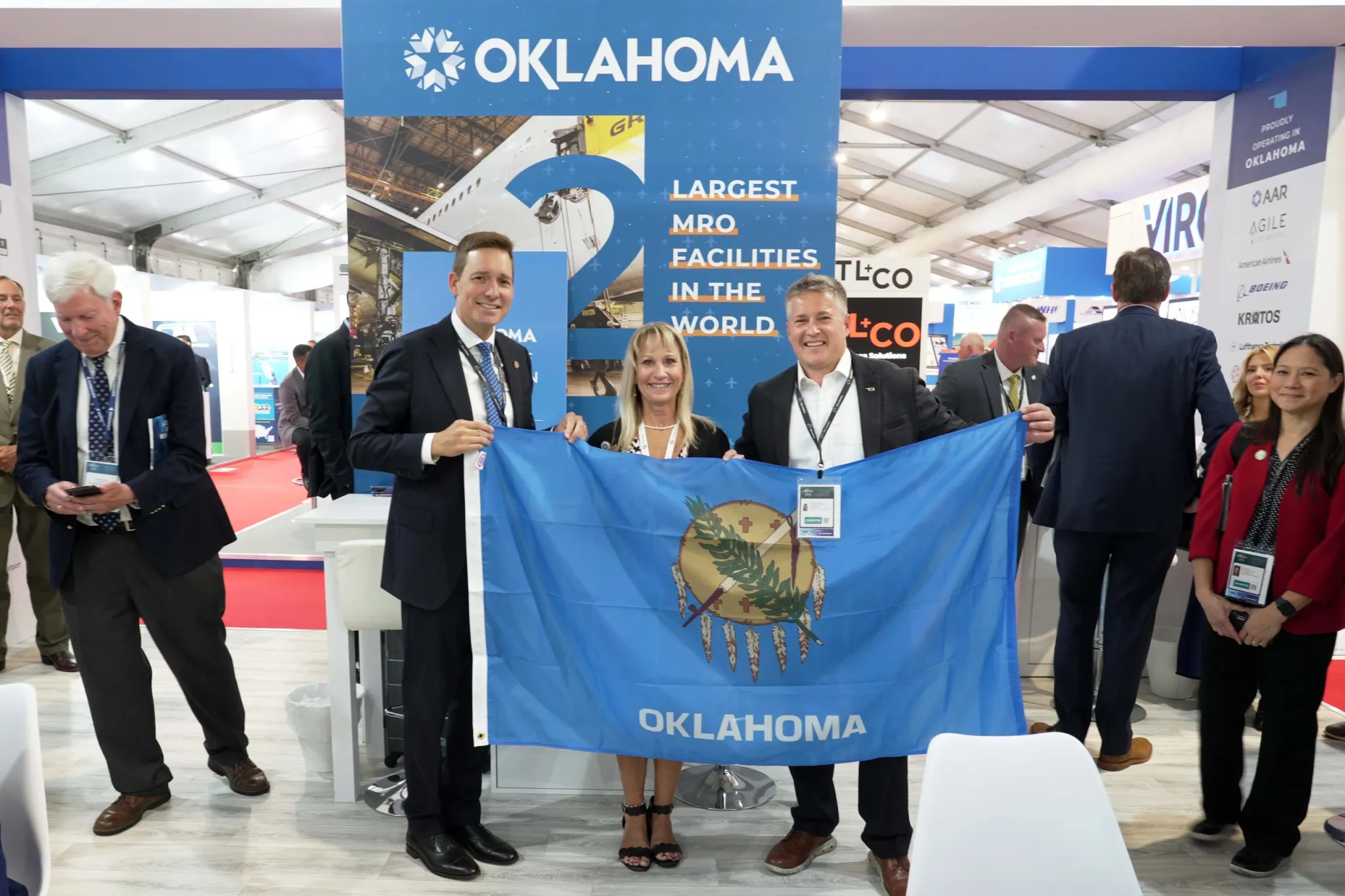
As Ready 3 expanded nationally and internationally, Compton kept its headquarters in Oklahoma City.
He credits Oklahoma’s business climate, people, military presence, and network of aerospace and defense organizations with helping the company grow.
He became involved with organizations including the Greater Oklahoma City Chamber and the Oklahoma Defense Industry Association. Those connections helped Ready 3 become part of the state’s aerospace and defense ecosystem.
“You have to get embedded in those support systems. That is how you influence better policy, better laws, and better regulations for your business community.”
Oklahoma’s aerospace and defense industry includes major military installations and global manufacturers, but companies such as Ready 3 form another important part of the sector. They supply specialized expertise in logistics, software, training, and engineering to keep complex systems working.
Workforce begins inside the company
“Workforce is a business problem,” Compton said. “You can be assisted by the Legislature and lawmakers, but if you really want to make a change, you have to look inside.”
The first cohort returned to school and told classmates about the experience. Applications and interest followed.
Ready 3 hosted five interns last year. This year, it welcomed 14.
The earlier interns returned to their schools and told classmates about the experience. Applications and interest followed.
Ready 3 gives interns substantive assignments from the beginning.
“The first thing I tell them is, ‘You’re not here to make coffee. You’re not here to clean. You’re not here to do stuff for other people.’ We give them a no-kidding project.”
One high school student arrived quiet and uncertain. Ready 3 challenged him to improve his briefing and public-speaking skills during the summer.
By his final presentation, the team had given him a new nickname: Ted.
“It was like a TED Talk,” Compton said. “We were like, ‘Holy crap, man. Look at you.’ He said it gave him a bunch of confidence. It was cool to see.”
Ready 3 hired about five former interns and received commitments from two more who will join after graduation.
“Every young person needs a chance. I was a C-D student in high school. You just have to do your part.”
Interns traveled to Oklahoma City from MIT, Dartmouth College, the University of Georgia, and schools across Oklahoma. Compton wants them in the office, working alongside the company’s employees and learning what professional expectations look like.
They receive meaningful work, but the standards are real. Show up late without sending a message, Compton said, and an intern may spend some time waiting outside.